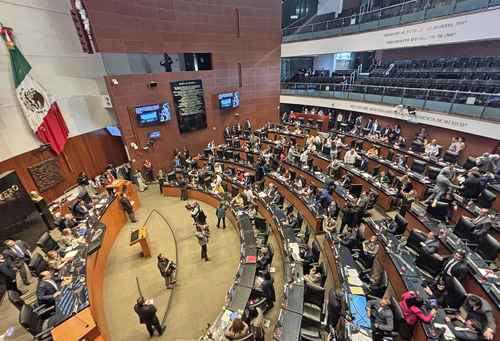
▲ Senate session last Tuesday.Photo Maria Luisa Severiano
Andrea Becerril
La Jornada newspaper
Sunday, September 28, 2025, p. 13
The presidents of the ruling commissions of the initiative regarding the Amparo Law in the Senate formed the list of about 40 speakers who will participate in the two public hearings, which will be held to analyze and discuss the proposal to reform President Claudia Sheinbaum.
The intention is to listen to the experts around the issue and especially the most controversial points of that reform, the presidents of the Justice and Legislative Studies, Javier Corral and Enrique Inzunza commissions, respectively.
In order to participate in the two hearings – the first one will be held tomorrow in the Upper House – 109 citizens and of them were registered, with the collaboration of the parliamentary groups, the most representative were chosen, among which are academics, experts in constitutional matters, litigants and members of Bar Associations.
In the first meeting, Carlos Cuenca Dardón, president of the College of Criminal Procedure Law; to the President of the National Association of Business Lawyers, José Ángel Santiago Abrego; Claudia Aguilar Barroso, director of Aguilar Barroso and Associates; To Retiro Magistrates, professors of the Law Faculty of the UNAM, to Maestro Santiago Aguirre Espinosa, specialist in Human Rights and former director of the Miguel Agustín Pro Juárez Human Rights Center.
As well as Andrés Aguinaco Gómez Mont, coordinator of the Constitutional Law, Human Rights and Amparo Commission of the Mexican Bar, as well as magistrates of the Federal Court of Administrative Justice.
In this regard, the Corral Legislator (Morena) explained that “it is an issue of the greatest relevance, which must be analyzed in its merits, which may occur in the two hearings, where you can hear concerns and concerns and even to hear the pros and cons that can represent the modifications to the Amparo Law. Each of the modification matters, since they are very important reforms,” he said.
Among the items to be discussed include the scope of the suspension of the amparo, the definition of legitimate interest, the digitalization of the processes and the improvement of the deadlines, as well as the implications on cases of organized crime and financing to terrorism.