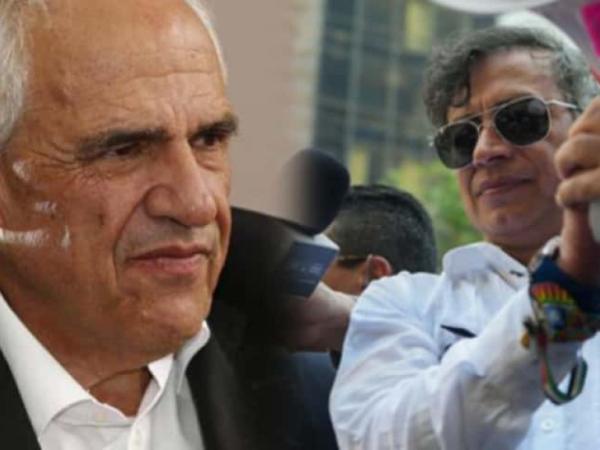
During the presidency of Ernesto Samper (1994-1998), Colombia lived one of its most friction moments with the United States for accusations of financing with drug trafficking money. In 1996 Bill Clinton’s government ordered to revoke Samper’s visa, an argument based on “substantial evidence” that political campaigns had received contributions from the Cali poster. This revocation was given at the same time that the country was discertified, which implied sanctions and loss of privileges in anti -narcotics cooperation.
What happened to the Samper case?
On June 12, 1996, the House of Representatives of Colombia acquitted Ernesto Samper of charges related to campaign financing with drug trafficking money, specifically from the Cali poster, after listening to evidence and debates.
See more: ‘We will revoke Petro’s visa for his incendiary actions’: USA.
Despite this acquittal, the United States Department of State, endorsed by President Clinton, He decided to revoke the presidential visa on July 11 of the same year. The official argument was that Samper would have “consciously assisted-or drug trafficking Through the acceptance of illicit funds, although he argued that he had no knowledge of the origin of these contributions.
In parallel, The United States decided to “discertify” Colombia as a proper collaborator in the fight against drugs. The descertification implied the suspension of certain military and financial support, cuts to international cooperation and diplomatic sanctions.
See more: Costs can be immense to all: Reactions after revocation of Petro’s visa
Samper critically reacted to these measures. He defended national dignity, rejected accusations that Colombia under his government be complicit in drug trafficking, And he argued that the descertification process was more a symbolic punishment than a decision based on procedural justice.
Colombia recovers certification
After a period of diplomatic tensions, in February 1998 the Government of Ernesto Samper obtained a “national security exemption” (National Security Waiver) which allowed the United States to certify Colombia, conditioning certain obligations in anti -narcotics policy. This gesture was interpreted as a recognition that Colombia had taken steps towards improving its performance control of drug trafficking.
See more: Petro says that he will call Colombian volunteers to fight in Gaza
Gustavo Petro’s case: recent allegations about his visa
President Gustavo Petro
Last Friday, September 26, 2025, Gustavo Petro, president of Colombia, attended a pro-Palestinian public act and gave a speech, so the United States State Department announced that it would revoke the president’s visa.
According to the entity, directed by Marco Rubio, Petro “He urged US soldiers to disobey orders and incite violence“
See more: Costs can be immense to all: Reactions after revocation of Petro’s visa
Given this, Petro declared: “[…] I do not even need to travel, Colombia is the heart of the world, And in their lands there are human beings who have in their veins, all the peoples of the world and I can distinguish their ancestors. I can know the world traveling through my country”
The United States government, however, did not officially confirm or denied the revocation. It is noted that visa records are confidential according to US law, and so far there has been no formal notification that certifies that President Petro’s visa has been canceled.
See more: creation of a Palestinian state would be a ‘national suicide’: Benjamin Netanyahu
Petro and his administration have linked that alleged act with broader tensions with the United States, including disagreements on deportations, migration, judicial cooperation and the policy of fighting drugs.
For Colombia, these situations have a strong impact not only on the symbolic – the perception of sovereignty and dignity against external influences – but also in practical: international cooperation in security, access to resources, investments and credibility to multilateral organisms.
Valentina Delgadillo Abello
Portfolio journalist