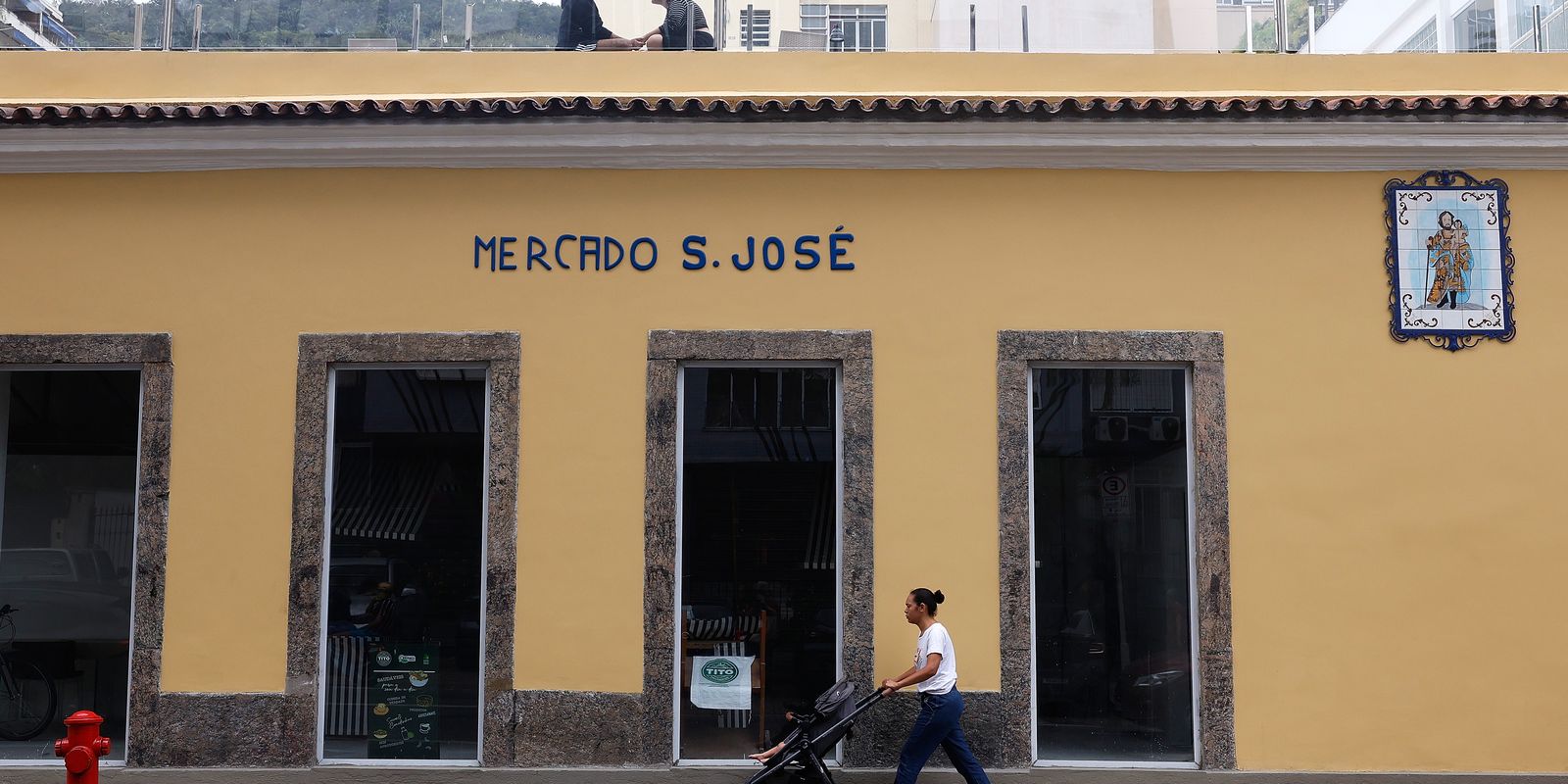
Accompanied by your dog Zéretired businessman Luis Sérgio Santos, 73, was in the newly opened new market São José this week. He wanted to see the news of the traditional Gastronomic and Cultural Pole of Laranjeiras, in the south of Rio de Janeiro, closed since 2018. 
Santos says he attended the space before his closure. “Regarding what is now, it was a property with very old characteristics, colonial style, it was cozy, but we saw that we needed a renovation. There were bars and selling of snacks. We heard music, played guitar, took a little one. But it was abandoned. Now is more comfortable, modern, beautiful.
Gastronomic stronghold
The 39 -year -old pharmaceutical Luiza Gotin took advantage of a free time at work to meet Rio’s new gastronomic stronghold. Laranjeiras resident since 2020, she only met the abandoned property.
“I passed by and saw the market well destroyed, with homeless people sleeping inside and out of place. I was very happy when they thought of revitalizing because it brought, besides more security, space for interaction with restaurants. I hope it has cultural activities. It is such an iconic building that it could not be abandoned the way it was.
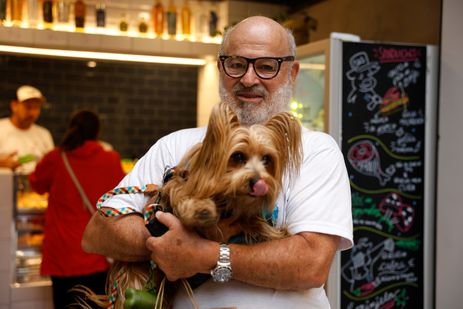
Luís Sérgio Touche goes to the market with his dog Zé. Tânia Rêgo/Agência Brasil
Closed seven years ago, when the National Institute of Social Security (INSS) resumed the property, the city of Rio bought the building and the land next to 2023, for R $ 3 million.
The Carioca Partnership and Investment Company (CCPAR) made a public call and the consortium led by Engeprat with the local board curated, which brings together organic producers, was selected to manage the space for the next 25 years. Private investment in revitalization was $ 10 million.
Popularly known as the São José Market, the Gastronomic Center has returned to 16 developments, including organic hortifruti, cheese, authorial confectionery, Arabic kitchen, special coffee, craft pasta, vegan ice cream, fermented, bars and restaurants. The market is open from Tuesday to Sunday, from 10am to 10pm, at Rua das Laranjeiras, 90.
Mass
The space was an opportunity for small businesses to open physical stores for the first time. The restaurant is enough, specializing in pasta, is one of them. Mauricio Borges, 28, took the gastronomy course at the renowned school Le Cordon Bleu. The partner, Ellen Gonzalez, was his teacher at the French Gastronomy School.
“Ellen has always participated in the local board and, when she learned that she was going to reopen the market, she was interested and we open our first business here. It’s been very full. Our expectation is very good. We are increasing our team and hiring more people,” he reveals.
Another rookie is Rancho das Vertentes, would chees on with his own handmade products and other producers. Partner Sandra Cardoso, 59, says they sold many of her products at the local joint fairs. “We had been looking for a point for opening a physical store for a long time. It was a dream to have a handcrafted cheese producer store. It has been very busy and we are selling well,” he says.
Co -founder of the local board, Thiago Nasser, said the idea was to be a market with local producers as it was when it was founded in 1944. “The idea was to rescue this tradition of being a place of producers. When we started with prospecting, we worked with our network of producers to have a fixed place. We have already generated about 150 jobs,” Nasser said.
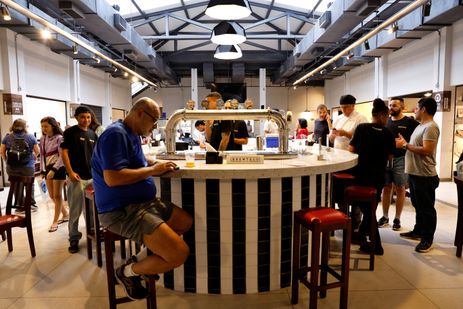
Market gathers goers of all ages – Photo: Tânia Rêgo/Agência Brasil
Since 1944, the market has integrated a cycle of Rio de Janeiro community spaces baptized with names of Santos – São Sebastião, São Bento, São Rafael, São Lucas and Sao Paulo. Its tipping as Rio’s cultural heritage in 1994 reinforced the value as the city’s affective and architectural heritage, according to the city.
Senzala and Barn
The property was a Senzala and a barn from a farm located in Guinle Park at the time of the Empire.
Its inauguration as a market occurred on May 31, 1944, when President Getúlio Vargas decided to adapt the stalls to create a place that could provide food more accessible to the population during World War II.
After decades of abandonment since the 1960s, the market underwent revitalization in 1988 and became a traditional point of Rio de Janeiro bohemia.
However, over the years, the infrastructure of the site began to deteriorate and it was closed in 2018, after the INSS resumed the site. Now the reality is different.