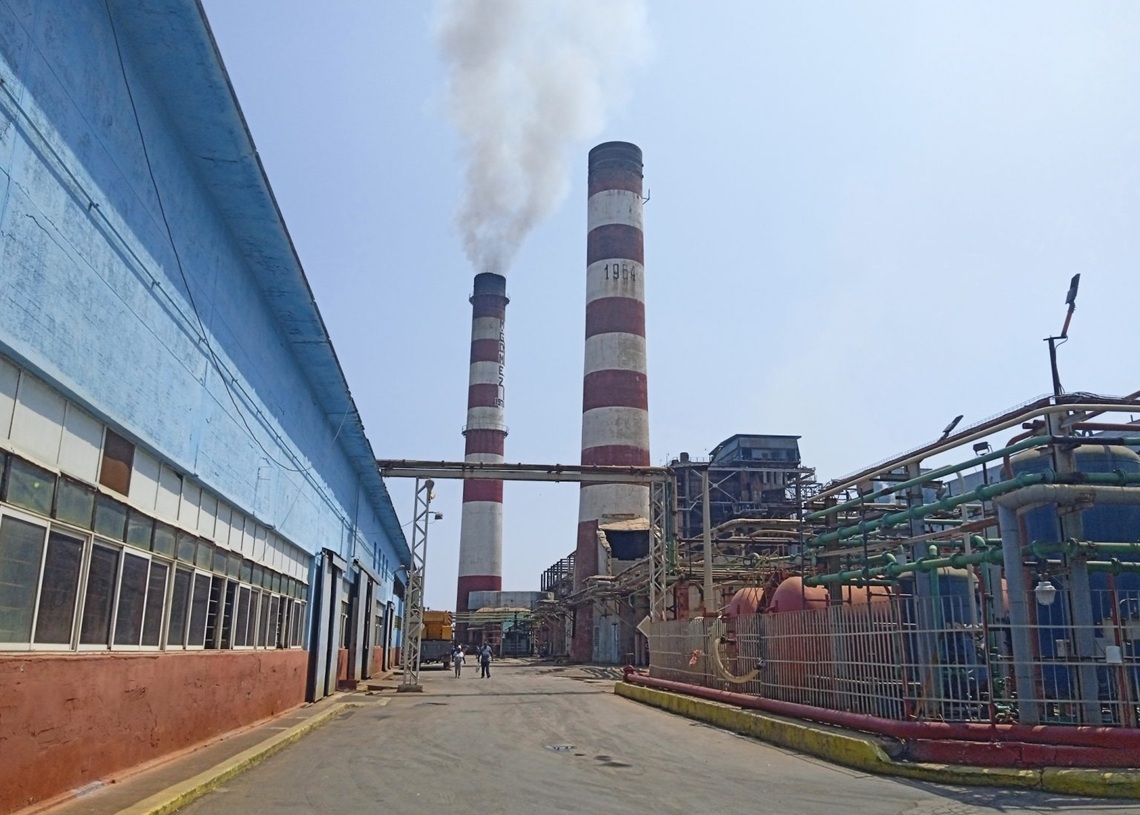
The sudden exit today of Unit 6 of the Máximo Gómez thermoelectric plant, Del Mariel, raises the effects of the official forecast, with more blackouts during the day throughout the country.
According to the electricity union, the unit is offline “due to oil pollution and vibrations in the water feed pump.”
The same unit already had another disconnection three days ago By “turbine regulation pump”, but He could return to the national electrical system (SEN) about three hours later, minutes before midnight.
This unforeseen increases the deficit initially planned from 1,600 MW, with an estimated affectation of 1,670 MW, according to the most recent part of the UNE, which announced this morning a maximum electricity capacity of 1 950 MW megawatts for a 3,550 MW demand for the moment of maximum demand.
Currently, four of the 16 thermoelectric production units available (25 %) are out of service due to breakdowns or maintenance in Cuba.
In addition, 56 distributed generation plants (engines) are out of service due to lack of fuel (diesel and fuel) and about 20 are not operational due to lack of lubricant.
From Friday, September 19 until today, complex days have been experienced in thermal generation, marked by unforeseen exits and strategic maintenance.
“They are below their generation capacity and we have a situation between 418 and 554 megawatts every day because some thermal blocks do not reach their maximum generation capacity,” said This Thursday in the Round table The First Vice Minister of Energy and Mines, Algierio Jesús Abad Vigoa.
“Constant stress”
“As a general tendency, the system remains operating under a state of extreme stress, we have said,” added the official, in reference to the “constant effort of electrical workers” in the recovery of the national electrical system.
He pointed out that the night peak schedule remains the most critical, with a maximum deficit between eight and nine at night, while added that “we are with the summer demand curve”, as a consequence of “the high temperatures that maintain a sustained demand, with a plateau instead of a punctual peak.”
Solar parks
To date, added the vice minister, some 32 new photovoltaic solar parks have synchronized the SEN, with a peak power of 700 MW, which adds to the 266 MW in existing parks.
In addition, it is planned to finish the assembly of seven new parks, with an additional 35 MW contribution.
To do this, he said, the specialized technical assistance is already in the country that must guarantee the implementation of these systems, whose installation is expected in its entirety among the late 2025 and early next year.