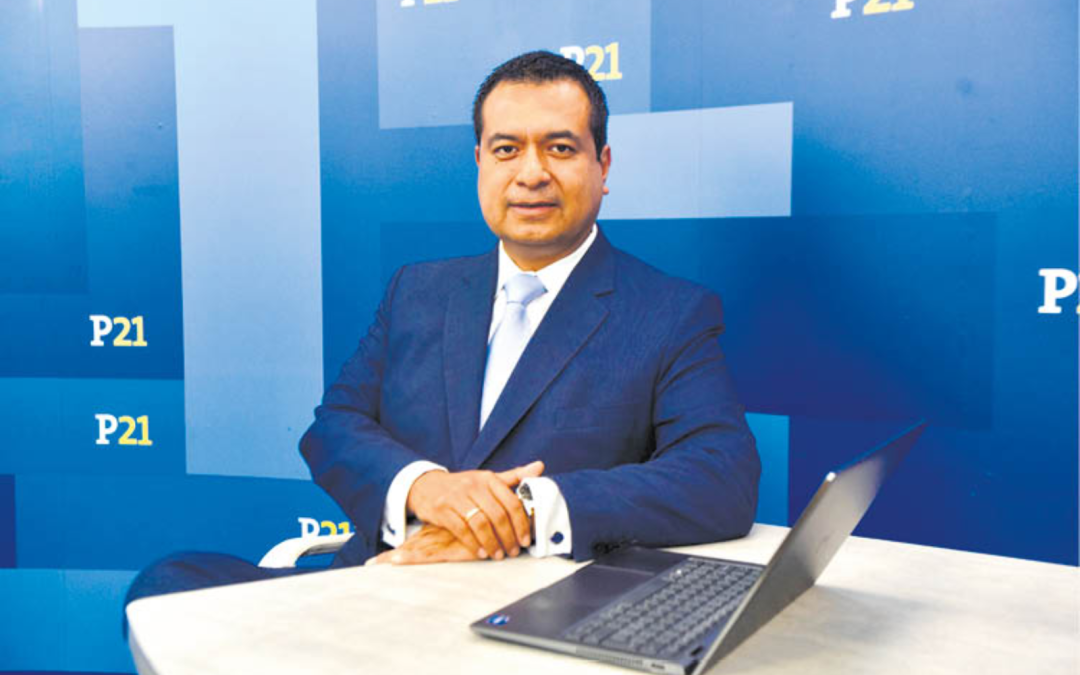
A few weeks ago, the Arequipa Campus of Continental University host the I Strategic Forum for the ethical integration of artificial intelligence in medical training, which brought together more than a thousand participants among teachers, national and international experts and professionals of higher education. There was a manifesto that defines commitments and strategies at 2026 to ensure that this technology is incorporated with responsibility, innovation and a person -centered approach. In this regard, we talked with Curious Walter, Vice Chancellor for Research at the host university.
Continental University has raised an important debate on the use of AI. This has determined conclusions in a manifesto of 15 section.
This manifesto represents the product of the discussion that was made very recently in Arequipa in the framework of a strategic artificial intelligence forum (AI) that was immersed within the III Meeting of Pedagogical Innovation. It was an event organized by the Continental University. And in this forum, deans from public and private universities linked to health sciences and also some doctors who are in clinical practice participated. The manifesto focuses on discussing three fundamental aspects: the role of ethics within the process of training and implementation of technologies, the need to update and review our curriculum of training students of Medicine and Health Sciences, and the need for technologies to complement, strengthen the professional, but above all that the person is in the center. Humanism is a fundamental aspect.
What are the main challenges indicated?
A first component are the data that is represented in many sources of information. One of them is the electronic medical history. However, despite the fact that there is a law for the implementation of a National Registry of Electronic Clinics, the implementation process is still slow. We have many public institutions that do not implement it in regions. We consider that implementing or accelerating this process will contribute to artificial intelligence tools, because the tools need quality, timely and protected data. There are other complementary data sources, for example, of auxiliary exams or medical images, including telemedicine or genomics. For example, a person’s genome sequence can say how a medication can behave. Integrating these pharmacogenomic profiles into the entire data set will allow us to get more profit.
And a better diagnosis too.
Which will then result in a more personalized treatment. That is an important trend, personalized medicine. That is, how based on your medical record data, exams, pharmacogenomic profile, you can have a finer treatment and handling. Before there was a lot of discussion to try to reach the precise diagnosis, today that process has been greatly optimized with technologies. There has entered an important benefit, AI in the field of diagnosis.
IA tools can detect abnormal patterns of very useful for a doctor to confirm a diagnosis. All this will allow an earlier diagnosis in diseases such as tuberculosis, where we have done research at the university, with more timely diagnoses and optimal treatment to avoid resistance.
Will also help prevent
It is the other great application. With data that we can obtain from the medical history, background or drugs helps us in a very important field in public health such as prevention, without waiting for the disease to develop to just see what is the best option.
How in the case of cancer?
We have many AI tools that allow us to detect some signs that can anticipate years. There are even studies that tell us that he can anticipate up to five years in the development of cancer lesions.
Why do you think the AI has not been implemented between professionals and health students?
The first thing is to share that the great challenge of AI in health is not technological but socio -technological. This involves, on the one hand, data availability, Internet connectivity. Without broadband it will be very difficult to be able to take advantage of AI tools because they need that great connectivity to transmit images, to be able to transmit videos. The case of Telesalud is a great example and that still constitutes an important challenge. The sociotechnical has to do with change resistance, there is still a lot of distrust of the effectiveness of AI. That is why it is important that medical students can be clear about what are the potential, but also the limitations or considerations that must be taken into account. The AI has the ability to transform, but the cognitive process, the clinical judgment, must prevail. Technology should not dehumanize, but rather to enhance.