Since 2003, Fernando Henrique dos Santos, 42, suffers from severe pain, especially in the spine. In 2018, after receiving a diagnosis of rheumatoid arthritis – a chronic inflammatory disease that can affect various joints – it was removed from work. In one of its latest medical consultations held this year, however, its diagnosis has been changed to ankylosing spondylitis, a form of inflammatory arthritis that mainly affects the spine.
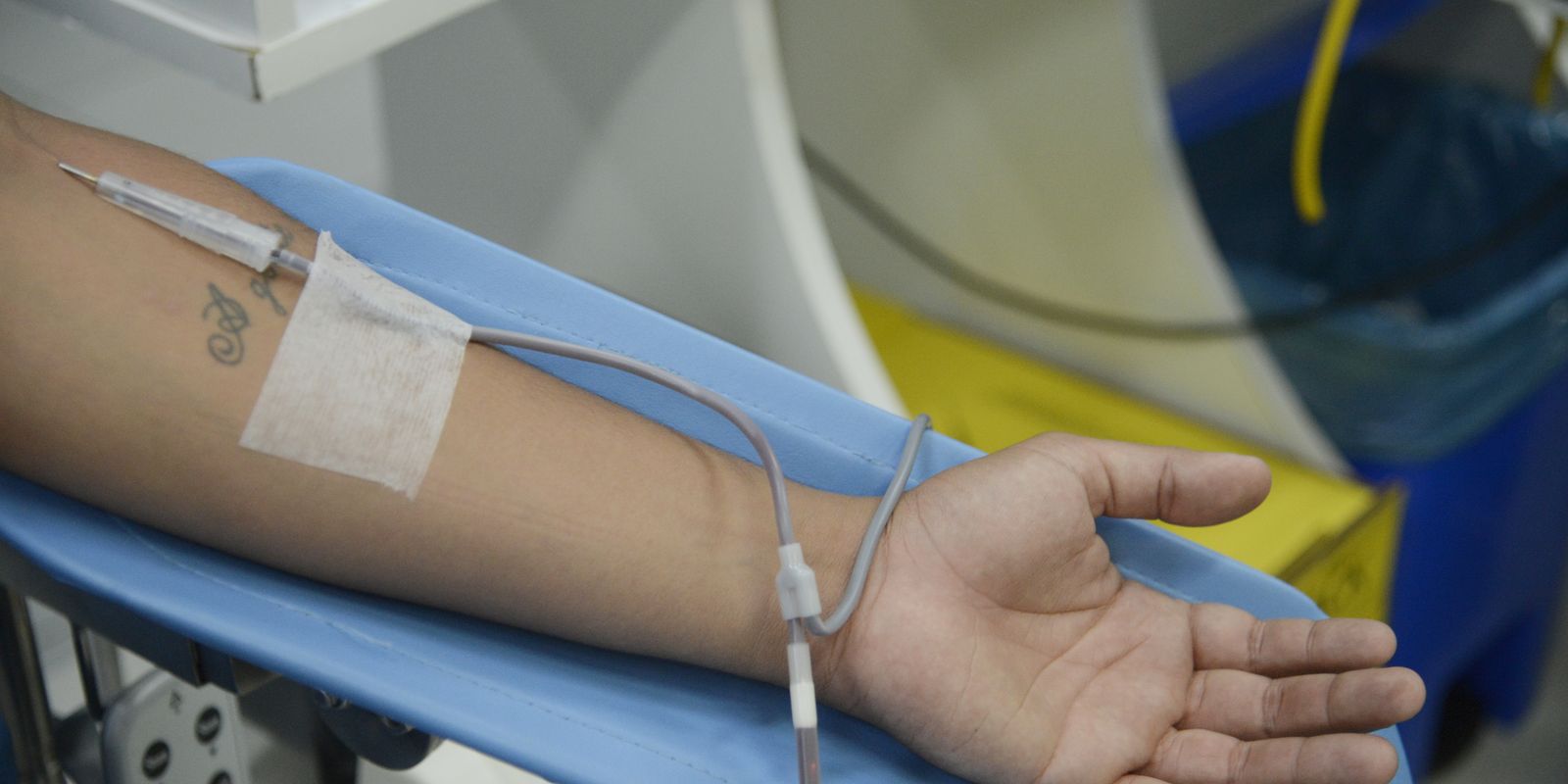
Because of these diagnoses, Santos needs to take a medicine called Infliximab, which is applied every eight weeks through an infusion – which is high cost. The drug he gets free of charge in the city where he lives. However, the treatment is more complicated.
A resident of Guarulhos, in Greater Sao Paulo, Santos needed to go to the city of Mogi das Cruzes, also in the metropolitan region of São Paulo, so that the drug could be applied safely. This service was offered by the laboratory that made the medicine and had an agreement with the state government.
“An infusion is done that has to be [aplicada] With the specialized team, ”he said. When the contract between the laboratory and the government was broken, he had to do the procedure in a clinic in the east of São Paulo, through his medical agreement, as the service was not available by the Unified Health System (SUS).
“I am away from the service, so I have this possibility of moving [entre Guarulhos e a capital paulista]. For me, this is no problem. My biggest difficulty is the treatment itself: by SUS I can’t [fazer o tratamento]”, he said.
For the Brazilian Society of Rheumatology (SBR), the lack of infusion centers in SUS and protocols for the application of medicines puts at risk the treatment of autoimmune chronic diseases and rare and the loss of high cost medicines.
In an interview with Brazil agency During the Brazilian Congress of Rheumatology, held between September 17 and 20 in Salvador (BA), the rheumatologist Vander Fernandes, coordinator of the entity’s Assisted Therapy Centers Commission said that,, Although many of these drugs are offered free of charge by the public system, there is today “a void between the patient to take the medicine and go somewhere that will serve it and do it safely.”
Many of these biotechnology medications are of high cost and, despite the supply by SUS, there are no protocols that determine the care network for the administration of medicines, which requires special attention in manipulation, maintenance, storage and application.
“For over 25 years SUS has incorporated this technology into its pharmaceutical care hall, but what was the error from the beginning? Since this treatment technology was incorporated into the SUS, it was understood that it was only one medicine and put itself [esse medicamento] In the specialized component of pharmaceutical care that assists SUS patients, providing medicine directly to patients. Each one takes his own, takes it home and uses it. But that is not right. These are medications that sometimes need a serum, a pre-medication team to observe if it will not give adverse reaction. Some of these medications require long infusion, two to six hours. And this has not been contemplated at any time to this day in the history of SUS, ”he said.
One of the damage caused by the lack of these centers, clarified the rheumatologist, is that some of the medicines require assistance at the time of application and a suitable place for dilution and even storagesince some of them need to remain at specific temperatures. Without these conditions, the drug loses its effectiveness.
“There are medications that have to be stored at a certain temperature, in a cold chain, and that out of temperature, it can lose its quality, thus compromising its effectiveness and safety,” he said.
In addition, the doctor said, these centers would be fundamental to observe possible complications or allergic reactions.
“Our struggle is for the Ministry of Health to let this rule loose [sobre os centros de terapia assistida]create a financing for this and for states and municipalities to adhere to this policy, accredit services and then to claim with the ministry an appeal to pay these providers because it would be necessary to have this in all cities [do país]”Said Fernandes.
“There are people who have medicine in hand and have nowhere to do [a aplicação]. This has no fit, ”he said.
One Survey by the Brazilian Society of Rheumatology revealed that in Brazil there are only 61 assisted therapy centersmost of which are private and concentrated in the Southeast, especially in capital and large cities.
Although they make both private and public, through industry support programs, only 11 of them have some contract with SUS. It is estimated that about 20,000 patients perform treatments provided by SUS with immunobiological drugs of intravenous infusion application, which would need specialized assistance for its use.
In July 2023, Biored Brasil, a network of patient associations, conducted a survey of 761 patients who receive high cost drugs from SUS. This study indicated that 10% of these patients were without access to application and 46% claimed that there was no assisted therapy center near the place of residence where they could do this application.
More than half of these patients (55% of the total) reported paying between $ 150 and $ 200 per application which, according to them, had a major impact on family income.
Of the total of patients interviewed by the network, only 20% said they apply the drugs in SUS assisted therapy centers.
Sought by Brazil agencythe Ministry of Health said it is analyzing the creation of points to become intensive care centers. This process is in the technical study phase.
* The reporter traveled at the invitation of the Brazilian Society of Rheumatology