By Marta Fernández and María Elena Rodríguez
On September 8, 2025, a virtual meeting of the BRICS, convened by President Luiz Inacio Lula da Silva, sought to consolidate the position of the group and reaffirm the guidelines established in the 17th Summit, held in Rio de Janeiro in July. At the meeting, Lula defended multilateralism, criticized the tariffs imposed by the United States and stressed the need to end unilateral practices that compromise international trade. The meeting was attended by leaders or representatives of China, Egypt, Indonesia, Iran, Russia, South Africa, United Arab Emirates, India and Ethiopia.
The July Summit, which preceded this virtual meeting, took place in a context of great geopolitical tension, marked by attacks by Israel and the United States against Iran and by the increase in global economic disputes, intensified by Donald Trump’s tariff war and its “America First” policy. Even in these challenges, Brazil managed to promote a multilateral agenda focused on the confrontation of global inequalities, managing to approve four main documents: the final declaration and three thematic statements in the areas of health, digital governance and climatic financing. These texts not only expand the group ambitions, but also reaffirm the Brazilian commitment to an inclusive and oriented multilateralism oriented to the reduction of inequalities.
The final declaration exceeded considerable resistance. Iran, even after being attacked recently, he accepted a text that defends the solution of two states for the Israeli-Palestinian conflict, a gesture of diplomatic openness. South Africa, Egypt and Ethiopia, on the other hand, agreed to nominally mention Brazil and India in the defense of the security council reform, while it was recognized that Africa deserves greater representation. In the monetary field, the text avoided the proposal of a new common currency – previously deprived of Lula – but reaffirmed the advance of trade in local currencies. With a prudent tone, the document avoided direct mentions to the United States, although it pointed out the desire to reduce the dependence of the dollar.
This modulation is consistent with the Brazilian strategy of non -active alignment and was already clear in the opening speech of the summit, which marked the tone of the encounter by evoking Bandung, a gesture loaded with symbolism. In 2025 70 years of the Bandung Conference, founding milestone of the Non -Aligned Countries Movement. It was also under the Brazilian presidency that Indonesia – historical epicenter of that meeting – became a full member of the BRICS, reinforcing the commitment to a more plural international order, based on autonomy and cooperation between developing countries.
The Brazilian defense of multilateralism, however, does not mean acritic adhesion to existing institutions. On the contrary: the statement repeatedly emphasizes the imperative of democratizing the UN, reforming the institutions of Bretton Woods and restoring the operation of the WTO and its mechanism for the solution of dispute, paralyzed years ago by the veto of the United States. The word “democracy” appears seven times in the statement, which suggests that, unlike what certain analysts affirm, the BRICs does not ignore the issue, but addresses it from its own perspective: the defense of a more democratic global governance, which transcends the limits of the strictly national plane.
This criticism also extends to the instrumentalization of multilateral agencies. An example is the International Atomic Energy Agency (IEA), whose neutrality was questioned after they will suspend their cooperation with the entity, accusing it of facilitating Israeli attacks by sharing sensitive data. It is ironic, therefore, that the BRICS – with a frequency described as a threat to the liberal order – is positioned as a defender of an order based on rules, provided that they are built collectively and with democratic legitimacy.
The three thematic documents adopted during the summit reinforce the vision of the group in favor of a more inclusive governance, with joint solutions for global challenges. The BRICS association for the elimination of socially determined diseases It highlights the commitment to the eradication of diseases such as tuberculosis, recognizing that these disproportionately affect the most vulnerable populations. The text reaffirms the right to health and the need to strengthen national public systems, expand access to medicines and technologies and promote scientific and technical cooperation among member countries.
In the Declaration on the global governance of artificial intelligenceCountries recognize that AI has deep impacts on economies, societies and democracy itself. They defend that their governance should be based on the purposes and principles of the UN Charter, on Human Rights, the protection of privacy, inclusion and diversity. They reject the concentration of power in the hands of great digital platforms and express concern about the reproduction of prejudices and inequalities in algorithmic systems, proposing a more ethical, accessible and equitable model.
Finally, in the Frame declaration on climatic financethe commitment to the Paris Agreement and the United Nations Framework Convention on Climate Change is reaffirmed, defending the mobilization of new, additional climate financing and in fair conditions for developing countries. The group reiterated the principle of common but differentiated responsibilities and defended reforms in multilateral banks, greater volume of financing and the mobilization of private capital to viabilize resources for climate actions in the global south. In addition, the text recognizes the New Development Bank (NDB) in its role as support for sustainable development projects and climatic action.
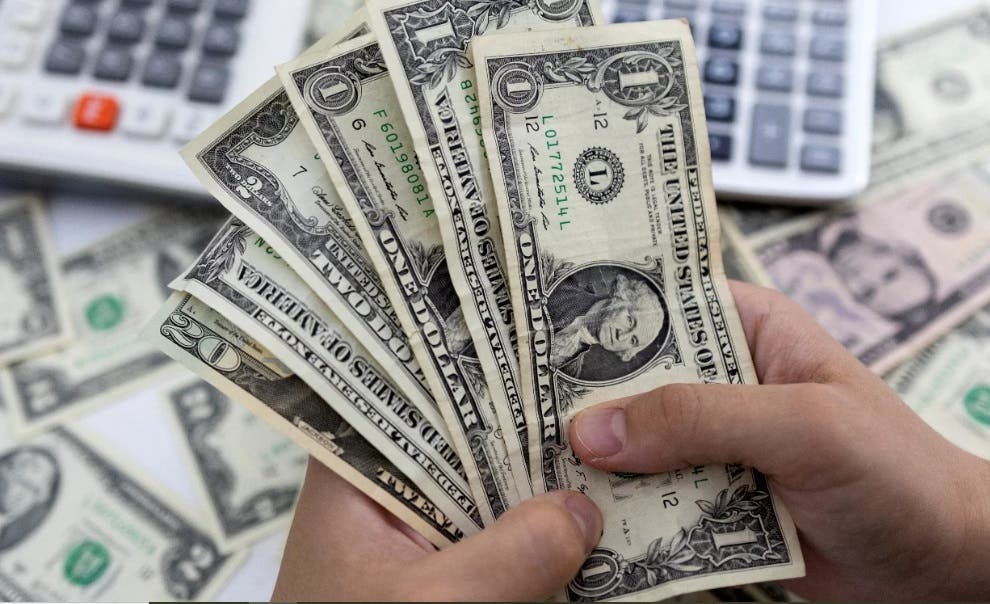
Despite caution diplomacy, the group remains perceived as a threat by hegemonic sectors. During the summit, Trump reacted with virulence, threatening with an additional 10% tariff for any country that aligns with the “anti -American policies of the BRICs”, stating that “the dollar is king. We will keep it like this.” “Losing the hegemony of the dollar would be like losing a war.” Trump interprets any movement towards monetary plurality as an attempt to dethrone the dollar, as an existential provocation. Its actions, by linking commercial issues with unilateral sanctions and challenging national sovereignty, underline the divergence of visions and the growing tensions that configure the international economic and political scenario.
Doctor of International Relations. Professor and former director of the Institute of International Relations (IRI) of the PUC-RIO. CNPQ researcher and the GlobalGrace project (global genre and equality cultures). Director of the BRICS Policy Center (2023-2025).
Doctor in Sociology for the IESP-RUERJ, professor of International Relations at the PUC-RIO and deputy director of the BRICS Policy Center.
*This text is part of the collaboration between the Organization of Ibero -American States for Education, Science and Culture (OEI) and Latin America21 for the dissemination of the Ibero -American Women Voices platform. Know and join the platform here.