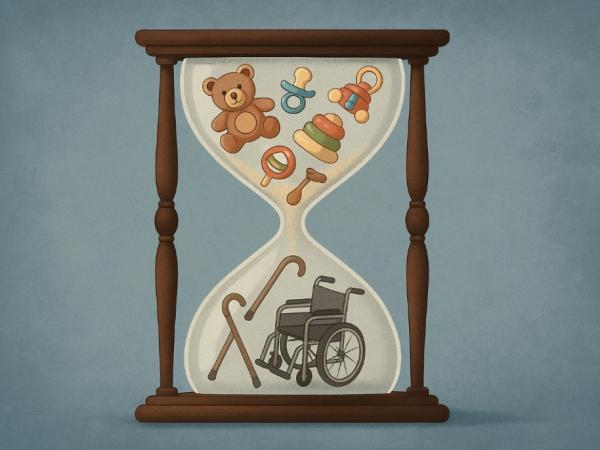
Colombia is going through a silent but deep demographic transformation, according to the latest numbers of births and deaths published by the DANE, which is confirmed that the country is in the middle of a sustained tendency which could reconfigure its social and economic structure in the coming decades.
The historical fall in fertility, accompanied by a progressive increase in the number of deaths, reaffirms that the country ages faster than expected and will have to face the challenges of sustaining their workforce and social security systems with less young people in the future.
See here: PGN 2026: What was approved in the alternative presentation and what comes now
The most forceful fact was recorded in 2024, when 453,901 boys and girls were barely born in the country, Thus being with the lowest figure of the last decade, which represents a 12% reduction compared to the births reported in 2023.
Piedad Urdinola, director of the DANE, said that if the perspective is extended and compared to 2015, the collapse is even more noticeable, since in that period Colombia stopped registering 207,098 births, which is equivalent to a contraction of 31.3%.
Births are in free fall from the pandemic.
Chatgpt image
“The fall was not stopped in 2025. Between January and July of this year, the DANE counted 243,870 births, 6.6% less than in the same period of the previous year. Everything indicates that the trend is not a conjunctural phenomenon, but part of a structural change in the country’s demographic dynamics, ”said Urdinola.
Fertility falls
The decrease in fertility among young women is one of the most revealing factors, since traditionally, the group of 20 to 24 years had been the one that contributed the most to births in Colombia. However, between 2015 and 2024 its specific fertility rate was reduced by 41.9%, from 94.2 to 54.7 births per thousand women.
Also read: Minimum wage: the table would start fractured between distrust and tensions
Said in a simple way, this implies that many women are postponing Maternity or deciding not to have children, in line with the social, educational and labor transformations that are lived in cities and that have also permeated rural contexts.
The accounts of the statistical authority also show that the decrease in births has not occurred homogeneously in the territory, since departments such as Vaupés, Sucre, Magdalena and Vichada recorded the greatest falls between 2023 and 2024, with reductions that exceeded 19%; Letting it clear that, beyond national averages, the phenomenon is present in almost the whole country and reflects both economic conditions and cultural transformations that influence reproductive decisions.

Births are in free fall from the pandemic.
Chatgpt image
On the other hand, the ethnic component also reveals interesting changes. In 2024, 9.1% of living births were recognized as belonging to ethnic-racial groups and there, indigenous births reached 5.4% of the total, the second highest level in the last decade, while the From Afro -descendant population they fell to 3.6%, the lowest point of recent years.
Deaths increase
The other face of the currency are the deaths, compared to which the Dane said that in 2024 275,778 non -fetal deaths were recorded, which represents an increase of 2.7% if compared to the previous year. The gross mortality rate remained at 5.2 deaths per thousand inhabitants, but the significant thing is that, in parallel to the fall in births, the death curve is still on the rise.
It may interest you: TPetro’s tax reform will be $ 16.9 billion
For example, in the first seven months of 2025, the number of deaths grew by 1% Faced with the same period of 2024, which confirms that the trend remains stable; while the causes of death reflect the weight of chronic diseases in the epidemiological profile of the country.
“The ischemic heart disease concentrated 17% of deaths in 2024 and 17.2% so far from 2025. They were followed by chronic diseases of the lower respiratory tract, with 6.6%, and cerebrovascular disease being a determining factor in the mortality of the country, ”says Dane.

Births are in free fall from the pandemic.
Chatgpt image
The report also shows lights in the midst of the shadows, since early maternal mortality reached its lowest level in the last decade, with 208 cases and a reason of 45.8 deaths per 100,000 live births; putting on the table a positive indicator that reflects advances in access to maternal health, although still far from the standards of developed countries.
The same goes for infant mortality due to malnutrition, which fell 25.2% compared to 2023, with 243 cases in 2024. Even so, it remains above the goal drawn on the road map of the national authorities, which reveals that care gaps persist in vulnerable regions.
Other news: LAs 26 Colombian clinics and hospitals are among the best in Latin America
Mental health care
Another point that turns alert is that of mental health. Mental disorders deaths and of behavior grew by 361% between 2015 and 2024, from 1,259 to 6,593 cases. Alzheimer’s represents almost two thirds of those deaths, which connects again with population aging and the increase in old age associated with old age.
In parallel, suicides reached 3,066 in 2024, an 8% reduction compared to 2023, although the trend of the last decade has been growing. Men between 20 and 39 years concentrate the greatest proportion of these cases, with departments such as Cundinamarca, Risaralda, Meta, Santander, Valle del Cauca, Huila and Nariño showing worrying increases.

Births are in free fall from the pandemic.
Chatgpt image
With all this, the panorama that the figures draw is clear and suggests that Colombia is growing rapidly, with less births and more deaths; a phenomenon, which in the short term may not Feeling strongly in everyday life will have deep economic and social implications.
Do not forget that less young people imply less labor available in the future, which will affect productivity and competitiveness. At the same time, more older adults mean greater demands on the health system and pensions, in a country that already faces tax tensions to sustain these schemes.
Daniel Hernández Naranjo
Portfolio journalist