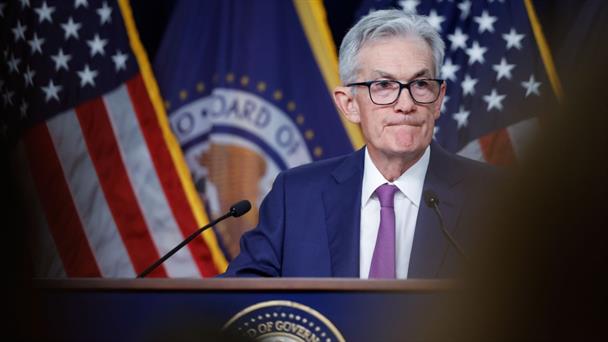
On September 17, one of the ads of rate cut of the Federal Reserve most expected in the history of the United States Central Bank. The Fed had given signs that It would lower its rate of reference, and fulfilled. The members of the entity are always careful not to disappoint the market once economic agents have anticipated, due to the same indications of the Feda reduction.
The announcement was expected locally. The reduction of 25 basic points, or 0.25 percentage points, is not a significant reduction. What is very relevant is that the Fed He has sent the signal that he will continue to produce cuts in the next meetings, until, most likely, a accumulated reduction of 1 percentage point. The Political rate It would reach 3.5 %. What would these reductions represent for the decisions of monetary policy In the country? Greater slack, greater space to reduce the reference rate local. Consequently, minor interest rates and, as would be expected, a Increase in demand Credit. Of course, provided that the profitability conditions of investment projects and the desire of people wholesale are present. Decisions to borrow not only depend on the interest rate.
If it is possible to accommodate the rates towards the drop, would the Active monetary policy of the recent past? In the last four -month period of 2024 the same Fed reduced the Political rate monetary in 100 basic points. The same measure was applied locally between September and December. However, in that period measures were adopted to expand credit with the aim of trying to achieve the announced growth goal. That experience, with an economy that in the last 12 months has not had important modifications that can increase its productivity, suggests that other episodes of legal lace policy and rapid liquidity facilities should not be ruled out. Two factors would be present. One is how much authorities consider that fiscal activism, through public spending, can grow GDP. The other element is that the amount of net international reserves are willing to use the authorities in order to handle the exchange rate. Both fiscal and monetary activism have an impact on the exchange rate, and on the increase in prices in the economy.
The Fed has expressed that his current priority is not the inflationbut employment; The other element of its double mandate. Faced with combating the inflation or address the reduction in the rhythm of job creation, members of the Fed that set the reference rate They opted for the last. However, political pressures should not be set aside. Especially if it is taken into account that the Unemployment rate It is found in 4.3 %, a measure that is not high compared to the historical average; and the inflation is maintained above the 2 % goal established by the same Fed.
The analysis of the decision of the Fed must take into account the political activism recent so that this institution goes down the Political rate monetary. A fact that must move worry.
How will the financial assets After the measure of the Fed and future reductions in your reference rate? Before one monetary policy more accommodating, it is expected to continue the Increased demand of assets. Therefore, their prices will continue to increase. The inflation of prices of financial assets its long expansion period will continue. As a consequence, we will continue to observe high gold prices, the most important reserve asset at the international level. The largest money supply allows the purchase of assets, and is also the fundamental factor that increases the inflation In the economy. While the interest rate continues to go down, expectations of inflation And people will sue gold, and also silver.
Will the Bond yields of the United States Treasury? Part of the political pressure has been directed in that direction. However, bonds also respond to inflation expected While the Fed will hold on to a Policy to inflate the currency American, people will not give in the yields they demand to have a treasure public debt bonus in their hands. It is relevant to remember that in the past not far away the reductions of fees were accompanied by bond purchases by the Fed. It was that way as the Fed influenced the reduction of yields; At the moment a quantitative flexibility policy is not contemplated. On the contrary, although with very little effect, according to statements from its own president, the Fed It continues to sell assets, including Treasury Titles of the United States. For now, we should not expect reference titles with minor yields.
In short, the decision of the Fedlike all Economic policy measuresmust be seen carefully, always taking into account that there are consequences that are not immediately observable.
__________
A collaboration of the Regional Center for Sustainable Economic Strategies (CREES).