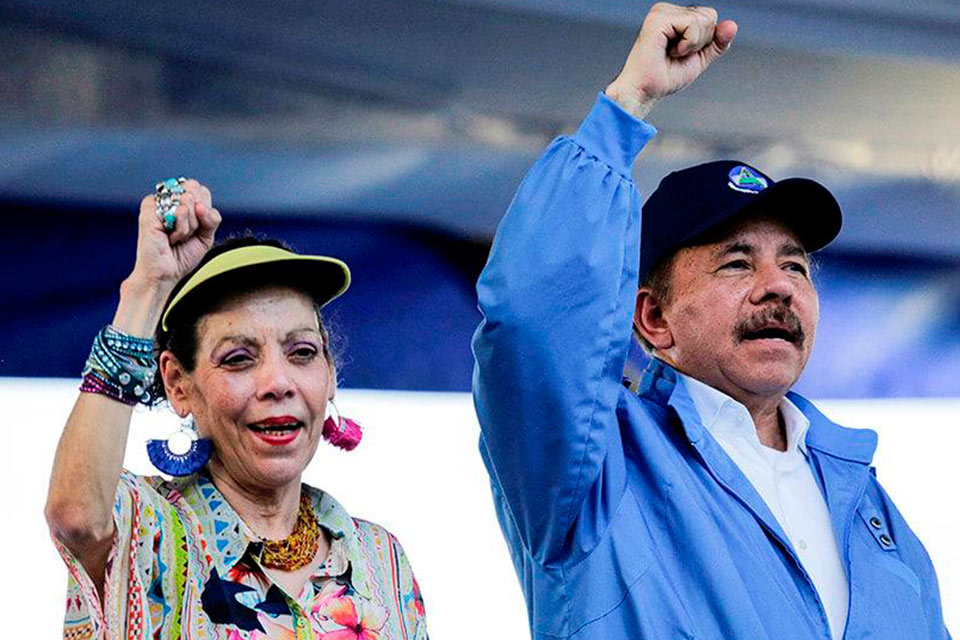
The report, presented to the Human Rights Council, documents how the Nicaragua Government has prosecuted thousands of Nicaraguans abroad, many of whom fled after the bloody repression of 2018
The Government of Nicaragua is extending its repression against perceived people as opponents beyond their own borders, warned the group of human rights experts over Nicaragua, from the United Nations, in a report released on Tuesday, September 22.
The American lawyer Reed Brody, a member of the group, said that “a climate of fear has been extended between the Nicaraguan diaspora, since no place in the world seems safe for Nicaraguans who oppose (co -chants) Daniel Ortega and Rosario Murillo.”
“An invisible hand chases the exiles wherever they go, deny them passports, threatens them and their families, and moves them away from their country,” Brody said.
The report, presented to the Human Rights Councilhe documented how the government has persecuted thousands of Nicaraguans abroad, many of whom fled after the bloody repression of 2018.
The persecution has been carried out through severe measures that include the arbitrary deprivation of nationality, prohibition of entry to the country, denial of passports, confiscation of goods, digital surveillance and threats, as well as the intimidation and punishment of relatives who remain in Nicaragua.
The German penalist Jan-Michael Simon, president of the group, observed that “the damage suffered by exiled Nicaraguans is not the result of an isolated event or a single violation.”
*Also read: What can be expected from a “state of external shock” if Maduro declares it?
“His entire life is systematically dismantled, beginning with his uprooting and the erosion of his legal identity, which derives in an economic collapse, social isolation and omnipresent surveillance,” Simon said.
The experts pointed out that, between February 2023 and September 2024, 452 people were deprived of their nationality by court, of which only one remains in Nicaragua. Others were stripped of their nationality without any legal process.
Other Nicaraguans abroad have been denied the renewal of the passport or access to other official documents, which makes them “de facto” stateless, stripped of their legal identity, their means of subsistence and their rights, and prevented from reconstructing their lives abroad.
The group has also documented complaints of physical violence against Nicaraguans in exile, including the murder in Costa Rica, in June 2025, of the largest retreat from the Army Roberto Samcam.
Samcam, who had been stripped of his nationality in 2023, was an open critic of state repression.
Although the investigations are still ongoing and link with the Nicaraguan authorities has not been established, experts indicated that this is at least the fourth violent attack against exiles in recent years.
Human rights violation in the country
In their presentation before the Council, experts also expressed concern about the deterioration of the situation of human rights within the country.
In this sense, they alerted about the increase in simultaneous mass arrests and the arrests of prolonged lack of lack of communication within Nicaragua.
The authorities have refused to reveal the fate and whereabouts of dozens of detainees, which configures forced disappearances.
“The resurgence of forced disappearances is one of the most alarming events that we have witnessed since the group began its mandate (March 2022),” said Uruguayan expert and lawyer Ariela Peralta.
Two recent deaths under detention occurred while those people were held in an incommunication regime. These deaths “reflect the brutality of detention conditions and the lethal consequences of torture,” the report indicates.
“When people stop secretly, they are tortured and, in some cases, they die in custody of the State, state responsibility is configured under international law. This points to a deliberate horror policy that must face urgently,” Peralta added.
The experts also highlighted the unprecedented withdrawal of Nicaragua of international organizations and organizations, including the UN Human Rights Council itself.
They pointed out that these decisions “represent a deliberate strategy to avoid scrutiny and consolidate impunity.”
The group called for other states to demand responsibilities to Nicaragua before the International Court of Justice for Violations of the United Nations Convention on the reduction of the cases of Apatridia of 1961.
He also urged states to adopt comprehensive measures to reinforce the protection of Nicaraguan people in exile, among other things facilitating asylum, refuge or naturalization procedures.
*Journalism in Venezuela is exercised in a hostile environment for the press with dozens of legal instruments arranged for the punishment of the word, especially the laws “against hatred”, “against fascism” and “against blockade.” This content was written taking into consideration the threats and limits that, consequently, have been imposed on the dissemination of information from within the country.
Post views: 307