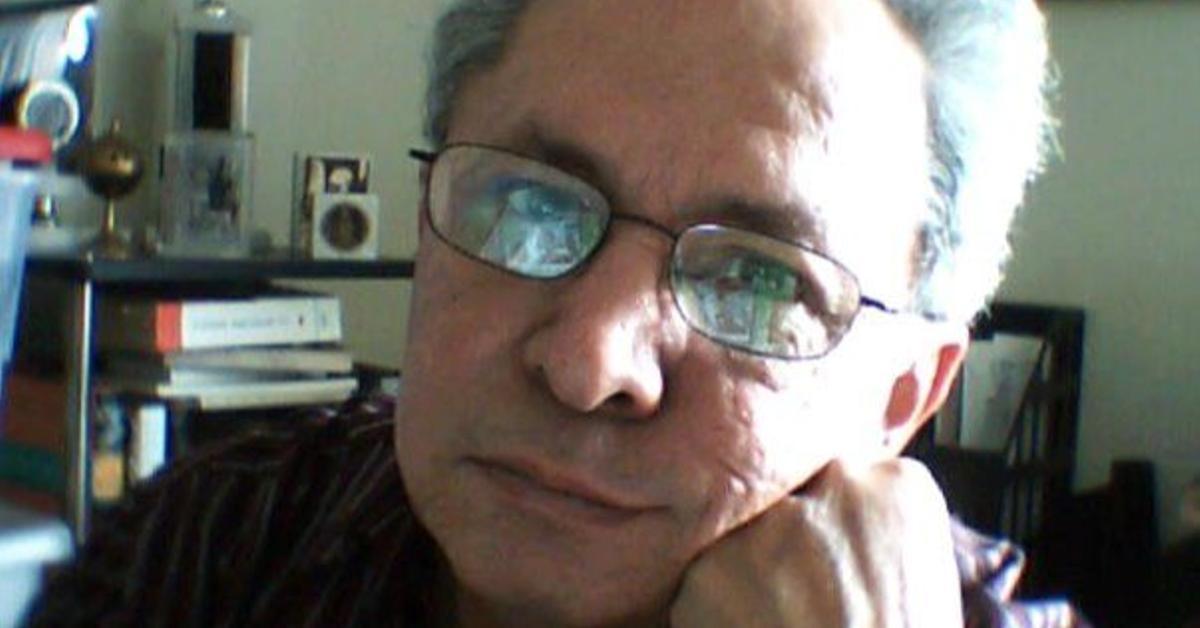
Havana/In the last days of August, Cuban literature lost the poet and writer Manuel Ballagas. A few days later, in September, his wife also died of a lifetime, the dancer and singer Juanita Baró. Many of those who knew and admire their work have taken care to react, perhaps wishing that it was not true. With him he left an uncomfortable, resistant and deep literary voice, which knew how to combine the memory of exile with a critical look towards the island and the labyrinths of exile.
Ballagas was the son of the prestigious poet Emilio Ballagas, one of the most relevant names of Neorromanticism and black poetry in Cuba. Born in 1948, Manuel grew surrounded by books and literary gatherings. His house gave shelter to readers, writers and poets who talked until late at night, and he breathed that atmosphere of creation, passion for letters and cultural consciousness.
He started writing from a young age. His first story appeared when he was barely 15, in the magazine Casa de las Américas. Over time he published with editions the bridge the storybook With fearbefore fulfilling the 18, a work that caused the fury of the revolutionary regime, which marked the course of his life.
It is said that Fidel Castro described that book as “intolerably morbid” and “counterrevolutionary”, and in fact ordered the destruction of their typographic tests in a public act in the Plaza Cadenas of the University of Havana. In 1973 he was arrested under positions of “ideological fun” and sentenced to prison. After several years between bars and under guarded freedom, he was forced to opt for exile.
From that new shore it was defined as “an American who has Spanish as the first language”
In April 1980 he looked for asylum with his wife and son at the Embassy of Peru in Havana, during the days of Mariel’s exodus. His memories of that episode are full of harassment, shoves, spit and screams of “Let them leave!”, That accompanied him to the boat that left the Havana port. In his own voice he affirmed: “I did not leave, but they expelled me.” In the following years he lived in the United States, setting his life in Miami, and developed a literary and journalistic career from exile.
From that new shore it was defined as “an American who has Spanish as the first language.” In the United States he worked in media such as The Wall Street Journal, The Miami Herald and The Tampa Tribune. He was an editorial consultant of the Spanish edition of Foreign Affairs Between 2000 and 2003. Before, between 1981 and 1984 he co -directed with Roberto Madrigal the literary magazine Terma bilingual four -monthly space (English and Spanish) that promoted honest controversy, debate and freedom of thought among Cuban writers in exile.
His works were published in magazines such as Gazette of Cuba, Scandal, Mariel, Linden Lane Magazine, Setback, Sinalefa, Another Monday and Cuban Hispanic Magazine. His literary production is heterogeneous: he cultivated stories, novels, poems and memories. Among its most prominent titles are Hotel Paris, Cubiche, Newcomer: An American Adventure, Account bird, The Jagüey path and the carob, Bad tonguesamong others.
In the novel Cubichefor example, deployed raw and urban realism, with influences of dirty realism and the American narrative, applied to the Cuban American universe. His style, deliberately stripped of Pomposa rhetoric, has been compared to Raymond Carver, Charles Bukowski or Joyce Carol Oates, although always with a Cuban Background look and tension. In several interviews, Ballagas explained that he did not write thinking about assembling books, but that his stories accumulated until he became collections or novels. His stories often intertwine the everyday, the mythical and the memory – the lost island, the family corners, exile -, and circulate between nostalgia, irony and challenge.
“Cuba has also forgotten me”
Ballagas never stopped asserting his right to dissent, or point to his wounds. He talked about censorship, cultural repression and silence imposed on several generations. In his work it beats a persistence to name the banned, to rebuild what power deleted, for rescuing voices and memories that official oblivion intended to bury. In his interviews he claimed that he watched the streets of Havana on television and failed to recognize themselves in them or in their inhabitants. For him, Cuba had become a country that he could no longer be part; “Cuba has also forgotten me,” he said.
Manuel Ballagas was, from the beginning, a provocateur, an uncomfortable polemicist, a man who exposed his opinions without fears, even when that made him target of invisible enemies. In his public profilethe writer Joaquín Gálvez defined him as someone who “issued his opinions without fear of gaining enemies.”
While in Cuba many of his works were censored or directly erased from the editorial circuit, in exile he maintained a strong constancy. He published, he said, never surrendered to geographical indifference or before the closure that the power imposes. His literary legacy, his plural voice and his commitment to memory is placed today as a reference point between the Cuban letters of banishment.
Those who knew him personally keep in his memory his restless gaze, his word frank, his conviction that writing is not only a trade, but a battle. Readers have their work, their texts that continued to grow, even from distance. To the world of literature, he has the testimony of a man who, despite the shadows and silences, never resigned to write.