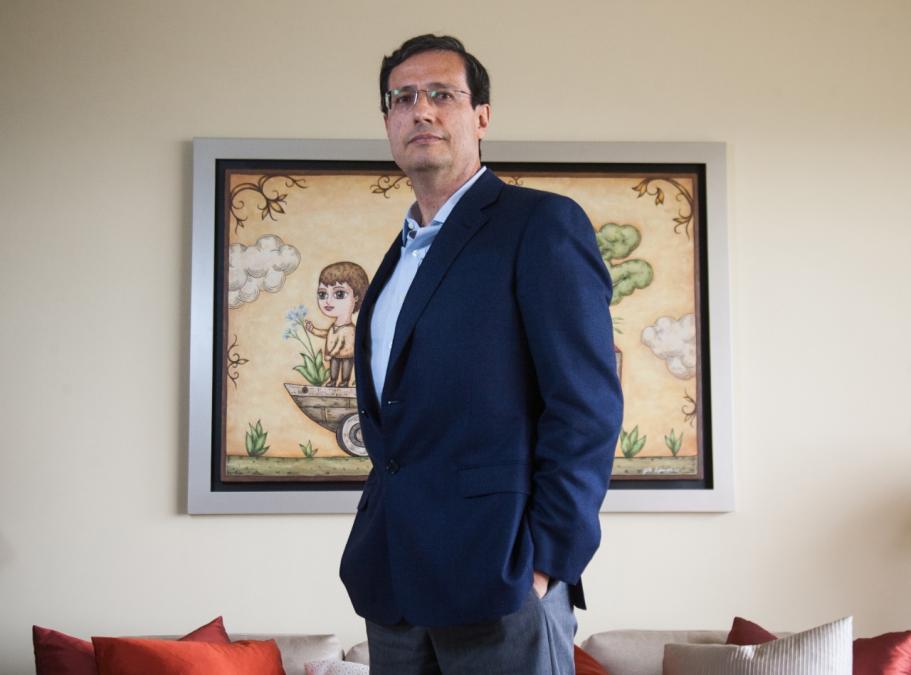
For the president of Ipethe withdrawals authorized by the Congress They have dismantled the pension system and threatens to leave the country without retirement funds.
What impact does a new withdrawal of pension funds have to be allowed?
In Peru there is no pension system since the so -called “Law of 95.5” was approved. Anything that is discussed now, such as the withdrawals you mention, has nothing to do with a pension system, because it no longer exists.
What would seem to be sought now with retreats is to close at AFPs. As things are, probably one day they end up closing them. If 95.5% is allowed to get out and the Congress authorizes withdrawing money from the funds when you want and how you want, what can the AFP be for? The risk is that the funds disappear, as they did in Argentina.
Do you think that at some point you want to approve a law to close to the AFP?
Look what happened with the law of modernization of the pension system. It was approved with certain controls and, a few months later, Congress took out another law that allowed all funds to be withdrawn. It is a foolishness of Congress to do that.
On the other hand, I have heard some who call them liberals say: “Why don’t they let people manage their money?” The answer is that throughout the world there are mandatory pension systems because almost no one saves enough for old age. Nowhere in the world the opposite occurs, so they have to force people to save more. The new law was supposedly going to address that problem, but now Congress allows them to withdraw their money.
While there was no pension system as mentioned, what there was was a pension savings …
No, what there was was savings until you retired, because from there you simply took your money. A pension savings is different: it serves to pay you a pension that allows you to face the risk of longevity, which is real. And probably the most efficient way to do so, with all the imperfections that it had for being a forced system, it was a system like AFPs in Peru.
Could the new pension modernization law have helped rebuild a pension system by establishing that people under 40 would receive a retirement pension?
Yes, because in theory they were not going to be able to withdraw their funds. But now the law has been overlooked and, again, we have nothing. There was an intention to re -create a pension system in Peru. They realized that what they were doing did not make sense and that it was like starting from scratch: with those under 40 a new system was going to be created, and those over 40, as there was no system, would simply take their money.
However, if the system will stay, what is going to be said is that it pays tiny pensions. But how are those pensions going to be lowercase if people have already removed everything? They only aggravate the problem.
Is that another criticism of the system, that pensions are very low and do not reach the expected replacement rate?
The other problem in Peru is high informality. If a worker formally contributes every month until his retirement, he will have enough savings for a good pension proportional to his salary. But as most enter and leave the formality, it ends up contributing, say, half of the time and, consequently, your pension will be much less than half of what you earned. That is why pensions are not enough.
Make the calculations: if someone has 40 years of continuous contributions, get a decent pension. The problem is that today we cannot have decent pensions because the vast majority of workers contribute less than half of the time. That is, it is another guilt of informality. The pension funds were designed for formal workers, but they are not.
There is another important aspect.
Which?
When you have a pension system, you need institutions that save in the long term and make investments with a wide maturation horizon, which is when they obtain more profitability. However, the withdrawals approved in the last two years forced the AFPs to liquidate large amounts of money, even with losses. For example: What is the bank deposit that pays the most interests? The fixed term deposit. But what happens if you have to withdraw it early? They pay you only the current interest and you lost. The same thing happened to AFP. They were told: “You have to pay the funds now”, and they had no alternative to liquidate. In addition, with constant retreats they are forced to invest in liquid assets, which are less profitable. Everything is a disaster.
Does allowing withdrawals and, at the same time, assuming the commitment to pay a minimum pension affects public finances?
What has been done is absurd. The State is committed to paying a minimum pension and then ensures that no one has for a minimal pension. A contingent debt of the Peruvian State that should be calculated will be created. With this rule, that debt will probably increase several points of GDP. The MEF should transparent it.
According to the BCR, the prices of the goods that we export in relation to which we import (terms of exchange) have risen to record levels and, in this situation, the State captures more resources. However, BCR himself hopes that the fiscal deficit goal is not fulfilled this year. What would be the explanation?
In the pricing cycles of previous minerals, we did not have for 10 or 15 years, on average, fiscal deficit, but fiscal surplus. Because in times of fat cows you have to save when the skinny cows come. Now, with terms of exchange that are at the best level in history, we have deficit. This year we are growing at 3% and a little more, and we have a deficit that will not be as terrible as it was thought at the beginning, but that will end by around 2.5%. But for next year they have expanded the deficit and, if income falls, we will have problems. I estimate that we are going to have a deficit about 3% of GDP.
What is the reason why in 2026 we get to have a fiscal deficit of about 3%?
First, for everything we are spending right now. There will be no regularization (income tax) such as this year. Second, Petroperú will have to be rescued again, with a cost of at least between US $ 1,500 and US $ 2,000 million. Third, there is armament spending, which will represent another important and third, are all expenses for CTS of CAS workers, the salary increase for teachers and multiple tax exemptions, which mean strong fiscal pressure. With all this, we will have a deficit of at least 3% of the GDP. And being an election year and with an irresponsible congress, the situation can be made even worse.
Receive your Peru21 by email or by WhatsApp. Subscribe to our enriched digital newspaper. Take advantage of discounts.
Recommended video