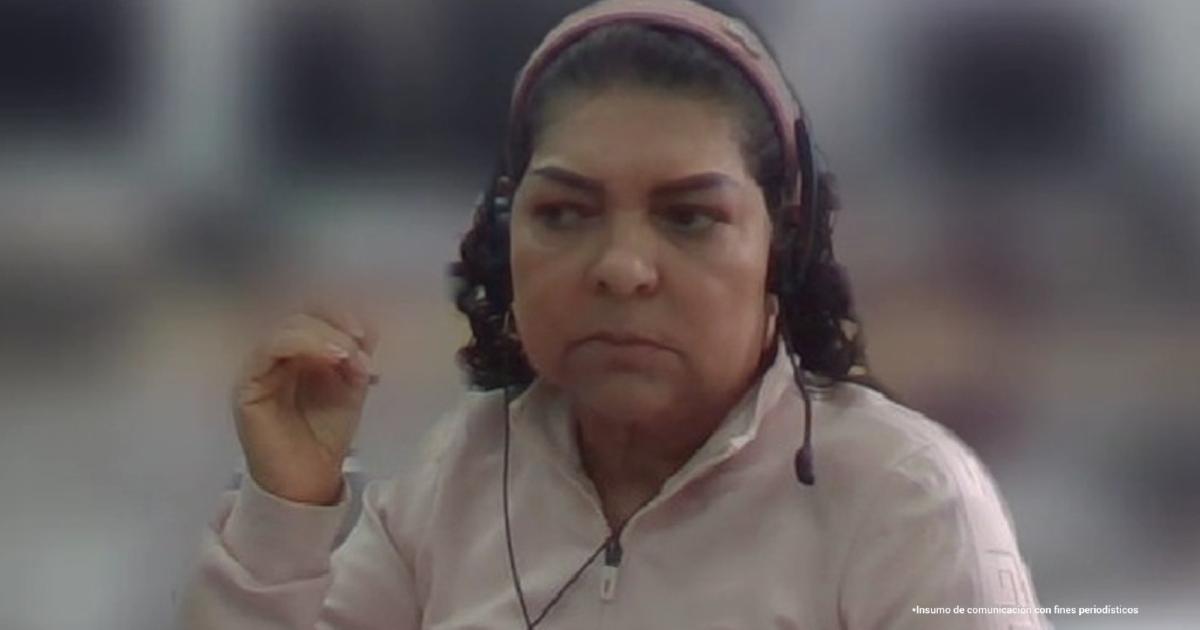
This woman obtained details about the movements of the army troops in Magdalena Medio and South of Bolívar.
Through pre -agreement signed with the Attorney General’s Office, Teresa Jaramillo, known with the alias of ‘La Aunt’, accepted his participation in a corruption network at the service of the sub -structure Arístides Mesa Páez of the ‘Gulf Clan’, that contacted some members of the public force with the aim of obtaining information on military operations.
It may interest you: Affinia manager on debt in the energy sector: “More than 500,000 million in debt has the National Government”
The evidence obtained by a prosecutor of the delegate for territorial security realizes that This woman articulated a group of people who contacted military and paid them certain sums of money, In exchange for details about the movements of the troops and the operations against the ‘Gulf Clan’, in the regions of Magdalena Medio and South of Bolívar.
Loading …
It may interest you: ICBF says that 50 children were in danger due to alleged pump caneca in Anorí, Antioquia
Teresa Jaramillo Giraldo, aka “La Aunt”, was sentenced to 4 years and 15 days in jail as responsible for concert crimes for aggravated crime and bribery for giving or offering.
For these facts, they were also condemned the first year in retirement of the national army Juan David Caicedo Lucumí, who by order of ‘the aunt’ offered an officer 100 million pesos for privileged data of his military unit; Daniel Henao Hernández and Luis Fernando Zapata Jaramillo, son of the sentenced today, In charge of paying each 25 million pesos to another uniformed in Medellín, between October 2024 and January 2025.
In other news
Unmaved Red that mobilized 114 migrants through Urabá in tourism buses
In a joint operation between the Attorney General’s Office and United States agencies, an indicated criminal network was dismantled illegally by the Colombian territory. Five people were captured and prosecuted for their alleged link to this activity.
The investigation revealed that the network mobilized 114 migrants from countries such as Pakistan, Haiti, Cuba and Congo in a period of two years.
Migrants entered Colombia through Nariño, where they were contacted by traffickers to be transported by land to the Urabá region by public and tourism buses.
Source: Integrated information system