Havana/The Popular Provincial Court of Havana sentenced Yuni Valdés Pérez to 10 years in prison, driver of the Cubacar Varadero company, after being found guilty of a crime of sabotage. The sentence, issued on September 18, It was announced by the Facebook page of the Government of Havana and replicated by various official media.
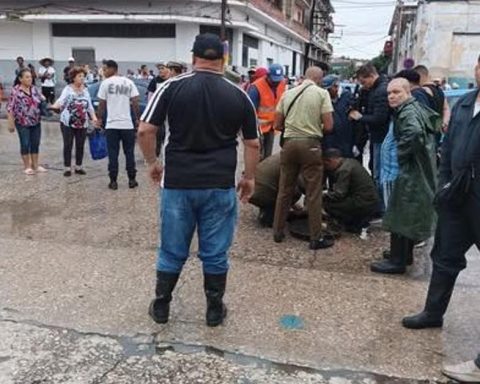
The case has drawn attention not only for the severity of the sanction, but also for the typification of crime. According to the official note, Valdés, in a drunken state, used the vehicle in its custody to brave a bus of the Transmetro company in the city of Cárdenas, Matanzas, on May 5, 2025. The clash occurred after an discussion with the state bus driver.
He Video of the eventspread on social networks, generated intense controversies. Some tried to justify the driver’s action, claiming that he was previously attacked by three men, armed with bates, related to the transmetro bus. Others described what happened as “inexcusable”, and attributed it to the stress caused by the crisis suffered by the country, increasing the acts of violence. The official press just reproduced the official note without investigating more details about the health status of those involved or the exact material damage. Nor did they seek statements from the company Cubacar Varadero or Transmetro.
The Court highlighted the “material damages of consideration” caused and stressed that the ruling responds to “the need to preserve the security of the State and the integrity of public goods.” However, the use of the sabotage figure – a crime usually linked to actions with political motivation or intention to destabilize the state order – has generated suspicions among citizens.
In practice, this flexibility usually benefits the accusation and tightens penalties
In the Cuban Criminal Code, sabotage is defined as any act destined to “prevent or hinder the economic activity of the State or social organizations.” The amplitude of this definition allows its application in cases as dissimilar as intentional fires in productive facilities or the simple destruction of state equipment. In practice, this flexibility usually benefits the accusation and tightened penalties, which can reach death in extreme circumstances.
The process against Valdés was in charge of the Chamber of Crimes against State Security, an instance usually reserved for cases of espionage, conspiracy or enemy propaganda. The fact that a personal and isolated conflict has been processed by this judicial route can be interpreted as a warning message: the state heritage is untouchable and its aggression, even if it is accidental or the result of a personal outburst, will be treated as an affront to power.
In recent years, Cuban courts have hardened convictions for crimes involving public goods. The official narrative presents these facts as coordinated attacks against the system, even in the case of spontaneous actions motivated by social discomfort, such as protests in the country since 2021.
In the case of Cárdenas, the official note does not mention that there were political motivations or that the defendant was part of an opposition organization. Everything points to a personal altercation aggravated by alcohol consumption. Despite this, the court cited the Opinion No. 475 of the Governing Council of the Popular Supreme Court to justify the sanction, claiming that “the social conduct of the accused and the severity of the fact” was taken into account.
The sentence can be appealed in cassation before the Popular Supreme Court, both for the defense and by the Prosecutor’s Office. However, in the Cuban judicial system the possibilities of such a ruling being reversed are scarce. Official statistics on appeals are opaque, and in the few known cases, penalties are usually confirmed.