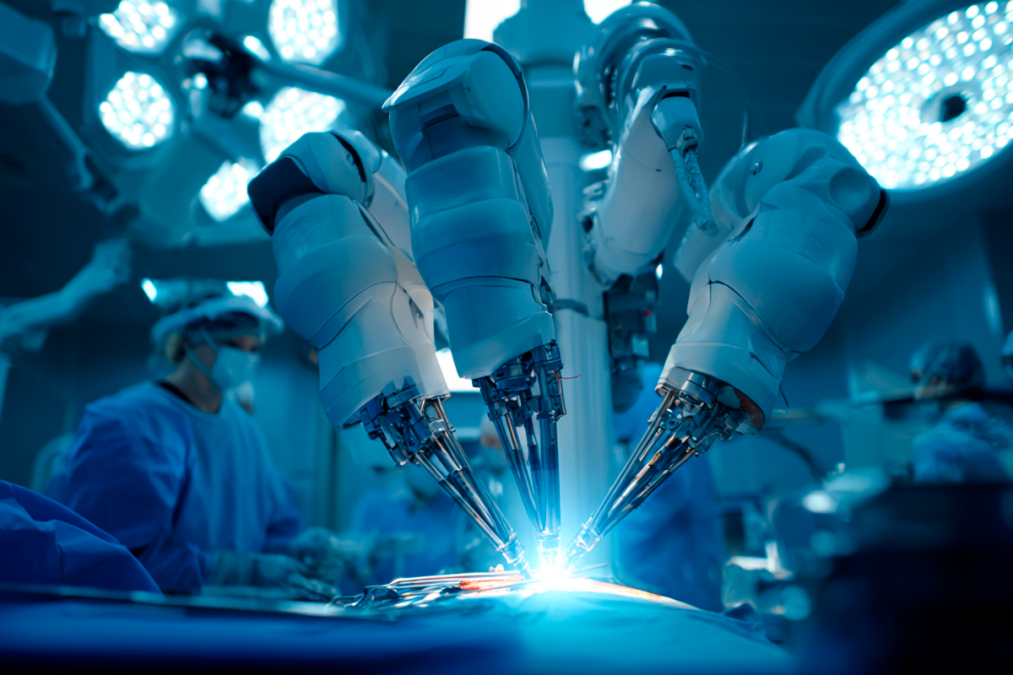
The first gallbladder surgery performed in Chile with the assistance of an autonomous chamber guided by artificial intelligence (AI) marked a before and after in regional medicine. The procedure, carried out at the Las Condes clinic in Santiago, showed that a surgeon can operate with the support of a system capable of tracking its movements and adjusting the visualization automatically, without the need for a human assistant. This milestone not only impacts Chile, but opens the discussion about how these technologies are transforming medical practice throughout Latin America.
“In rural areas, difficult to access for specialists, the implementation of guided surgeries with AI and cameras would facilitate care, avoiding the transfer of patients to urban centers and allowing complex interventions to be carried out as if they were directly supervised by an expert,” says Gabriel Mendoza, doctor and teacher at Franz Tamayo University, Unifranz.
The technology behind these interventions combines laparoscopy, magnetic surgical instruments and advanced software that controls cameras. In practice, the system follows in real time the surgeon movements, adjusting angles and guaranteeing a clear and stable visualization throughout the operation. Traditionally, this task depended on an assistant who received instructions, but now the AI assumes the role, reducing interruptions and increasing precision.
According to Mendoza, this innovation not only facilitates the work of specialists, but opens unpublished possibilities in medical training.
“Today young surgeons are no longer limited to observing and repeating. Simulators with AI allow hyperrealistic training, where complications such as bleeding or sepsis are recreated, and offer immediate feedback to correct weaknesses,” he explains.
The impact of artificial intelligence on surgery is not limited to the operating room. In regions with a specialist deficit, such as several rural areas of Bolivia, this type of tools promises to reduce the gap in access to health.
Mendoza emphasizes that telemedicine, combined with smart cameras, would allow an expert from another country to supervise or even guide real -time procedures. This would mean that remote communities access safe interventions without the need to move to the capitals or wait months for specialized care.
The global surgical robots market already is around 15.6 billion dollars, with projections that exceed 64,000 million by 2034. This growth reflects a worldwide trend towards automation and the use of AI in medicine.
For Mendoza, that Chile and Brazil lead this technological border in South America is an incentive for other countries to increase their investments in innovation and health.
“Promoting these innovations not only retains medical talent in our countries, but also improves the quality of the service and the safety of patients,” he says.
The advantages are multiple: safer operations, reduction in the need for auxiliary personnel in the operating room, greater stability in the image and, above all, a more equitable access to high complexity services. At the academic level, a change in the way of training new generations of surgeons is emerging, with simulations increasingly close to clinical reality.
Chilean experience shows that surgery assisted by AI is no longer a futuristic concept, but an expanding reality. In Bolivia, where health access gaps persist, the challenge will be to integrate these technologies with a vision of equity and sustainability. The future of Telemedicine points to intelligent operating rooms capable of connecting specialists and patients beyond physical borders, bringing quality health closer to all corners of the region.