The scene is repeated in different parts of Santa Cruz: several people with LPG bottles form long lines to acquire the product, while no official of the distributor companies knows with certainty if the truck will arrive, if it will bring enough garrafas or if it will reach for everyone. The irregular supply of Liquefied oil gas (LPG) reaches critical levels. Currently, distributors operate only 15% of their capacity due to the lack of carafes in good condition. This situation causes product scarcity, delays in the delivery and appearance of a parallel market that makes a basic input for thousands of families more expensive.
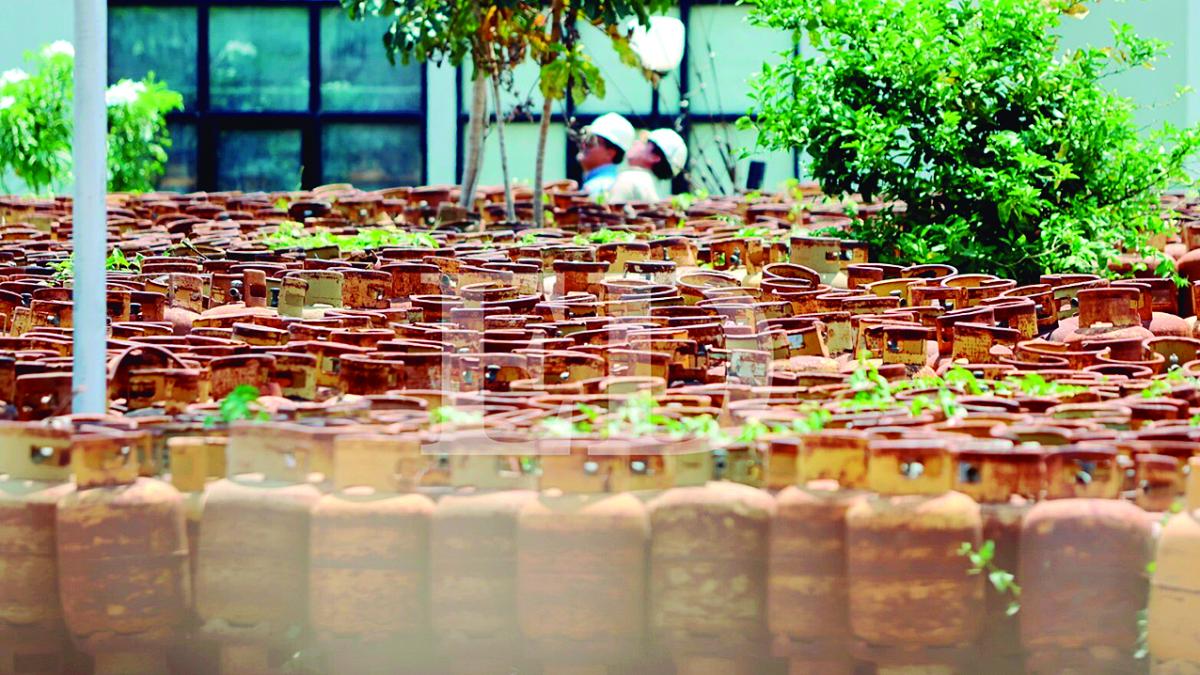
Only in the urban area of Santa Cruz, About 70% of households depend on LPG To cook your food. However, the lack of replacement of containers in the last 20 years has caused more than 1.5 million carafes to be out of circulation, which distributors qualify as a true “camelon of carafes.”
Ernesto Zamora, president of the Departmental Chamber, said that according to Census 2024, 65 % of households in Santa Cruz use LPG as the main fuel, a figure that increases to 70 % in the urban area of the capital of Santa Cruz.
“Millions of people depend on LPG to have a dignified quality of life. This chain is about to break through a fundamental element: the carafes are not enough to operate,” he explained.
Problem
Fernando Segovia, president of the National Chamber, denounced that companies are currently working with only 15 % of the total available carafes, which causes distribution delays and a noticeable decrease in the quality of the service.
“If a company normally distributes 10,000 carafes, it now works with 1,500. Trucks must circulate faster, many times at night, to meet the daily quotas, but the population notices it: there are fewer trucks and less gas in the neighborhoods,” he said.
Segovia explained that the problem is due to historical imbalances in the carafic replacement and replacement system, administered by Bolivian fiscal oil deposits (YPFB).
The businessman said that in the last five years, Only one fraction of disuse jararrafas has been repaired, while more than a million and a half remain in jerky such as “camelcus of carafes”, without having been recycled or replaced by new Segovia detailed.
The leader said that the current system, with frozen rates for decades for replacement and repair, limits the capacity of companies deprived of maintaining the service.
“Each carafe has an amount destined to their arrangement, but that value is the same for 20 years. The consequence is that there are fewer carafes in circulation, and those that exist are aged,” he said.
Zamora and Segovia agreed that the lack of state intervention It has aggravated the crisis, leaving companies with limited resources to meet the demand. According to Segovia, scarcity not only affects the domestic consumer, but also generates a distorted market, where some monopolize carafes to sell them at higher prices than regulated.
“We are using the carafes until the last. Many no longer have a solution, and without containers we cannot get LPG. It is as if Coca-Cola would like to sell soda without bottles,” said Segovia.
Zamora warned that the crisis could open space to speculation. “The LPG is like the battle bread, an essential article. When it is not found, parallel markets arise where it is revealed at prices above the legal ones. And who pays the consequences is the population.”
Excuses
It is not the first time that Santa Cruz, and the rest of the country, faces GLP supply problems. In August there were already long rows and an unusual increase in prices. In some border regions, the cost of a carafe exceeds Bs 80, when the official price of the cylinder is around Bs 22.50.
Regarding the current problem, the state YPFB did not issue an official statement yet. Even duty tried to contact the company’s presidentArmin Dorgathen, But the Executive did not respond to the messages sent by this wording.
In previous pronouncements, however, YPFB argued that the supply of LPG remains “normally” and that there is no shortage in Santa Cruz, ensuring that daily offices reach 38,000 garrafas.
In addition, the state company reported that, at a national scale, it produces and dispatches daily around 1,375 metric tons of LPG, a figure that – according to its calculations – would cover the projected demand in the country.
The lack of carafes in good condition not only extends the ranks, but also forces many families to improvise: some resort to electric kitchens, others buy firewood, and others end up paying more in the black market.
To know
Production. According to official data from the National Hydrocarbons Agency (ANH), Bolivia produces approximately 1,500 metric tons of LPG daily.