The Municipality began works in Api neighborhood, one of Melo’s most populous
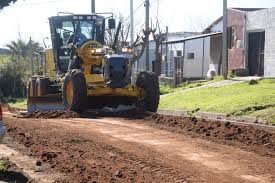
The Departmental Intendance of Cerro Largo launched a series of road recovery works in the ARPI neighborhood, north of the city of Melo, where more than 5,000 people reside according to a census carried out by the Neighborhood Commission in 2001. The work marks a historical fact, since it is the first thorough intervention since 1988, when the then intendant Villanueva Saravia personally led the placement of the placement of the asphalt folder in the area.
The beginning of the works
The tasks began in the streets Héctor Gutiérrez Ruiz, Villa de Moros and Gerónimo Díaz, where the preparation of the base and the profile is already executed, steps prior to the application of the bituminous irrigation. Once that stage is completed, the intervention will be extended to Mireya, Barcelona, Morett and Alfonso III streets, completing a circuit that will improve the internal connectivity of the neighborhood and its link with other areas of the departmental capital.
From the Intendance it stressed that the work responds to a historical claim of the neighbors, who for decades had been requesting a structural repair of the pavement, deteriorated by the passage of time and the growth of the population.
A historical debt
The Arpi neighborhood had been the subject of a strong controversy in 1988, when Villanueva Saravia, then at the head of the intention, decided to get on a machine to supervise and personally execute the placement of asphalt folder. That gesture, which sought to show commitment to public works, was criticized at the time by sectors of public opinion, which considered unnecessary the exhibition of the mayor. However, for the neighbors it was in memory as the last time an integral work had been done in its streets.
In the following decades, the streets only received specific arrangements and maintenance tasks, without planning that respond to the magnitude of the problems. Over the years, the pavement was yielding and multiplied the potholes, making vehicular circulation difficult and affecting the quality of life of the inhabitants.
The impact on daily life
Those who live in the neighborhood highlight that the bad conditions of the streets not only complicated traffic, but also had social consequences. On rainy days, several sections were practically impassable, which made it difficult to entry bus, ambulances or waste collection trucks.
“We have been claiming for years, because when it rains, true lakes are formed. To get a patient in ambulance, the neighbors had to ask for help,” He recalled a member of the neighborhood commission.
Other neighbors underline the symbolic value of the intervention: “It is a large neighborhood, with thousands of people, and we always felt that we were left out of important works. Today we felt that they finally remembered us.”
The commitment to connectivity
The recovery of the streets of Arpi not only seeks to improve local transitability, but also strengthen connectivity with other areas of Melo. The growth of the city to the north has turned the neighborhood into a nerve point, where several access routes that link the departmental capital with rural areas and with the urban plant itself are crossed.
From the Intendance it was highlighted that the works plan in ARPI is part of a broader strategy of road recovery, which includes interventions in different neighborhoods of Melo and in localities of the departmental interior.
The claim of decades
The fact that the last thorough work in ARPI dresses to 1988 explains the magnitude of the neighborhood claim. An entire generation grew seeing how the streets deteriorated without structural solutions.
In 2001, a neighborhood commission made a census that estimated at more than 5,000 the inhabitants of the neighborhood. This survey was accompanied by a document presented to the authorities of the time, in which the need to address the road infrastructure as a priority was underlined. Despite efforts and promises, the answers never passed from partial or maintenance works.
Look forward
With the beginning of the current works, the expectation is high. The Municipality assured that the resources are already assigned and that the Plan foresees a quality intervention, with adequate materials to withstand the high circulation of vehicles and the climatic conditions of the region.
“We want this work not to be a simple patch, but a lasting solution. The Arpi neighborhood deserves it for its history and the number of people who inhabit it,” A spokesman for the departmental government expressed.
The neighbors, meanwhile, await cautiously, but with optimism. “I wish this time is seriously. We no longer want to see more unfulfilled promises. The important thing is that the work began and it shows that there is movement in several streets,” A resident of Villa de Moros street commented.
A work with strong social value
The intervention in Arpi transcends the technical aspect and is projected as a social justice action towards one of the most postponed areas of Melo. Road recovery will not only improve traffic, but will also impact safety, mobility, hygiene and integration of the neighborhood to the city as a whole.
In short, after almost four decades, the neighbors see how a claim is specified that accompanied several generations. The Arpi neighborhood begins to change its physiognomy with a work that, beyond the asphalt, means the recognition that its more than 5,000 inhabitants are a fundamental part of the Arachana capital.