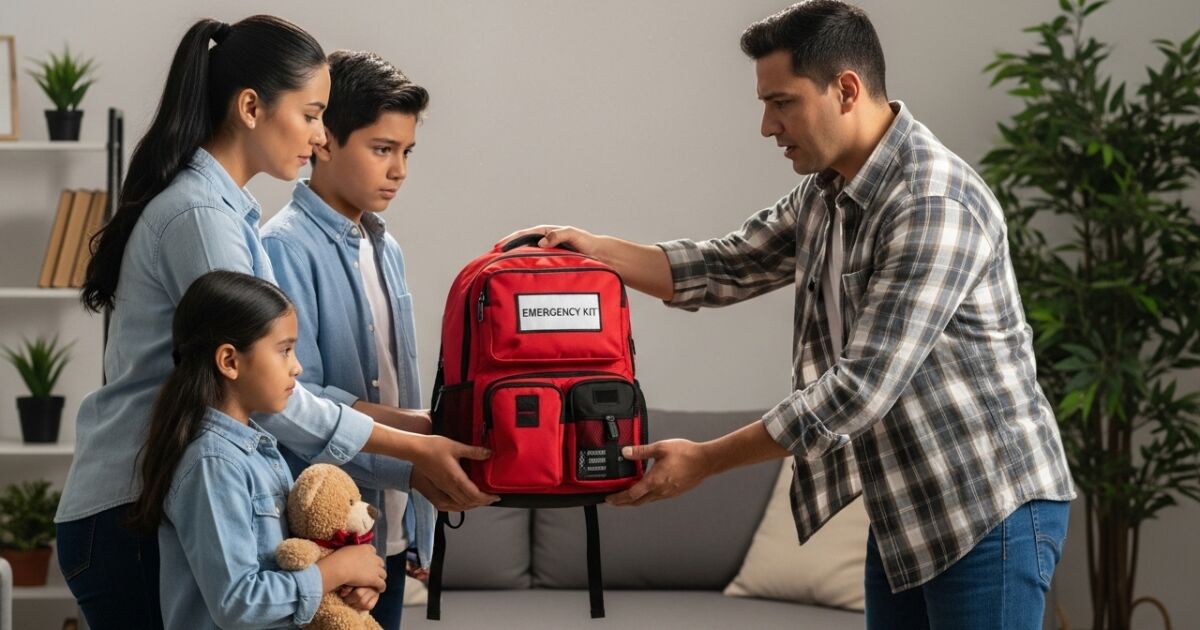
What should contain an emergency backpack?
According to him National Disaster Prevention Center (Cenapred) and the Secretariats of Integral Risk Management and Civil Protection, an emergency backpack must include the following elements to adequately face situations such as an earthquake:
-Lintern with batteries: useful if electrical installations are damaged during earthquake.
-Radio without internet or telephone networks: it allows you to stay informed about alerts and recommendations of the authorities.
-Agua: packaged bottles, preferably without gas, to guarantee hydration.
-To perishable foods: canned, light, personal size food, easy to open and provide energy.
-Boir and extra footwear: Includes blankets, dry and waterproof clothes and spare shoes.
-Encer or matches: for emergencies that require controlled fire.
-Silbato: Useful to ask for help in case of being trapped.
-Important document: photocopies or digital files in a USB.
-Llaves of the house: an extra copy in case they are lost in the evacuation.
-Medicines and special products: for babies, people with medical treatments or older adults, includes medicines, bottle, porridge, milk cans and diapers.
Preparing this backpack in advance helps face any emergency more safely and organized.
All ready for the simulation 2025
With the objective of promoting the culture of civil protection and strengthening the capacity for reaction to emergencies, the Government of Mexico, through the Ministry of Citizen Security and Protection and the National Coordination of Civil Protection, summons the 2nd National simulation 2025 .
The exercise will be carried out on Friday, September 19 at 12:00 hours and is aimed at public and private institutions throughout the country. Participation consists in registering real estate on the official digital platform before 11:59 a.m. on the same day.
During the drill, the seismic alert will sound through the speaker system and a notice will also be sent to people’s cell phones to alert the exercise.
This drill seeks that internal and citizens practices evacuation and disaster response procedures, contributing to being better prepared in case of earthquakes, fires or other emergency events.