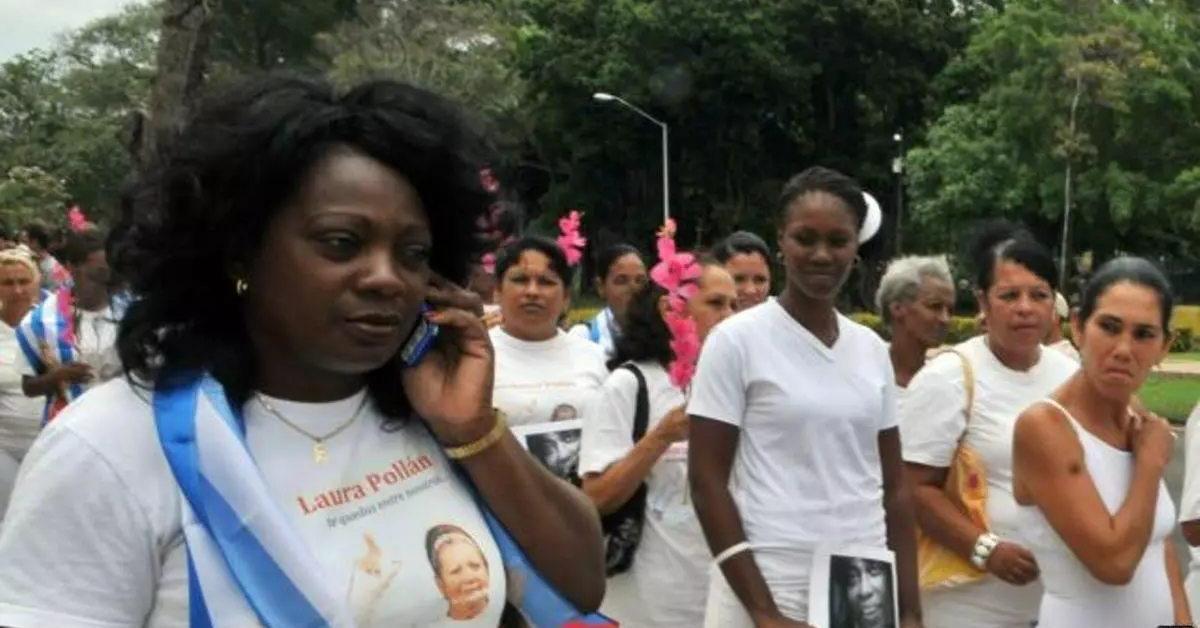
Havana/About thirty NGOs and Cuban dissidents urged Thursday in a letter to the European Union (EU) to change their policy towards the island, which cross “ineffective”, to align it “with democratic principles and human rights” of the block. Among the signatories are the leader of the ladies of Blanco, Berta Soler, the independent trade unionist Iván Hernández Carrillo, the intellectual Alina Bárbara López, the member of the Assembly for the Cuban Resistance Orlando Gutiérrrez-Boronat and the head of the Women’s Network of Cuba, Elena Larrinaga.
The text, sent to the European Foreign Action Service (Seae), is the last chapter of the relationship between the two, which revolves mainly around the Agreement of Political Dialogue and Cooperation (ADPC) that governs EU’s relations with Cuba and that many activists and opponents of the island reject. “The ADPC requires being substantially reviewed and replaced by a foreign policy towards Cuba fully aligned with the democratic and human rights principles that constitute the basis of the European project,” argue the signatories.
In his opinion, the EU should not be limited to “preserve a diplomatic framework without demanding substantive reforms” in Cuba in terms of democracy, rule of law and human rights, since this “disconnects to the EU” from “Cuban citizens and contributes to perpetuating the impunity of perpetrators.”
They consider that the “advances” mentioned by the SEAE in a previous letter – such as greater diplomatic contact, the development of the private sector and the release of some political prisoners – “do not constitute structural improvements”, but are “tactical and reversible concessions” in Havana.
The signatories also regret that “independent civil society” continues “excluded from any official bilateral interlocution framework”
The signatories also regret that “independent civil society” continues “excluded from any official bilateral interlocution framework, while on the island” the number of political prisoners increases and fundamental freedoms remain criminalized. ” Therefore, they advocate a new framework of relations with “democratic conditionality” that controls with greater “transparency” the use of European funds for Cuba, with the objective that they benefit defenders of human rights, unofficial media and civil society organizations.
They also ask that this new European policy towards the island officially recognizes that in Cuba there are “political prisoners”, which springs independent civil society as “legitimate and indispensable actor” and that includes sanctions against those directly responsible for human rights violations. The signatories, who have more support in the coming weeks, emphasize that the letter “reflects a broad and sustained consensus” and is a “plural and representative voice” of Cuban civil society.
They also subscribe the letter, among others, the leader of citizenship and freedom Carolina Barrero, the director and founder of Alas Tenses Ileana Álvarez, the president of Cuba Century Juan Antonio Blanco, the intellectual Jenny Pantoja, the opponents Sonia Álvarez and Zealand de la Caridad Pérez.
The ADPC, a 2016 agreement to promote both commercial and diplomatic relations and human rights, is also subject to debate in the EU, since some conservative political families in the Eurocamara and some member states have questioned their usefulness. The high representative of the Block for Foreign Affairs and Security, Kaja Kallas, defended in May the agreement as “the best EU asset” to promote its values and interests on the island, despite recognizing that to date “it has not contributed” as much as expected.