Ignoring the US footprint is amputating a fundamental part of our memory. Cuba and the US have shared intense ties long before 1959, ties that still persist despite the efforts to silence them.
Imagine a Cuban humorist in the 80s, Enrique Arredondo “Kneled like Bernabé,” joking on television: “If you behave badly, I put the Russian dolls.” General laugh in the study, but immediate sanction: months out of the air for a joke that played an uncomfortable truth. What Bernabé hinted was what everyone knew in silence: Cubans preferred American cartoons, full of color and dynamism, the grays and propaganda who came from the Soviet Union. It was not a simple anecdote, but a reflection of how the cultural influence of the United States filtered on the island despite the attempts to deny it.
The official narrative insists on reducing Cuban identity to the Spanish-African mixture. And, without a doubt, that root defines us in the most intimate. But ignoring the US footprint is amputating a fundamental part of our memory. Cuba and the US have shared intense ties long before 1959, ties that still persist despite the efforts to silence them.
Unlike other Latin American countries, where the indigenous root survives with force and defines both the face and memory of their peoples, in Cuba the Taíos were practically exterminated. What remained was an island built on waves of immigration: Spanish, Africans, Chinese, Arab, Jews … and, in a powerful way although often denied, American. In this sense, Cuba looks more like the United States than Mexico or Peru: both are young societies, forged in mixing and creativity, with a short but intense history. Irony of history: While political discourse insists on painting the US as “enemy”, in essence we share the same migratory root.
In music, affinity is evident. In the 1930s to 1950s, the American jazz entered through the ports and habaneros clubs, and musicians such as Armando Romeu or Chico O’Farrill mixed their codes with Afro -Cuban rhythms, giving rise to Latin Jazz. New York and Havana were then twin cities in the sound. The paradoxical thing is that, although Cuban conservatories insist on the teaching of classical music, the real prestige of a graduate is measured in its jazz domain, a genre born in the United States. Even the new trova absorbed American influences: Silvio Rodríguez and Pablo Milanés drank from the author’s song of Dylan or Joan Baez. And in the 90s, when the “salsa boom” seemed to destroy everything, more than a hundred rock bands broke into the Cuban scene directly inspired by American rock. Music reveals that, although politics tries to divide, peoples are recognized in the sounds they share.
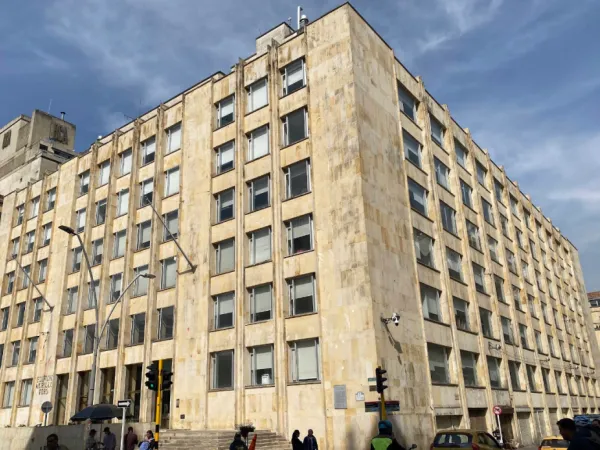
Havana’s architecture also speaks that language. The Vedado, Miramar, Centro Habana and El Cerro are neighborhoods where the imprint of the Art Deco and rationalism imported from the United States is recognized. The National Capitol, inaugurated in 1929, is almost a mirror of Washington, larger but inspired by the same idea of democracy. Hotels such as the National O The Riviera They evoke the Miami of the 50, and curiously, those buildings – before symbols of “imperialist” modernity – are today tourist emblems that the government itself promotes without openly recognizing its origin.
To that architectural influence is added the urbanization itself. Since the 30s, the design of the neighborhoods began to imitate the American canon: rectangular blocks, ordered apples, wide avenues and even highways such as the central highway, drawn under imported modernity criteria imported from the north. That urbanism not only changed the way of inhabiting cities, but prepared the scenario for car culture.
Therefore, US cars of the 40s and 50s –chelet, Ford, Cadillac – are not an accident in Cuban history: they circulated in neighborhoods to measure, on streets and roads that replied the American lifestyle. Today those same streets are a living museum of that interrupted bond, where architecture, urbanism and cars narrate the intensity of that relationship together.
Something similar happens in political history. The independence of 1898 cannot be understood without the American intervention, which ended the Spanish domain and opened a guardianship period under the Platt amendment. However, that relationship also allowed the modernization of the country. The 1940 Constitution, the most democratic in Cuban history, took as reference American models: separation of powers, limitation of mandates, social and civil rights as the eight -hour day, the female vote or racial equality. Repealed in 1959, it is still a reminder that freedom was not alien or imported: it was a right, and deeply Cuban.
Cuban national sport is another sample of this affinity. Baseball was born in the United States and became a Cuban passion. Peloteros on the island have reached the big leagues, inspiring new generations despite being stigmatized as “deserters.” Baseball, more than a simple game, is a bridge impossible to break.
Emigration also tells this story. Miami is, in many ways, a second Havana. Exile chose the United States not only by geographical proximity, but because it found cultural and political affinity. Remittances, customs and family ties maintained a constant flow that eroded any attempt of isolation.
Even in the field of race and slave inheritance, parallels are clear. Both countries suffered the dehumanization of forced labor and discrimination after abolition. In Cuba, the miscegenation partly diluted racial barriers; In the United States, the struggle for civil rights transformed society. It is revealing that in Cuba since 1987 the Martin Luther King Jr. Foundation, inspired by the legacy of the US leader.
Daily life also reveals the cultural repression of that affinity. In the 70s and 80s, using jeans or carrying long hair could be a reason for sanction under the label of “ideological fun.” Young people who followed American trends were ridiculed as “effeminate” or “slag.” In schools, Russian was imposed as a language of political affinity, while English was sought by students as an access key to the world. Therefore, Bernabé’s joke about the “Russian dolls” was so acidic: he exposed a popular preference impossible to hide. Today those prohibitions have faded, and even the leaders use jeans and hair. But the scars of that cultural repression are still there.
Something similar occurs in the religious field. Most Cubans identify themselves as Catholics, but only a minority regularly attend Mass. In contrast, Protestant churches – many American tradition – grew strongly during the special period. Unlike nominal Catholicism, these communities are characterized by their dynamism: active cults, mutual support networks and a vibrant community life inside and outside the temples. The “cult houses” that multiplied in the 90s were, for many, spiritual and social refuge in the midst of the crisis.
All this confirms that Cuba is not just Hispanic and African: it is also deeply American. That root is found in our music, in our neighborhoods, in our laws, in the sport we love, in the churches that flourished in difficult times and in the diaspora that keeps the dream of freedom alive. Recognizing this connection does not mean rendering anyone, but accepting an inheritance that can inspire those who on the island continue to expect an open future, where cultural affinity with the United States ceases to be a taboo and celebrate as an essential part of who we are.