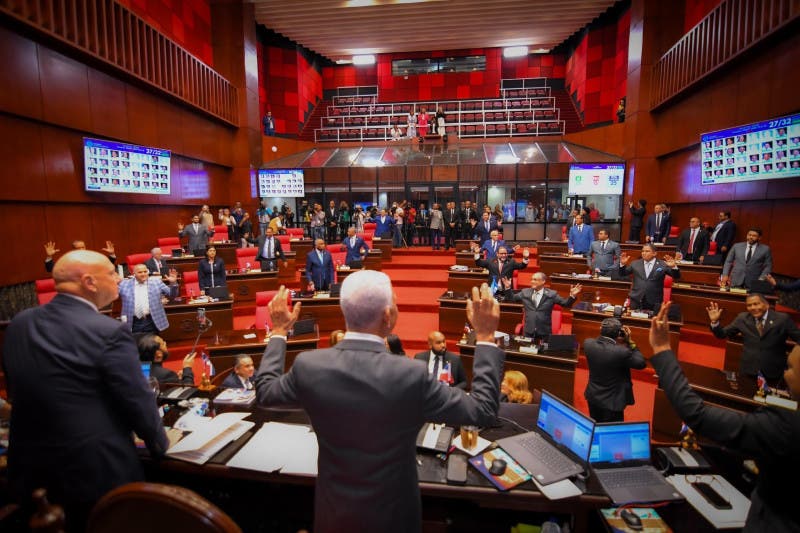
Santo Domingo. – The Senate of the Republic approved on Monday in the first reading the bill that regulates the retentive embargo in the Dominican Republic.
The initiative is authored by the senators Ricardo de los SantosCristóbal venerated Castillo and Antonio Manuel Taveras Guzmán.
The piece establishes that “the credits and movable property that are affected by the retentive embargo are considered the object of the embargo.
It also points out that this figure affects the goods included in the similar stock and furniture market, including financial products of any kindwithout prejudice to the incorporates submitted or not to registration, in accordance with Chapter IV of the Law.
The initiative specifies that the procedural acts for embargoes, in lifting penalty, according to what provided in Title II, Chapter I, of the Law, can only affect a maximum of ten credits per act.
In his first recital indicates that the retentive embargo is the procedure by which a creditor affects Sums and movable property owned by your debtor that are in possession of a third party at the time of the embargo.
It also adds that the retentive embargo procedure is carried out for the conservation and execution of “a certain, liquid and enforceable loan.”
Also, in the extraordinary session held on Monday, the Senate Plenary approved in the second reading the bill that establishes tax exemptions and tariff for cardiovascular, ophthalmological and endocrine medical equipment and equipment.
This initiative was presented by Senator Ginnette Bournigal de Jiménez.
The law emphasizes that products, supplies and medical equipment for cardiovascular, ophthalmological and endocrine diseases are not marketed through health centers, but that patients should buy them directly to distributing houses, which increases the cost.
Meanwhile, of urgency, the Senate also knew the modifications of articles 3 and 10 of the bill that modifies Law 90-24, which authorizes the Executive Power, through the Ministry of Finance and Economics, to make the issuance and placement of public debt values.
In addition, the senators knew the bill that regulates the professional practice of the private detective in the country.