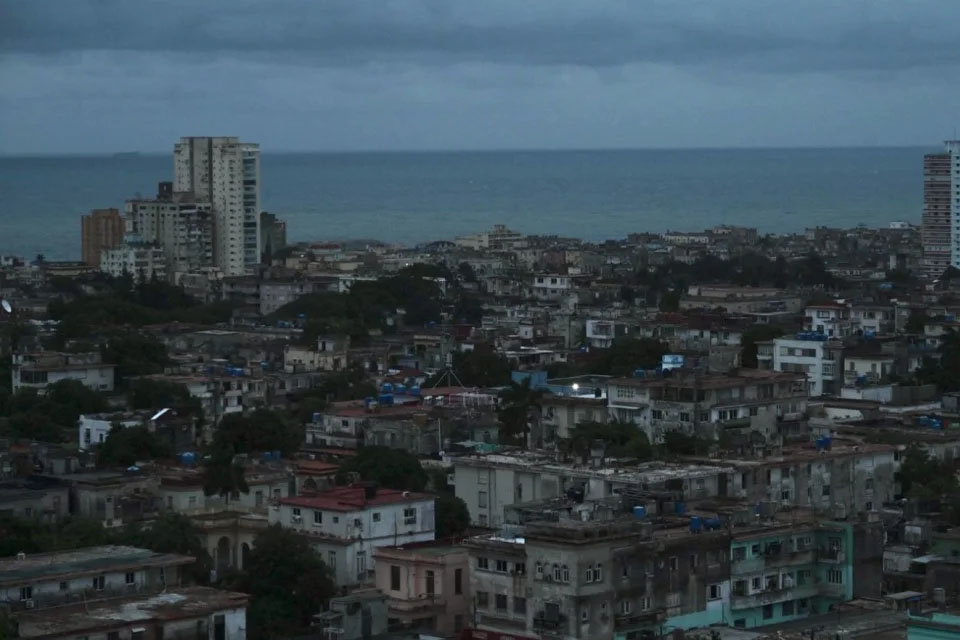
After a generalized blackout of almost 24 hours that paralyzed the activities of the majority of the population, Cuba completely recovered the national electricity service, in its fifth total blackout in less than a year. “There is no medium -term solution,” Jorge Piñón, principal researcher at the Energy Institute of the University of Texas, told RFI.
Manu Terradillos | RFI in Spanish
The electric service gradually returned to Havana, where traffic and activities returned to normal, as in the rest of the country’s provinces, of 9.7 million inhabitants.
The Ministry of Energy and Mines reported Thursday afternoon in its account in X that “the national electrical system is already restored.”
The generalized cut surprised the Cubans on Wednesday at 09h15 premises (13h15 GMT), when many had gone to work, to bring children to school or make purchases.
Jorge Piñón explained to RFI That the main cause of the blackouts is that «all the infrastructure, not only of the electricity generation, but also of the transmission and the distribution, has been exploited during the last 40 years without operational maintenance or capital maintenance. The units are already old, they are out of service, out of technology, they are tired. All this can no longer continue with brief solutions or arrangements. It is a system that is totally collapsed and that needs a recapitalization that, according to our estimates, can take between 3 and 5 years and cost between 8,000 and 10,000 million dollars ».
The Ministry of Energy reported that a false sign of overheating in the boiler of the Antonio Guiteras Thermoelectric Central, located in the center of the island, caused this plant, the most important in the country, to leave operation and trigger the fall of the national system. This is the fifth general cut since October 2024. Only on Sunday, five of the 15 provinces of the island were left without current for several hours.
It is a situation that, according to this specialist, requires important investments.
«I do not see a short -term solution, much less in the medium term. This will take years to be able to recapitize the system because the 20 generation units, which are all passed from their capital maintenance cycle, will require a lot of time for replacement. The other thermoelectric problem is that they use Cuban national crude as fuel, which has a high sulfur content and metals such as vanadium, which damage the units. So it is a vicious circle: you fix the thermoelectric, but then you start feeding it with this crude that is harmful, ”he said.
Other options also run into the wall of the economic crisis. «Biomass has been evoked. Yes, this has immense potential in Cuba, but, as we know, sugarcane almost does not exist today on the island. Cuba is importing sugar. So how are we going to build the 600 megawatts of biomass that we need for the 2030 plan if we do not have sugar cane? The same goes for wind. So all we have is solar energy, but this does not work when there are cloudy days, ”he concluded.
Cuba has faced a severe energy crisis for more than a year due to the poor state of its electrical infrastructure. The service depends on eight obsolete thermoelectric and structures arranged throughout the island, which require the low fuel available to function, in addition to a worn network.
*Journalism in Venezuela is exercised in a hostile environment for the press with dozens of legal instruments arranged for the punishment of the word, especially the laws “against hatred”, “against fascism” and “against blockade.” This content was written taking into consideration the threats and limits that, consequently, have been imposed on the dissemination of information from within the country.
Post views: 303