A relevant group of Catholic bishops and nuns in the United States expressed its forceful rejection of immigration policy promoted by the government of Donald Trump.
Religious believe that this policy of the Republican administration causes family division, fear and disturbs the daily life of millions of immigrants.
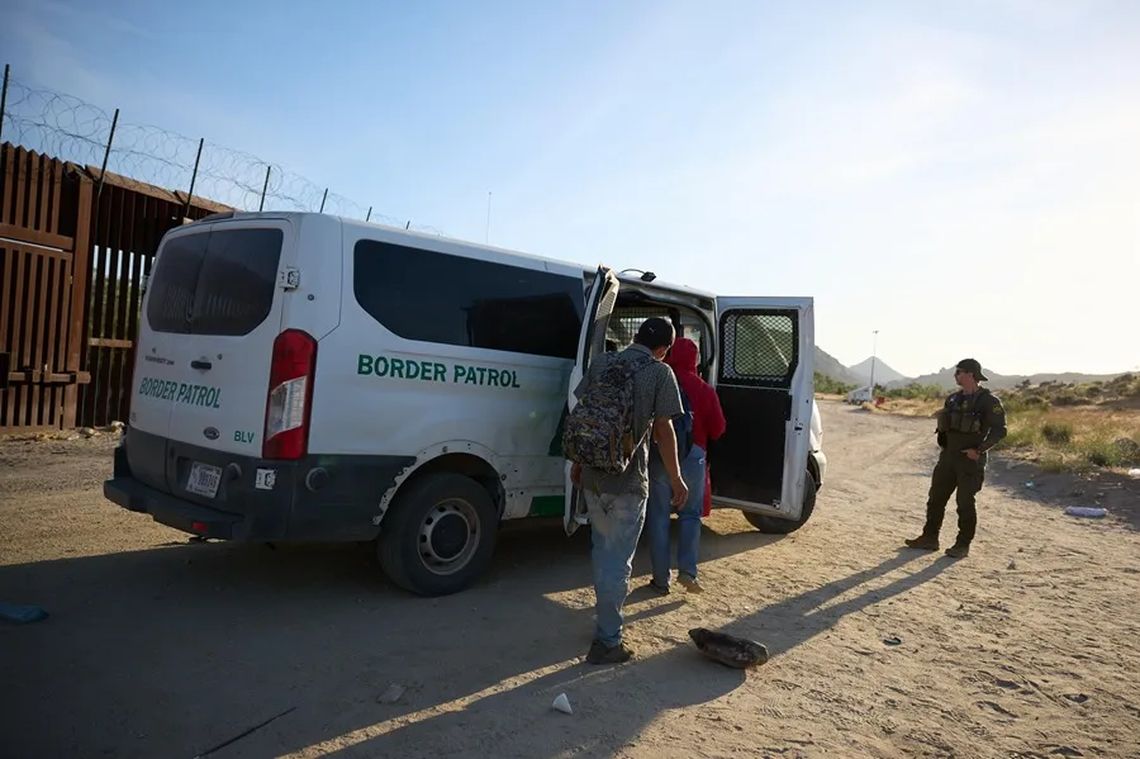
In a discussion panel held this week at the University of Georgetown, church leaders denounced how the mass deportation agenda and the greatest severity in arrests – including schools and places of worship, traditionally considered safe spaces – generate fear among immigrant families, refer press reports.
“The way in which these policies apply not only destabilizes the individual immigrant, but to whole families, businesses and communities,” said Washington’s auxiliary bishop, DC, Evelio Menjivar Ayala, who illegally emigrated from El Salvador and today is an American citizen.
“What I see in people’s eyes is pain and deep confusion … Where will we go if we are not welcome here?” The prelate wondered, quoted by the agency AP.
Sister Norma Pimentel, an activist who runs Catholic Charities of Rio Grande Valley in Texas, reported the suffering of migrants arrested in unfortunate conditions that he has personally witnessed.
“I saw border patrol agents move and cry; they also recognized that they were human beings, not simple numbers,” said the nun.
https://www.youtube.com/watch?v=WVFKO4UVS8W
Between doctrine and human rights defense
Although the Catholic Church maintains conservative positions on issues such as abortion and same -sex marriage – coincidents with many political priorities of Trump -, it has expressed its deep discrepancy regarding current immigration policy.
The United States Catholic Bishop Conference (USCCB) suspended in 2025 collaborations with the federal government regarding support to refugees after abrupt fund cuts that qualified as “heartbreaking.”
Pope Francis, who died in July 2025, had strongly criticized mass deportations, remembering that expelling people only for their immigration status violates the inherent dignity of every human being.
For its part, the archbishop of Miami, Thomas Wenski, emphasized the economic contribution of immigrants in key sectors such as agriculture, construction and health.
“The application of the law must exist, but it has to be rational and humanized so that it does not destroy lives or communities,” said the purple.
https://www.youtube.com/watch?v=sl_kdwgmxt
Examples of abuse and dramatic consequences
In Chicago, an undocumented immigrant lost his life this Friday after a confrontation with an immigration control patrol agent (ICE).
According to the Department of National Security, the man dragged an agent with his car in an attempt to escape, which led the agent to shoot for fear of losing his life.
Although the violence of these interactions is rare, this case has generated outrage, especially as it is Chicago, a sanctuary city that opposes federal government repressive policies.
At the same time, the mass raid in a battery factory in Savannah, Georgia, which left almost 475 workers, mostly South Koreans – caused a diplomatic crisis with South Korea.
More than 300 of them were repatriated in a charter plane in the midst of public outrage due to humiliating treatment, with disseminated images where workers appeared chained by hands, ankles and waist.
The South Korean government described the operation as a betrayal, given the close economic and political link with the United States.
Those detainees in the raid faced charges for illegal income or stays with expired visas, but questions about the rigidity and lack of adequate mechanisms to regulate and protect foreign workers qualified.
South Korean companies have depended largely on temporary visas or the electronic system for travel authorization (this) to send their staff, a practice that has been tolerated in the past, but now strongly sanctioned.