The US military deployment in the Caribbean has turned on the alarms for its magnitude and the type of armament involved, unusual for anti -drug operations in the region. While Washington exhibits fire power, Caracas responds with symbolic and old F-16 maneuvers that still take off
The image seems taken from a war board: destroyers, cruises, drones and furtive fighters distributed between Puerto Rico and the Caribbean waters. All this under the seal of an “anti -drug operation.” For the security and defense analyst Andrei Serbin Pont, the deployment of the US in the region is unusual, not only because of its scale, but by the type of means involved. «Historically, many of these tasks are delegated to the Coast Guard. Seeing so many conventional media together attracts attention, ”he says. And summarize the dilemma with a graphic phrase: «You can kill a fly with a flamethrower. Kill her, but you bise the house ».
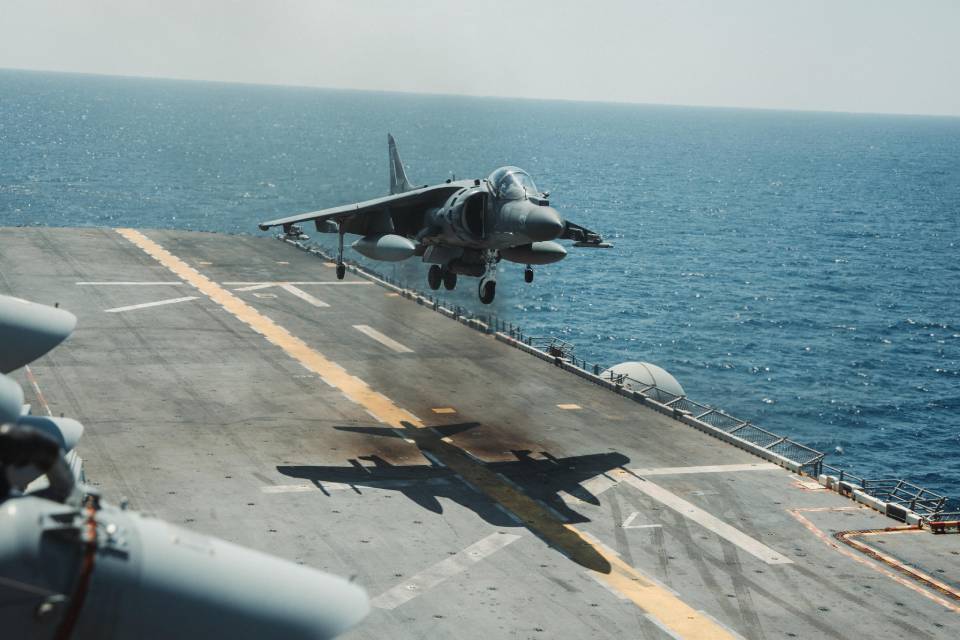
The core of the operation revolves around the Anfibio Uss Iwo Jima assault ship, designed to transport and disembark hundreds of marine infants with their armored ones, artillery and Osprey aircraft. Around it, support units such as the USS San Antonio complete the landing capacity, while the USS Minneapolis-ST. Paul – a coastal combat ship – provides versatility for coastal missions and fight against drug trafficking.
Further back, three Arleight Burke destroyers and the Lake Erie cruise concentrate the power of fire: «Each Burke has 96 vertical launch cells. Added, among the four there are more than 400 cells for anti -aircraft missiles and Tomahawk attack. It is a conventional package left over to defend the fleet and hit on land or sea, ”explains Serbin Pont.
In the air, the deployment is equally forceful. In Puerto Rico they operate between 10 and 12 fighters F-35, “The most advanced US: furtive, capable of penetrating enemy airspace and attacking targets in land or air.” They are accompanied by P-8 Airplaces of Patrol Maritima, “Centrals to monitor the surface and coordinate operations”, and MQ-9 drones “probably armed with Hellfire missiles”, which could have recently destroyed a suspicious vessel near the maritime border of Venezuela.
All this structure is supported by strategic transport aircraft, spare parts, supplies, and resistant KC-135 Stratotanker: «They allow to replace in flight to the fighters and extend their scope. If you have to climb, you can arrive ten F-35 more tomorrow and use them immediately because the infrastructure is already mounted ».
In Night d of SuchWhichthe analyst connects this deployment with recent political decisions: «Trump signs in June a directive for the Armed Forces to participate in the fight against cartels. They frame it as narcoterrorism and use the legal scaffolding created after 11-S to combat terrorism ». That, clarifies, does not imply an invasion: “It does not necessarily mean a regime change operation, although unilateral actions could occur.”
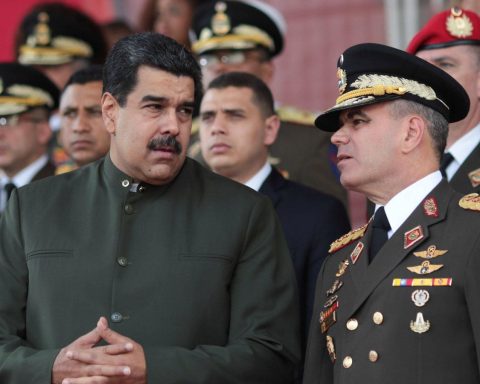
From Caracas, the reaction has been to exhibit its own muscle. The Ministry of Defense announced the shipment of 15,000 troops to the border with Colombia and patrols on the coast, in addition to reinforcing air surveillance. But Serbin Pont relativizes: “More than a great logistics movement, the activation of URRA seems – quick reaction units – with regionally deployed personnel.”
And about the Venezuelan Navy is direct: «It was the great loser of modernization. Today it looks more like a coastal guard with some teeth: Patrolmen with Iranian anti -man -year missiles, but without operational submarines or advanced missiles on their main ships ».
The most striking incident has been the approximation of two Venezuelan F-16 to the USS Jason Dunham destroyer. To Serbin Pont, the choice of these devices responds to pragmatism, not to symbolism: «They are reliable and cheap to operate. SU-30 have KH-31 anti-miss. He calculates that Venezuela retains “about six F-16 operations and between 11 and 13 SU-30”, although not all are ready at the same time: “There are rotations and maintenance. Having six does not mean that six at the same time can take off.
And he adds that, if they want to show real attack capacity, the SU-30 would have been used: «An F-16 would have to enter the anti-aircraft umbrella of the destructive. It would be almost suicidal. He believes that the aforementioned F-16 are very likely to have been unarmed.
Serbin Pont analyzes the speech of “people in arms” that Caracas has reactivated with public training of militiamen and state employees: “There are two militias: a very visible in networks, useful especially as a message, and another of reservists with real training. Its operational value is limited except in support tasks, but its political value is high: they serve to internal control and to feed the resistance narrative against a foreign occupation ».
The conclusion, in any case, returns to the beginning. «It is a blunt, scalable and layer deployment: deterrence, territorial control, logistics preparation. It exceeds a police operation, ”summarizes Serbin Pont. And repeat its initial warning: «The fly can die. The risk is the fire ».
https://www.youtube.com/watch?v=zw0msucs7oo
*Also read: How far the Sovereignty of Venezuela comes in the sea and what happens to US ships
*Journalism in Venezuela is exercised in a hostile environment for the press with dozens of legal instruments arranged for the punishment of the word, especially the laws “against hatred”, “against fascism” and “against blockade.” This content was written taking into consideration the threats and limits that, consequently, have been imposed on the dissemination of information from within the country.
Post views: 1,108