Nepal ended this Friday several days of political uncertainty after the resignation of the former Minister KP Sharma Oli, with The designation of Sushila Karki, former president of the Supreme Court, as head of the interim governmentbecoming the first woman to take office in the history of the country, as confirmed to EFE Presidential Advisor Kiran Pokhale.
Karki will swear at 9:00 p.m. local time (15:15 GMT) at the Sheetal Numba presidential headquarters, before heading the first cabinet meeting.
In that session, the ministers plan to recommend President Ram Chandra Poudel to dissolve the House of Representatives, in response to the demands of the protesters.
The role of the youth movement
The agreement was possible after intense negotiations between President Poudel, Karki, the Army and leaders of the “Gene Generación Z”, who demanded the dissolution of Parliament as a condition for accepting an interim executive.
Karki, recognized in Nepal for firmness against corruptionbecame a figure of consensus among young people.
His name had sounded from the beginning of the crisisalthough there were legal doubts, since the Constitution establishes that only a parliamentarian can be appointed prime minister.
Nepal: rule of law in the center
Several civil society actors, including professional associations and associations of lawyers, had insisted on maintaining the exit within the constitutional framework.
President Poudel himself promised to ensure that the transition respect the rule of law and institutional legitimacy.
Protesters set the Parliament in the midst of the political crisis in Nepal
A violent political limbo
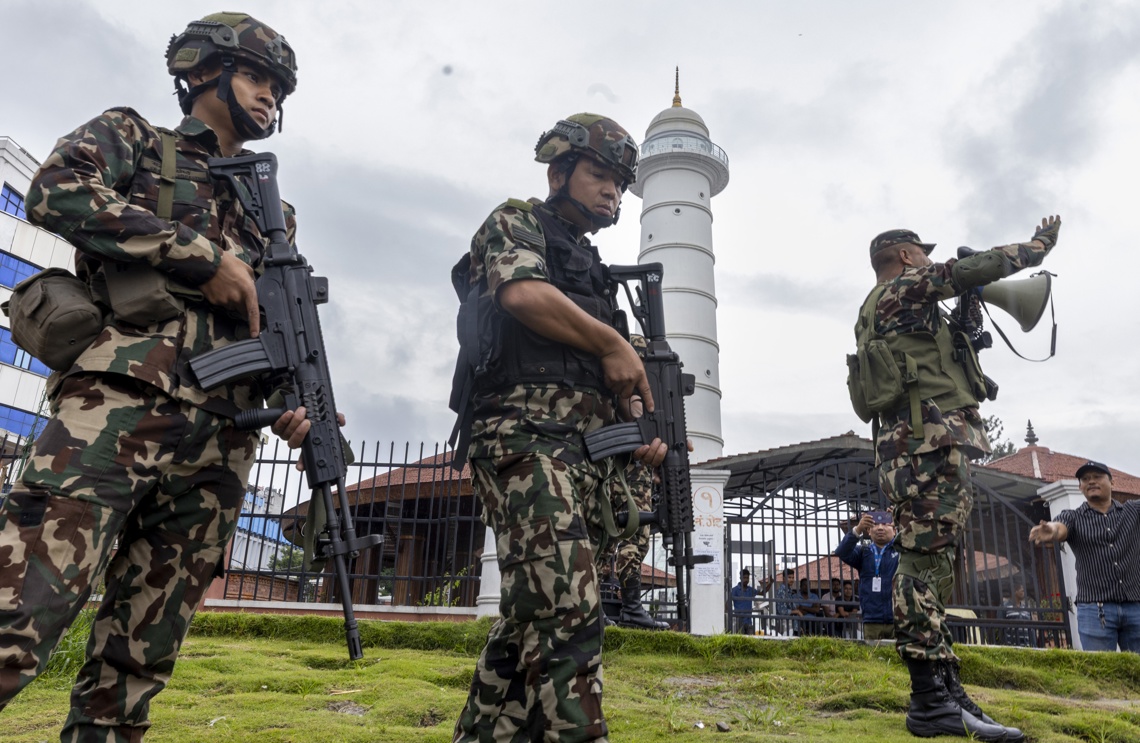
The crisis occurred after the prohibition of 26 social networks on September 4which unleashed mass protests that left at least 51 dead and more than a thousand injured, according to the last official balance.
For three days, the country remained in a political limbo with Parliament demanding a constitutional exit and civil society warning against any solution outside the Magna Carta.
With Karki’s appointment, Nepal begins a transition period that seeks to channel the country towards stabilitywhile the demands of youth movements persist and the pressure to convene elections.