A Cuba archive report includes the testimony of a former employee who describes conditions of trafficking in persons in mixed companies of the Canadian mining company with the Cuban regime.
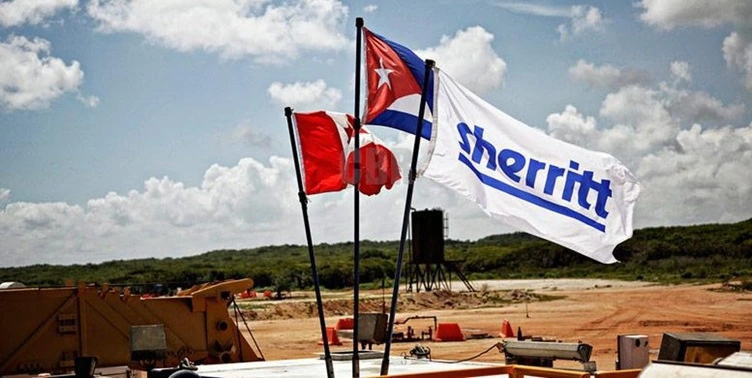
Madrid, Spain.- A new testimony collected by the Archive Cuba organization returns to the center of the debate between The Canadian Sherritt International and the Cuban regime. The complaint, recently published, points to a labor exploitation scheme that would have operated for years in Sherritt mixed companies with Cubaniquel, both in the Bahamas and Canada, within the framework of what is presented as “labor and internationalist missions.”
The former employee, a qualified professional sent to work in New Providence Metal Marketing, Inc., in Nassau, reports that Cubans were subject to a forced labor regime. Among the practices indicated include the confiscation of up to 95 % of their income, movement restrictions and personal relationships, obligation to attend political meetings and interviews with state security, as well as the prohibition of returning to the island in case of leaving the mission.
According to the complaint, the salaries were deposited in accounts of the Royal Bank of Canada in Bahamas, but most had to be transferred to an account in Havana administered by the International Financial Bank, an institution linked to the GAESA military conglomerate. The workers could retain only 500 Canadian dollars per month (about 388 USD), of which 150 were held in Cuba. With the remaining – around 262 USD – they had to cover maintenance expenses in a country with one of the highest life costs of the Caribbean.
The report He adds that Sherritt Canadian managers and local employees in Nassau were aware of the conditions in which Cubans lived. In addition, since the joint operations began in 1994, more than two dozen workers would have defected, many of them in Canada, presenting exploitation tests to support asylum applications.
A similar scheme applied in the Fort Saskatchewan refinery, in Alberta, where testimonies reveal that after deductions and taxes the Cubans received only between 600 and 1 000 CAD per month, despite gross salaries that were around 95,000 CAD annually. It is estimated that at least 40 workers deserted in that Canadian province, being recognized as victims of labor exploitation.
Cuba Archive argues that these mechanisms configure a pattern of institutionalized people in violation of the Palermo protocol and ILO agreements. The organization asks the Canadian government to investigate urgently, sanction the banks involved and rethink their cooperation policy with Havana, historically disconnected from human rights considerations.