Madrid/Cuban authorities encrypt about 2,000 million dollars annually for money to import food, more than 1,200 in just five products: corn, soy, rice, milk and meat, mostly chicken. The data shows that food security is still a very mentioned aspiration that is far from being achieved. To these amounts we should add what the private ones spend to bring, mainly from the US, many of these products.
The latest Cubatrade data indicate that, so far this year, foods were acquired from the island worth $ 285,709,353 only in the US, a substantially greater than 242,085,953 dollars of the same period of 2024. Of them 42,353,477 dollars correspond to July, last of which there are data available. Only that month was spent 23.6 million to buy chicken meat, 2.3 in pork, and more than half a million in eggs. Cereals are not far behind: wheat was imported worth 1.6 million dollars, rice for 1.2 and corn, further, for less than $ 12,000.
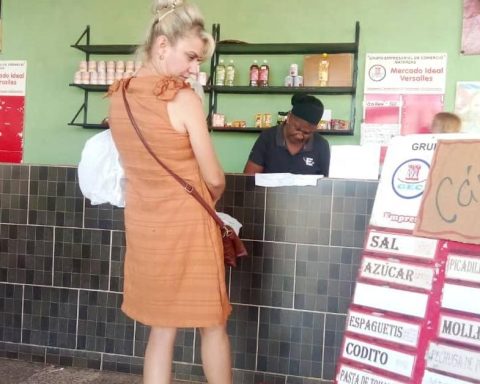
Those products, which subsequently sells the State – in particular dollar stores – and MSME Granma In two articles published on Tuesday and Wednesday in its national pages.
The transgenic corn Made in Cuba, achieved by the Center for Genetic Engineering and Biotechnology (CIGB) more than 30 years ago, has not been imposed
The transgenic corn Made in Cubaachieved by the Center for Genetic Engineering and Biotechnology (CIGB) more than 30 years ago, it has not just imposed itself even though it is a five -way that was formally approved its use and the first successful experiences began, particularly in Sancti Spíritus, where the program started.
In those five years, according to Prime Minister, Manuel Marrero, the Island spent around one billion to bring corn from other countries. The cereal is essential (in 70%) for the elaboration of a feed that also shines for its absence in Cuba – Pablo Estrada, director of agricultural research of the CIGB, explains that 90% of the corn harvested in the country goes to human consumption. The direct consequence is also the lack of meat and other products of animal origin, that is, new import expense.
“Why pork, bird meat, eggs … have disappeared from the public forefront, or traced prices that neither the most accurate glass ball could have enhanced decades ago? Without animal food there is no flock, nor breeding, nor meat, nor production, nor satisfaction of needs,” he deplores Granmawhich considers that if it is still sowing as it has been done for centuries “we will reach eternity by incurring millionaire expenses abroad.”
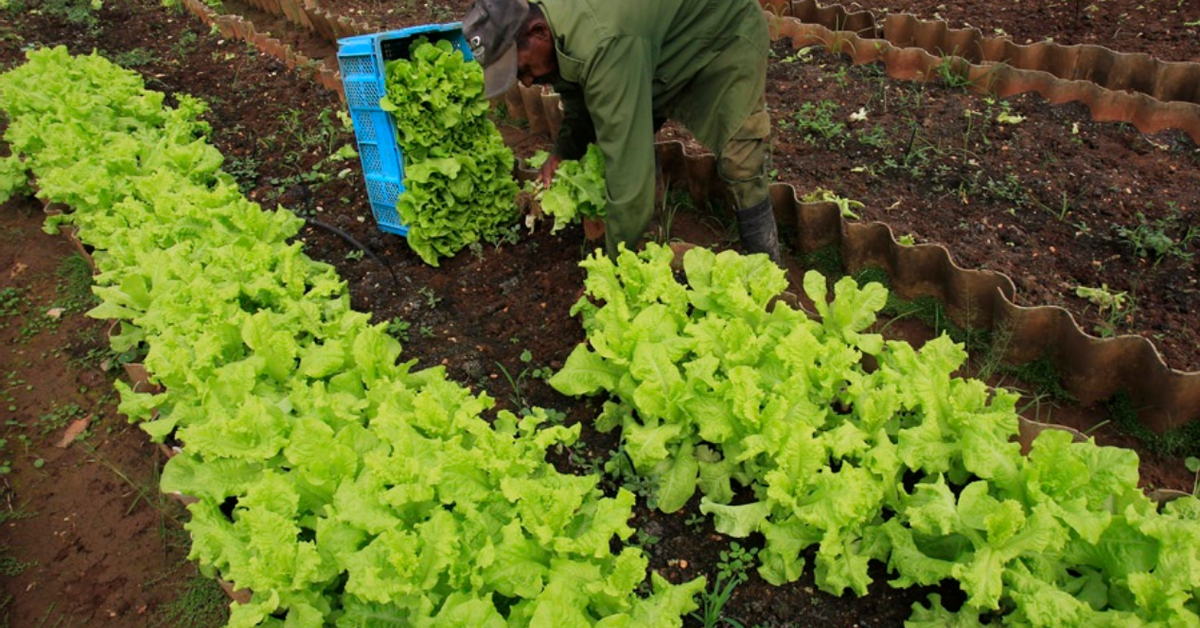
The newspaper has resorted to expert testimonies, such as Osvaldo Hernández Gil, responsible for the seed in Sancti Spíritus, to confirm the good yields it faces the traditional one. The transgenic hybrid exceeds 10 tons per hectare against 1 or 2 of the un modified seed, vulnerable to frequent pests in Cuba such as the palomilla, whose gene was introduced on purpose in the transgenic variety to neutralize the disease.
But he has also thrown out of “groove” and has asked the producers about their real experiences. Félix Álvarez, one of the pioneer peasants in Diamond Punta (Sancti Spíritus), collected 6.20 tons per hectare in its beginnings and does not want to go back. Reinier Catalá Dueñas, of the Credit and Services Cooperative Heriberto Orellana, has been modified for four years and considers that no one who has tried with the transgenic wants to sow traditional. He claims to have the help of specialists who also took crop samples. “In the first hectare I took six tons and in the second 7.5. Then he went down due to lack of supplies, drought and other problems,” he says.
The ailments suffered by agriculture in general also affect sowing with transgenics. However strong the seed is, the peasants point out the usual problems. “Irregularities with the technological package, as well as in the real ravages that cause the lack of fuel or lubricants when preparing the earth, or the unpredictable electricity to be able to guarantee irrigation, or banking,” are among the causes cited by the interviewees to explain the fall in production.
“This year I did not take seven tons per hectare, but 3,5,” adds Catalá, who compares, despite everything, the figure with those of others. “The corn that sowed Oys Carrazana and Luis Molina, to the traditional, became stunted, among other things for drought. Mine no. This has several advantages: it grows faster, it is strong, resistant to the palomilla, the cobs have more rows along the round, you can put more plants in the same area,” he explains.
Although the official newspaper has found many voices in favor of planting with this seed, the crop is not imposed and Granma He wonders why. Among the factors, the bureaucracy could be one of them. “Some grain producers see in the granting of that license a factor that slows or turns the incorporation of more peasants willing to cultivate that type of corn. It would not be bad to take a central look on the matter for those who correspond,” he says in relation to the biological or environmental security permit that the State must grant.
“Some grain producers see in the granting of that license a factor that slows or turns the incorporation of more peasants willing to cultivate that type of corn”
Mario Pablo Estrada argues that “the country does not just articulate a national, solid program, of animal food production” and believes that it is necessary to specialize the production of seeds through some structure or entity that ensures, among others, the quality of that seed. According to the note, in the international market the price of a ton of transgenic corn seed is at $ 12,000, while Cuba has its own and does not need to import.
The newspaper is not explained why, there is this possibility, it does not extend more, and again includes examples of success, from a mipyme of Placetas (Villa Clara) that works with producers in the area to promote the cultivation of the “seed harvested by six spirituan producers” with which 542 hectares were planted in Matanzas, blind of Ávila, Villa Clara and Sancti Spíritus.
The experts consulted speak of including in the process scientists, producers and entrepreneurs, in addition to the authorities, to make a leap and take advantage of the potential that science has given. Although Granma It does not doubt, in addition, in resorting to faith. “Let us ask what the commander in chief would recommend, whose feet never removed from the earth, nor the thought of science,” demands, while asking not to forget a phrase from Raúl Castro: “Beans are as important as cannons.”