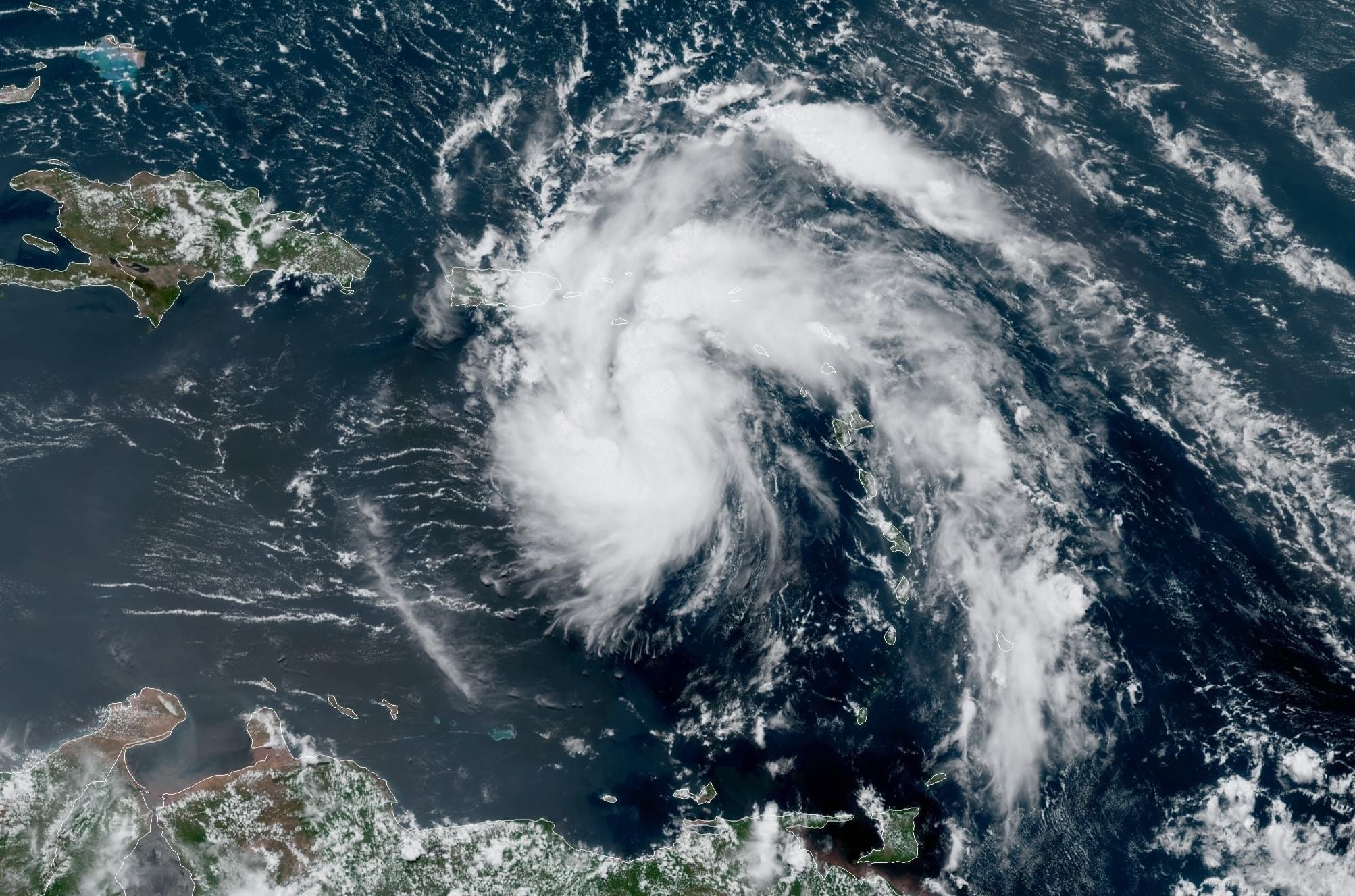
A group of scientists from the Netherlands and the United States presented a proposal to update the way in which the intensity of hurricanes is measured, expanding it to 6 categories.
Unlike the current one, The proposal would take into account not only the strength of the wind, but also the rain and the dizzy cyclonic.
The proposal, called Tropical Cyclone Severity Scale.
This was explained to the agency EFE The researcher Jennifer Collins, professor at the University of Southern Florida and member of the international team.
“Category 6 is reserved for those extreme cases where you have multiple extreme hazards. Between the wind, the marejada cyclonic and the rain, you will have at least two of these factors at a level (extreme),” Collins said in a virtual interview.
The research results were published in the magazine Scientific Reports and had the participation of specialists from Dutch universities such as Amsterdam and Tilburg.
According to scientists, The new scale would be more representative, since the current Saffir-Simpson only classifies tropical storms and hurricanes at levels from 1 to 5 based on wind speed.
Why add a new hurricane category?
Applied retroactively, the TCSS would have cataloged the Hurricane Wilma (2005), which Yucatan impacted with category 4, at the maximum level of 6, while the devastating Katrina, which left more than 1 800 victims in the United States and damage greater than 125 billion dollars, would have reached category 5 despite which he officially entered as a hurricane of category 3.
The team argues that the proposal better reflects realitysince only 8 % of hurricanes deaths are due to the wind, while 49 % occurs by dizziness and 27 % for heavy rains, according to figures from the National Hurricanes Center (NHC).
“I think our new scale can really help save lives and to help communities impacted by hurricanes,” said Collins.
The model was tested in a study with 4,000 people. According to Professor Nadia Bloemendaal, from the Royal Meteorological Institute of Netherlands (KNMI), participants made decisions “more informed and appropriate” when they received information based on TCSS compared to the Saffir-Simpson.
Researchers highlight that effective communication is key, since many inhabitants only evacuate when they hear that a cyclone has reached category 3 or higher.
“People are really going to pay attention when we tell them that a hurricane could be category 5 or up to 6 with multiple dangers,” Collins insisted.
The proposal is presented at a time of special interest in the United States, where the Oceanic and Atmospheric National Administration (NOAA) anticipates a “superior to normal” season, with between 13 and 18 tropical storms, of which between five and nine could become hurricanes.