From Guatavita al Viejo Peñol: Thus were the villages that sank to give way to the reservoirs.
News Colombia.
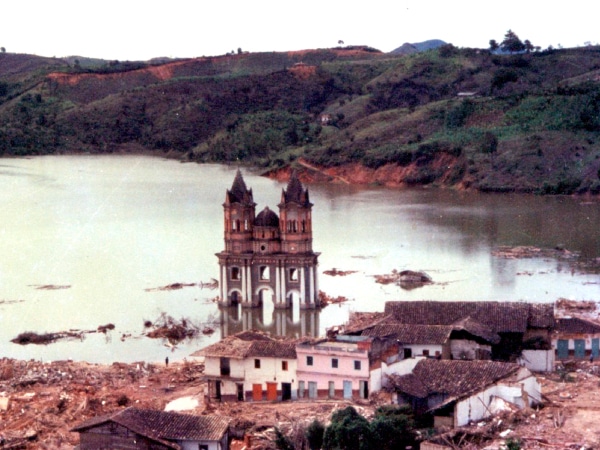
In Colombia, the rivers have not only marked the path of life, they have also kept secrets. Under some of their reservoirs they lie whole or hamlets that one day were home, square and memory, and today only survive in photographs and in the nostalgia of those who had to leave them behind.
The two most emblematic cases are those of Old Peñol (Antioquia) and The old Guatavita (Cundinamarca).
The first was flooded in 1978 to give way to the Guatapé -Peñol reservoir, which today is one of the most visited tourist landscapes in the country, with its artificial islands and the famous stone of Peñol as a central attraction.
The inhabitants were transferred to New Peñolan urban center specially designed for relocation.
https://www.youtube.com/watch?v=tzqo4xurdxy
https://www.youtube.com/watch?v=h7oqx4dny04
The story of Guatavita It is similar. In 1967, the waters of the Tominé reservoir covered the original town. Their colonial houses, streets and memories were underwater, and the inhabitants moved to the New Guatavitawhite architecture and red tiles.
Paradoxically, this place is related to the legend of El Dorado and with indigenous rituals in the nearby lagoon, which today attracts visitors from all over the world.
https://www.youtube.com/watch?v=vkquj8_9tvi
https://www.youtube.com/watch?v=negqyb3yigs
But they were not the only ones. In other regions of the country, the construction of dams and reservoirs also forced communities to be relocated. Although municipal headwaters did not disappear, corregimientos, paths and hamlets were submerged:
- Beltrán (Cundinamarca) He lost part of his territory with the Guavio reservoir in the 80s.
- In Santanderthe corregimientos of Papayal and Marta They were under the waters of the Hydrosogamoso reservoir in 2014.
- He Prado Reservoir (Tolima) He flooded whole hamlets in the 70s, giving rise to the current tourist attraction known as “The Interior Sea of Colombia.”
- In Nechí (Antioquia)Porce II and Porce III dams buried rural areas and moved families.
- In the case of Chingaza (Meta and Cundinamarca)the work affected small peasant towns that disappeared in the water.
- More recently, with the project of Hydroituango (Antioquia)dozens of paths were evacuated and uninhabited to give way to the reservoir, although without erasing an urban center.
Each story shares the same pattern: the promise of energy progress against the uproot of communities that had to abandon their roots.
However, over time, many of these places became new tourist attractionseither because of the curiosity of exploring what lies under water or by the transformed landscapes left by the reservoirs.