The VIII Study on Social Rights, presented on Tuesday in Madrid, reveals that the blackouts exceed the food crisis for the first time as the main concern of the population.
Madrid, Spain.- The Cuban Observatory of Human Rights (OCDH) presented on Tuesday in Madrid its VIII Report on the State of Social Rights in Cuba (2025), whose results confirm the aggravation of the social and economic crisis on the island.
According to research, 89% of Cuban households remain in Poverty situation Extreme, while 78% of citizens want to emigrate or know someone who wants to do it.
The study, based on 1,344 interviews between June 8 and July 11 in 70 municipalities from all provinces, shows that for the first time in the historical series the blackouts (72%) exceed the food crisis (71%) as the main concern of the population. They are followed by the cost of living (61%), low wages (45%) and poor medical care and medication shortage (42%).
Older and unemployed adults, among the most affected
The most hit sectors continue to be older adults (82%), people who do not receive remittances (62%) and unemployed (34%). The growth of social sensitivity towards prisoners, considered 31% of respondents among the most vulnerable groups.
The survey also reflects that 12% of the population of working age is unemployed, and that 72% of the unemployed have been without work for more than a year. Among young people aged 18 to 30, almost two out of ten does not study or work, while 14% of those over 70 are still active despite being retired, as a survival mechanism.
Homes to the limit of subsistence
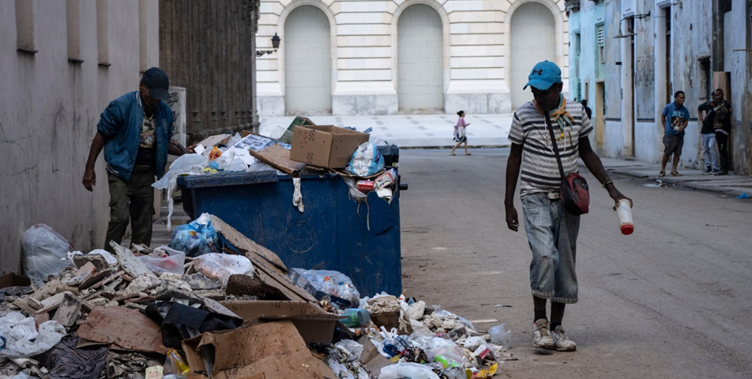
The report shows that eight out of ten homes are found on the margins of survival. 55% of respondents say they cannot cover even the most essential, and seven out of ten Cubans recognize having stopped breakfast, lunch or dinner due to lack of food or money.
The situation with medications is equally critical: only 3% manages to acquire them in state pharmacies, while 25% depends on shipments of family members abroad or the help of churches and charitable organizations.
Rejection of government and remittance dependence
The disapproval of government and social management of the government reaches 92%, compared to just 5% positive assessment. Among young people aged 18 to 30, support drops to 3.4%.
Family remittances, which receive 37% of households, constitute a partial lifeguard, although insufficient. Most households enter less than 23,000 CUP per month, and more than 58% of those over 70 years of age subsist with 4,500 cup or less.
Perspectives without future
The report concludes that the serious situation of social rights in Cuba has become a structural drama. For OCDH, the massive intention to emigrate, especially among young people – a 76% in the group of 18 to 30 years – reflects the lack of hope in the future within the island.
“The data confirms that millions of Cubans are trapped in extreme precariousness, without access to basic services or opportunities to develop,” said the agency in the presentation of the report.