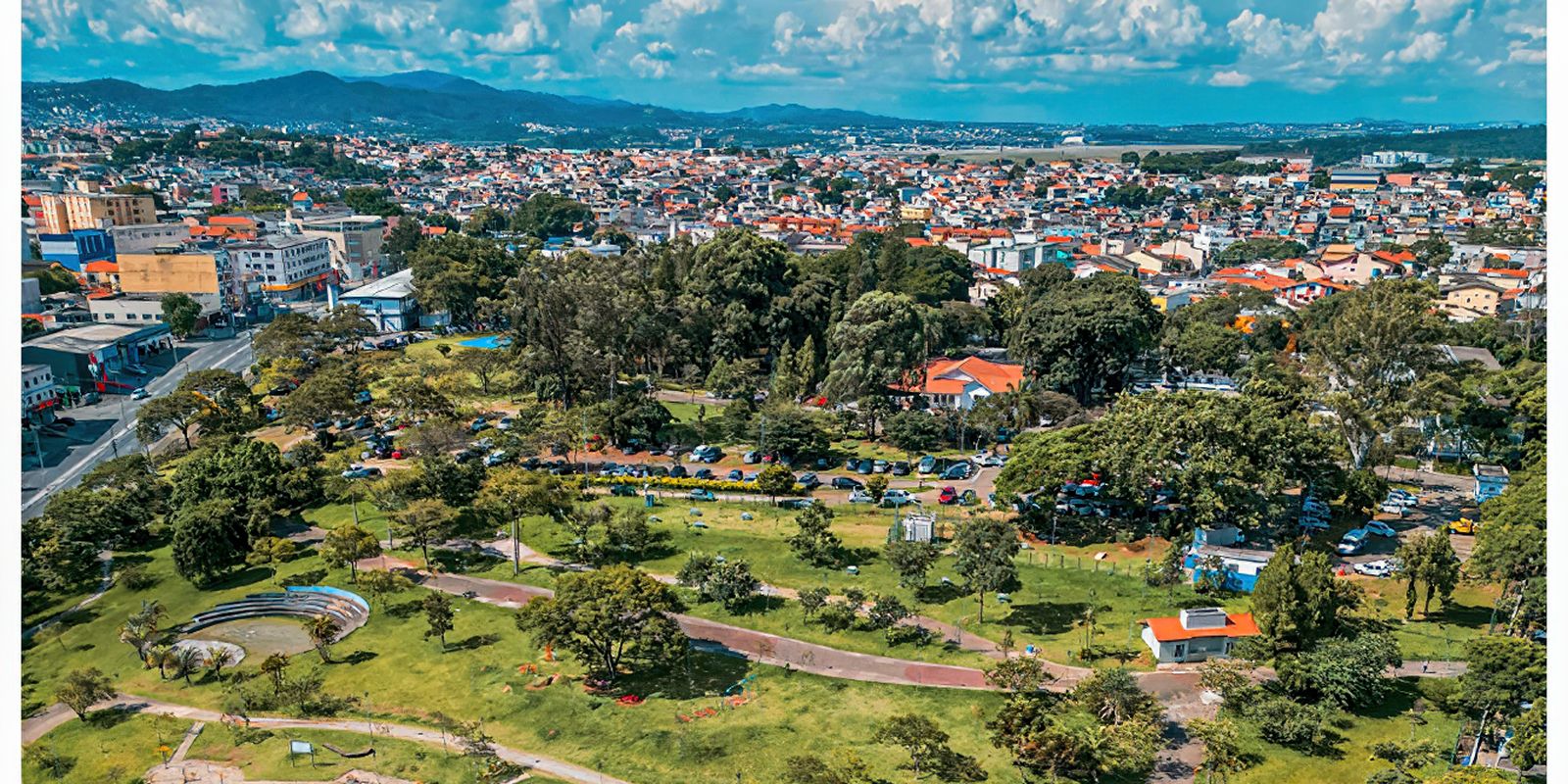
An unprecedented proposal to map urban green areas in Brazil was presented on Monday (8) by the Brazilian Institute of Geography and Statistics (IBGE). Guarulhos (SP) and Palmas were chosen as test areas because they are regionally different, both in terms of formation of cities and climate and vegetation. 
According to the research technician, Manuela Mendonça de Alvarenga, from this pilot project, the team of the Board of Geosciences do IBGE intends to evaluate methodological proposal to be carried out in the future throughout the national territory.
“For us it is important to launch this study on an experimental basis, so that we can put the methodology proposal under discussion, test its applicability to different contexts and, from a return of other researchers, managers and other stakeholders, propose something that can be applicable to all of Brazil,” said Manuela.
According to IBGE, the methodology carried out in this investigation used the definition of urban green areas of the Brazilian Forest Code, which considers public or private vegetation areas (natural or recovered), which have a destination in urban planning different from subdivisions and houses.
THE Institute explains that the classification of green areas followed the proposal of the Ministry of Environment and climate change, which includes different types, such as parks, squares, flowerbeds.
“For the mapping area, it was considered a delimitation that follows the international standard of UN-Habitat based on demographic density and population size in continuous areas. In addition, the use of collaborative cartography data, which indicates the presence of various green areas. These were used as inputs for preliminary identification, crossed with other satellite images, which indicated the presence of vegetation,” says IBGE.
>> Follow the channel of Brazil agency on WhatsApp
According to the Institute, In Guarulhos, 7,096.37 hectares of urban green areas were identified, representing 45% of the city’s urbanized areas, taking into account the area of 800 meters around the urban center. Considering the intraurban green areas, the size is reduced to 6,036.73 hectares, and the proportion becomes 38% of the city’s urbanized areas.
“With this result, we can interpret what is the degree of impact that the surroundings of the urban center has for the composition of the mosaic of green areas of the city and consequently the services provided to the population,” explained Manuela.
THE IBGE reported that, in Palmas, the total of urban green areas was 5,137 hectares, considering the mapping area of 800 meters from the urban center, which represents 49.11% of the total urbanized areas of the city.
“Considering only the intraurban area, urban green areas are adding 977.99 hectares, representing approximately 10% of the municipality’s urbanized spot. The decrease of about 80% of green areas between intraurban and periurban cutouts is due to the fact that Palmas has large extensions of tributary river river forests to the Tocantins river that are not considered urbanized areas, due to its large extent without housing or built area, ”says the institute.
“Mapping has been proposed considering the availability of inputs and the simplicity of processing, and with this we can reach a quality data throughout Brazil. Thus, from a first version and its validation, the mapping itself can serve as an entry to train artificial intelligence algorithms, which may allow an update of the more automated mapping,” adds Manuela.