On Thursday and Friday of this week in Barranquilla, the LATAM Fintech Market and the meeting will be held, which will be attended by more than 2,000 people, Colombia Fintech will present a document with a road map in innovation for the financial system that proposes important regulatory changes.
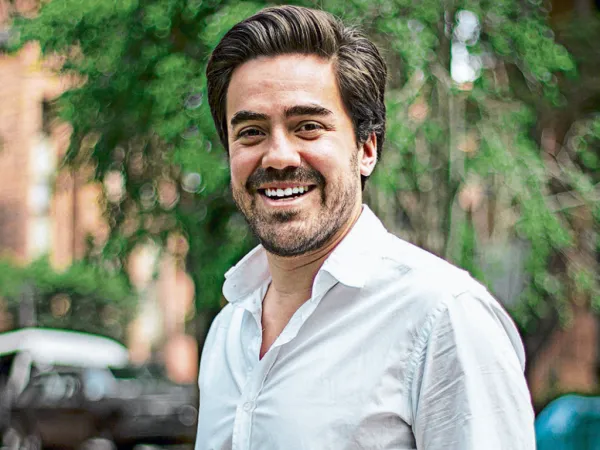
It is an 800 -page document, with 120 initiatives to intervene a total of 22 areas with innovation in the financial system. Gabriel Santos, president of Colombia Fintech, spoke with Portafolio.
See more: Colombian peso, the currency with better performance in the region in August
What will they talk about in Latam Fintech Market?
We will have cryptoactive discussions with the financial sector, about Stablcoins (stable cryptocurrencies), comes the director of the National Digital Assets of El Salvador, which is the country that has most aggressively adopted the crypto world, we will talk about remittances and digital assets, payments, cyberdelite, artificial intelligence.
Do you want to make changes in the financial system, with or without that sector?
We all transform this. It is not work exclusively from Fintech. It is with banks, regulators and users. They will be representatives of the main Colombian financial groups. We want to raise awareness that the opportunity to transform the financial sector benefits both incumbent and disruptors.
See more: Bre-B and interoperability: this is the solution for farmers and merchants
What will they propose?
There are two important challenges; the regulatory and the money. Colombia has to make a decision and that is why we are calling for a regulatory tsunami to transform the financial sector. And from that call to generate that regulatory tsunami is that this 800 -page document with 120 proposals and 22 intervened areas follows. Colombia needs to have a very aggressive financial innovation agenda in three pillars; Innovation, inclusion and competition, as Brazil or India did.
We have 35% access to credit through financial entities and that must be uploaded, facilitating payment systems via eliminating, for example, withholdings to digital payments, continuing to strengthen the BRE-B innovation agenda and interoperable payments systems, reconsider the tax scenarios to foreign investments.
Open finance policy must be operationalized, reduce high denomination bills and high cash transactions to encourage transparency in the economy and digitter the greatest amount of payments.
What needs the financial system that the Fintech sector contributes to you?
The financial sector has done a very important job in terms of inclusion, in terms of massification of services, but the entry of the Fintech from the point of view of innovation and competition is very important for the traditional financial sector.
See more: Efraín Cepeda, former president of the Senate, announced his aspiration to the presidency in 2026
Seeing yourself with highly disruptive systems forces to generate internal innovation, which is very positive, because it awakens that innovation fuse to offer services for all. And from the point of view of competition it is also very important. The measure that we have a financial sector that competes with each other, among new, old, as it will generate a very important supply pressure, cost reduction and attention to neglected.
What is the most dynamic vertical of the Fintech?
The segment that is growing most today in volume is not the digital credit, but is that of the Neobancos. In the last 12 months we spend approximately $ 1.3 billion in neoboncos deposits to $ 10.5 billion, an exponential growth that speaks of that trust. In digital credit we are spectacular.
Other segments that are growing in a very accelerated way are payments. The promise of value that the Bre-B immediate payments system achieves something similar to Pix in Brazil, thus marginal, means the entry of millions of Colombians to the digital economy that will have to make payments, conciliations and transactions, among others, which will be very important.
See more: the Colombian island where nobody uses money: everything is paid with barter
The ecosystem that grew the most last year was that of Regtech (regulatory technology), the compliance scenario, customer knowledge, knowledge of the transaction, digital onboarding, fight against fraud and verification of digital identity. We have 370 Fintech in the country.
Portfolio