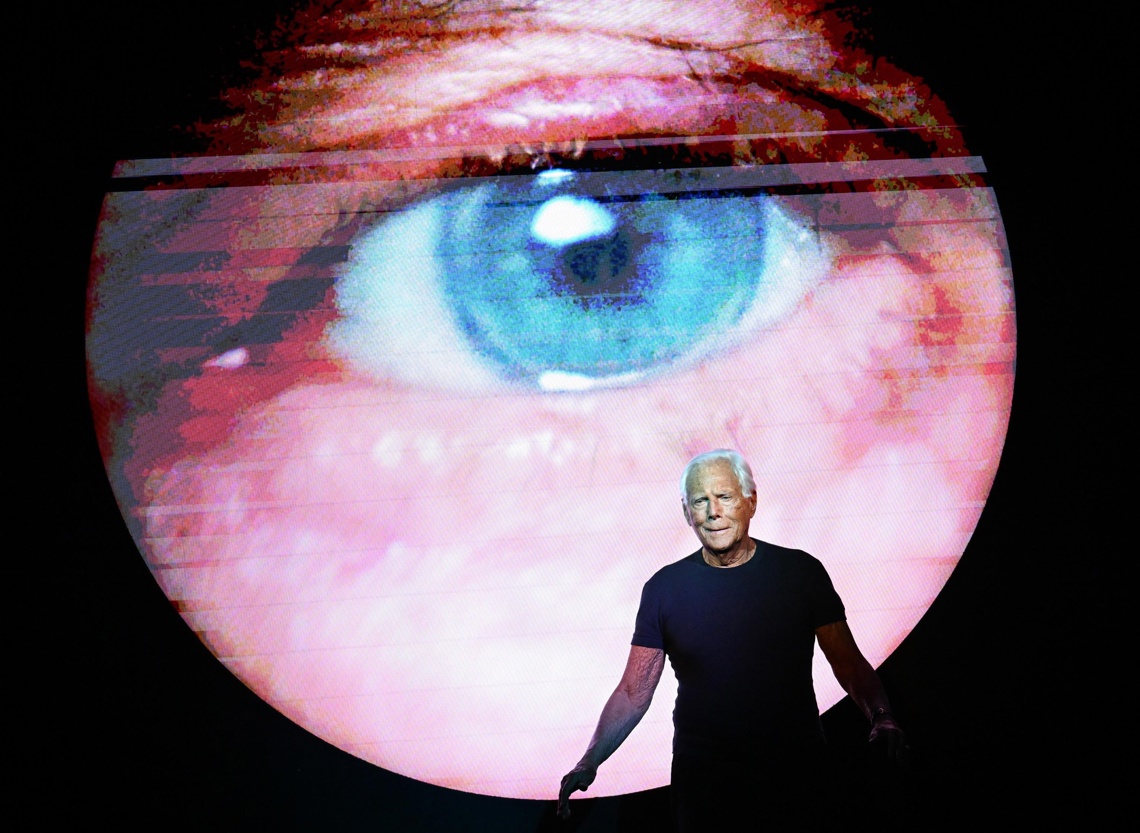
The fashion world has just lost one of its mostly influential figures. Giorgio Armani has just left us at 91, leaving behind not only a firm, but a universe. In the last hours, the media have compiled biographies, timelines and visual tributes.
But beyond the figures, catwalks and celebrities, what remains is a more complex question: what did Armani do with society? What really changed, in our way of dressing, seeing and being in the world?
The expert in cultural industries said Joanne Entwistle that the dress has always been a border between the individual body and the social body. Armani transformed that border into a bridge. He did it with a clean stroke, without raising his voice. He turned discretion into language, sobriety in status and comfort in power. Armani was not just a designer: he was a silence editor, a symbolic code architect.
Rewrite the suit: Design power without shouting
In 1975, he founded his firm together with Sergio Galeotti. Since then, he rewritten the codes of power. He did not through excess, such as Versace or Mugler, but through elimination. He removed linings, shoulder pads, rigidity. He disarmed the male suit from within and proposed a new masculinity that did not need armor. In full neoliberalism and corporate culture, Armani offered a uniform for quiet power. His proposal was not disruptive from the shout, but from the pause. Faced with strident maximalism, he chose the whisper. And that whisper transformed executive aesthetics into Hollywood, Wall Street and even in governments.
One of his most powerful gestures was also the least commented: his way of treating the female body without eroting or infantizing it. Armani did not design to please the male desire, but to empower the subject who carried him. In the 80s, when the Power Dressing female filled the offices of sharp shoulder pads and tube skirts, Armani offered fluid pants, Blazers soft, fabrics that hugged without marking.
It was not a feminist fashion in the militant sense, but deeply political: it gave tools to inhabit public space with non -aggressive authority. Instead of simulating men, Armani women occupied their place with autonomous elegance.
More style than fashion, more emotion than a trend
The global outbreak arrived in 1980 with American Gigolo. Richard Gere, practically dressed as Armani in each scene, became the symbol of the new man: elegant, sensual, safe, but also relaxed. The movie made for Armani what Sex in New York He did for Manolo Blahnik. Since then, the Armanism It expanded: not as a trend, but as an emotional aesthetic. Armani did not sell clothes; It sold attitude, sifted light, wish content.

The same happened with his muses: Michelle Pfeiffer, Cate Blanchett, Julia Roberts… None responded to the noisy stereotype of the sexualized diva. They were intelligent, sophisticated women, with soft silhouettes and hypnotic presence. As if the clothes did not cover them, but simply were there, floating in the air.
The art of building without logo
Long before the industry talked about Lifestyle Brands Or brand universes, Giorgio Armani had already drawn a form of aesthetic expansion that did not depend on a visible logo. Its strength did not reside in a graphic symbol, but in a visual tone, a shared gesture, an atmosphere. The Armani brand was recognized by how pants fell, how it illuminated a catwalk, for the elegant silence of a showcase.

Since the 1990s, diversified without fragmenting: Armani Jeans, Emporio Armani, Armani Casa, Armani Beauty, Armani Hotels … but did it without sacrificing his narrative. Each extension was one more piece of the same story: sobriety, calm, precision. He was one of the first designers to understand that fashion could design not only garments, but experiences. His legacy anticipated the current logic of the Branding emotional and multisensory coherence that the big luxury houses pursue today.
Armani built a recognizable world without shouting his name. And that, in an industry obsessed with the logo, remains one of its greatest revolutions.
Invisible style architecture
From fashion sociology, Giorgio Armani’s legacy can be read through several axes that explain its structural sophistication. As the sociologist maintained Pierre Bourdieufashion objects are symbolic devices that help us navigate the tensions between belonging and differentiation. Armani transformed that balance into an art form: he built a symbolic capital based on containment, not on ostentation. Their garments did not seek to dazzle, but insinuate. They didn’t shout, they whispered. His client did not need to be exhibited, but to inhabit an elegance without friction.
Even from the look of the sociologist Zygmunt BaumanArmani could be considered a master of coherence in a liquid environment: it flowed with the times, yes, but without ever diluted. He knew how to stay in the upper market without virality, without choreographies or noise. He said it in one of his Last interviews: “I prefer to let out rather than display.” That phrase is not just an aesthetic statement; It is a manifest of symbolic power.
There are designers that impose, and others who persuade. Armani persuaded. Not by chance he started as an outrageist and cartoonist: he always thought as an architect. That is why their collections seemed invisible buildings: the structures were not seen, but they held the body with silent precision. His clothes was a way of living the world with light firmness.
I used to say that black is not absence of color, but the synthesis of all of them. That idea summarizes his vision: it was not about removing to empty, but to concentrate. His fashion was essentialist, not minimalist. Each garment had some haikuof Japanese ceremony, of accuracy without boasting. Armani did not design to attract attention: he designed for the body to inhabit the style as a truth that does not need to be said.
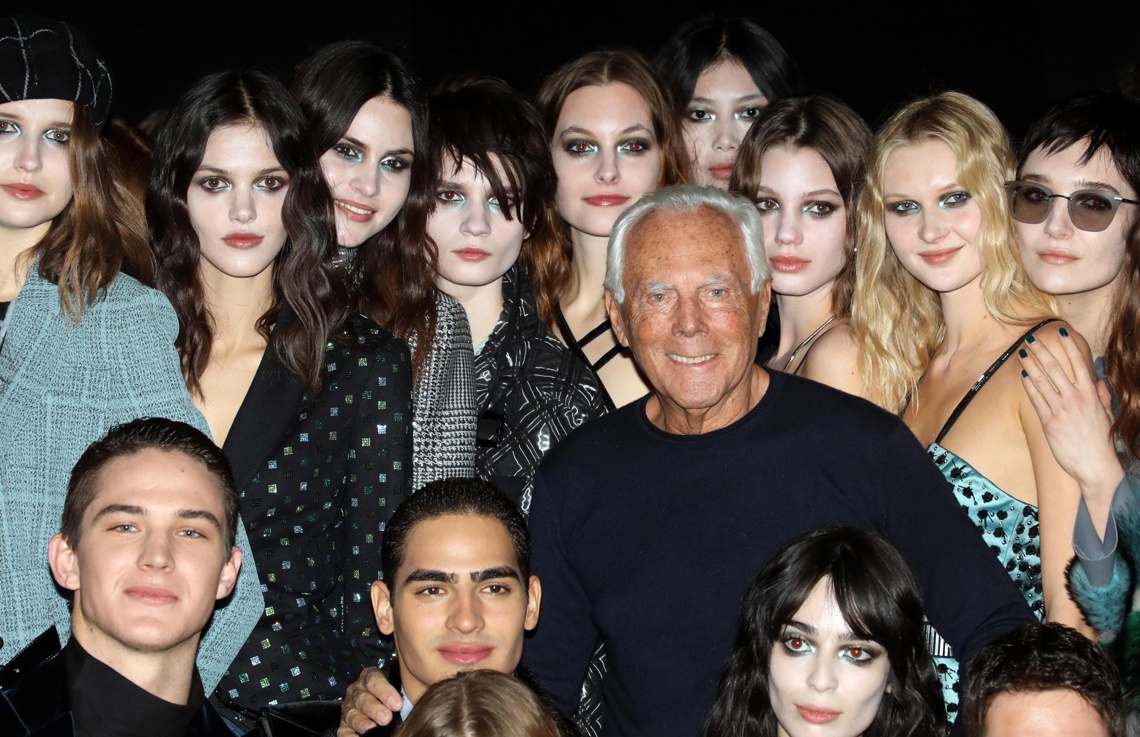
The real silent luxury
The death of Giorgio Armani marks the end of an era in fashion. But its legacy is not a closed file: it is a style of thought. His fabrics remain, his cuts, his parades. But above all there is a way of looking at the body, gender, work and power with delicacy and depth.
At a time when fashion has become algorithm, meme, logo and virality, Armani remains that whisper that crosses the room. A brand without scandal that understood that real luxury is not to be seen, but knowing how to be.
That Quiet Luxury which everyone is talking about now, the one who has become a trend, he practiced for five decades. When I still had no name, Armani had already made him code and language. Because the real silent luxury … it was him.
Sandra Bravo DuránSociologist and doctor in applied creativity, UDIT – University of Design, Innovation and Technology
This article was published in The conversation. Read the original.