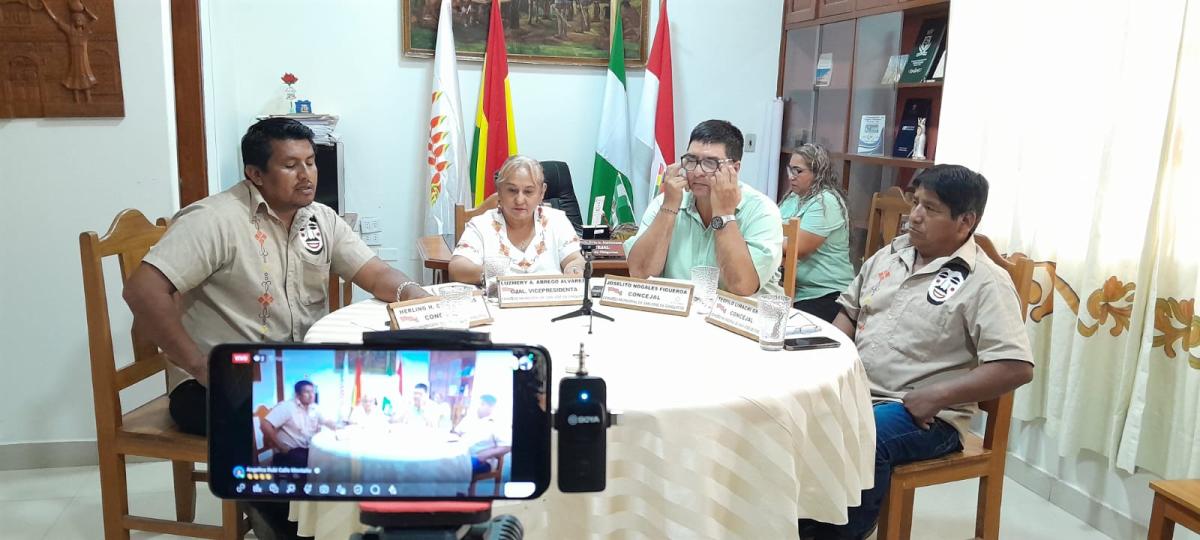
The Municipal Council of San José de Chiquitos approved, in its ordinary session No. 32, the Annual Operating Plan (POA) for the 2026 management, with a budget roof of Bs. 43,753,947. This plan prioritizes investment in basic social services, allocating 79.41% of the public investment budget, with Emphasis on health, education and infrastructure.
The public investment budget, which amounts to Bs. 34,743,355, reflects a commitment to the social development of the municipality. Of this amount, 28.60% (Bs. 12.515.102.05) is assigned to health, 8.31% (Bs. 3,635,921.31) to Education and 5.85% (Bs. 2.561.551.34) to urban and rural infrastructure. Together, these sectors represent 42.77% of the total budget, evidencing a clear priority towards the improvement of the quality of life of the inhabitants of San José de Chiquitos.
In the field of economic and productive development, more limited resources are allocated: 1.01% for agricultural production, 1.17% for tourism and 0.23% (Bs. 100,000.00) for employment and economic promotion. Despite what San José de Chiquitos is recognized for its cultural wealth And its tourist potential, the allocation for culture and heritage is only 0.91%, which could limit initiatives to take advantage of these sectors as economic growth engines.
Regarding the management of water and water resources, 1.27% and 0.46% respectively are assigned, while the microorriego and water resources together receive 0.55%. These figures are modest considering the challenges of the municipality, such as droughts, fires and the importance of agriculture in the region. According to local press data, San José de Chiquitos has faced recurring problems of water shortage, which suggests the need for greater investment in these areas to guarantee sustainability.
The Poa 2026 of San José de Chiquitos reflects an effort to strengthen essential public serviceswith a significant approach to health and infrastructure. This budget distribution is expected to translate into substantial improvements in medical care, education and rural and urban connectivity, directly benefiting the population of the municipality.
However, local experts have indicated in social networks that the limited budget for tourism and water resources could be a challenge for long -term economic development, considering the potential of the region as a tourist destination and its agriculture dependence.