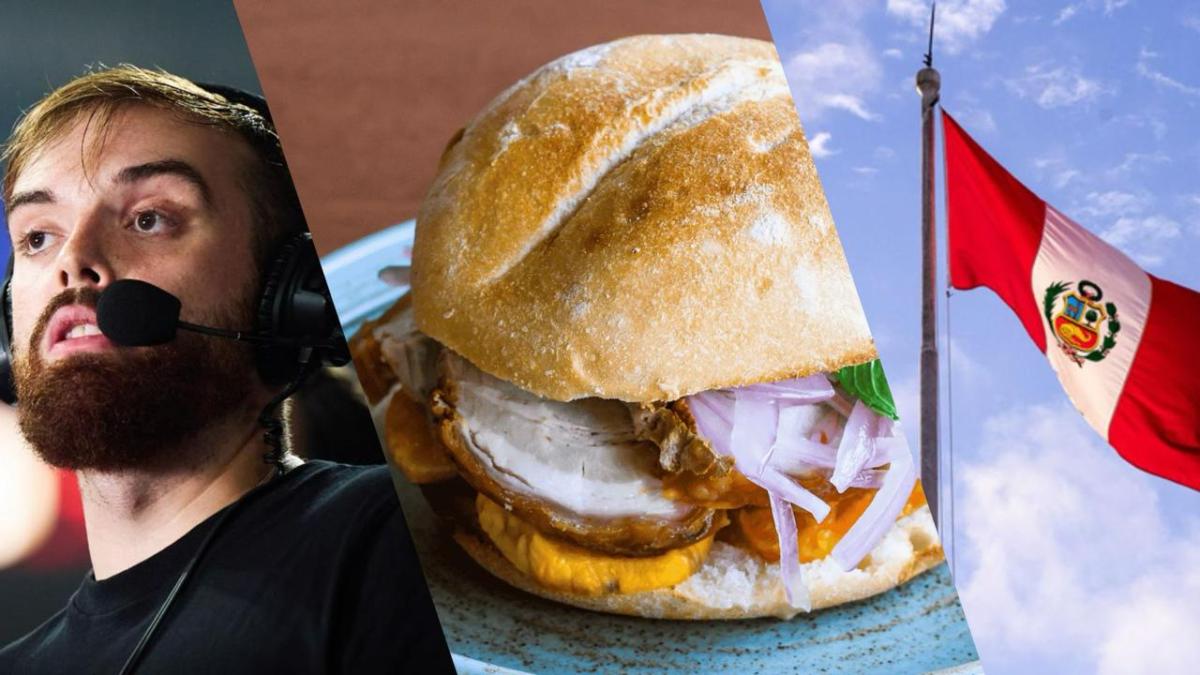
Chicharrón bread is undoubtedly one of our main classics in Peruvian cuisine. Today, in addition to the palates, he conquered social networks in the World Breakfast World Cup, a digital initiative of the Spanish streamer Ibai Llanos that faces 16 countries with their most emblematic dishes of the first meal of the day.
Peru is already in the semifinals with this traditional breakfast accompanied by Creole and Camote sauce. To this is added another infallible in our Peruvian cuisine, the Tamal, forming a pair that reaffirms its place among international favorites.
According to Rappi, the favorite multivertical platform of Peruvians, every month about 60,000 orders of this overwhelming breakfast are registered, being Miraflores, San Isidro, Jesús María and Monterrico the districts that concentrate the largest amount of orders. This preference reaffirms how digital platforms today bring more Peruvians to the flavors that represent us.
Stefano Delfino, Head of Rappi Peru restaurants, explains how this trend has impacted local consumption: “Bread with chicharrón is undoubtedly one of the most popular dishes on our platform, not only at breakfast. Now, in this context, we have registered more than 25,000 orders in the last week, which reflects the enthusiasm that has aroused this gastronomic competition.”
El Chicharrón is key
According to the Ministry of Production (Produce), the country’s chicharronerías generate more than S/ 244 million in sales per year, a business that is already an essential part of the national gastronomic ecosystem.
At the end of 2024, more than 730 formal restaurants dedicated exclusively to chicharronería were counted. Lima concentrates 40%of them, with 295 stores, followed by Cusco (12%), Puno (6%) and the rest of the regions with 42%. But the most revealing is the volume: more than 3,000 tons of pork rind in the country are sold on average, an indicator that speaks of the cultural roots and the good moment of this flag dish, according to the Minister of Production, Sergio González Guerrero.
The Observatory produces business details that in 2024 the per capita consumption of chicharrón reached 5.3 kilos per person nationwide. Some regions stand out for much greater enthusiasm: Ucayali leads with 35 kilos per person a year, followed by Tacna (15 kilos), Ayacucho (12) and Mother of God (9).
Prices vary according to the area and preparation: a kilo of pork rinds can cost between S/ 70 and S/ 140, while a bread with pork rinds is sold between S/ 10 and S/ 30. As for spending, the monthly average per national home was S/33 in 2024, but with marked regional differences. Ucayali heads the ranking with S/83, followed by Tacna (S/70), Mother of God (S/69) and Ayacucho (S/60).
If observed by socioeconomic level, segment A spends on average S/51 per month in chicharrón, followed by strata B (S/42), C (S/41), D (S/36) and E (S/35). The preference crosses all pockets and strata, confirming that this dish is one of the most democratic and beloved of the Peruvian table.
Receive your Peru21 by email or by WhatsApp. Subscribe to our enriched digital newspaper. Take advantage of discounts.