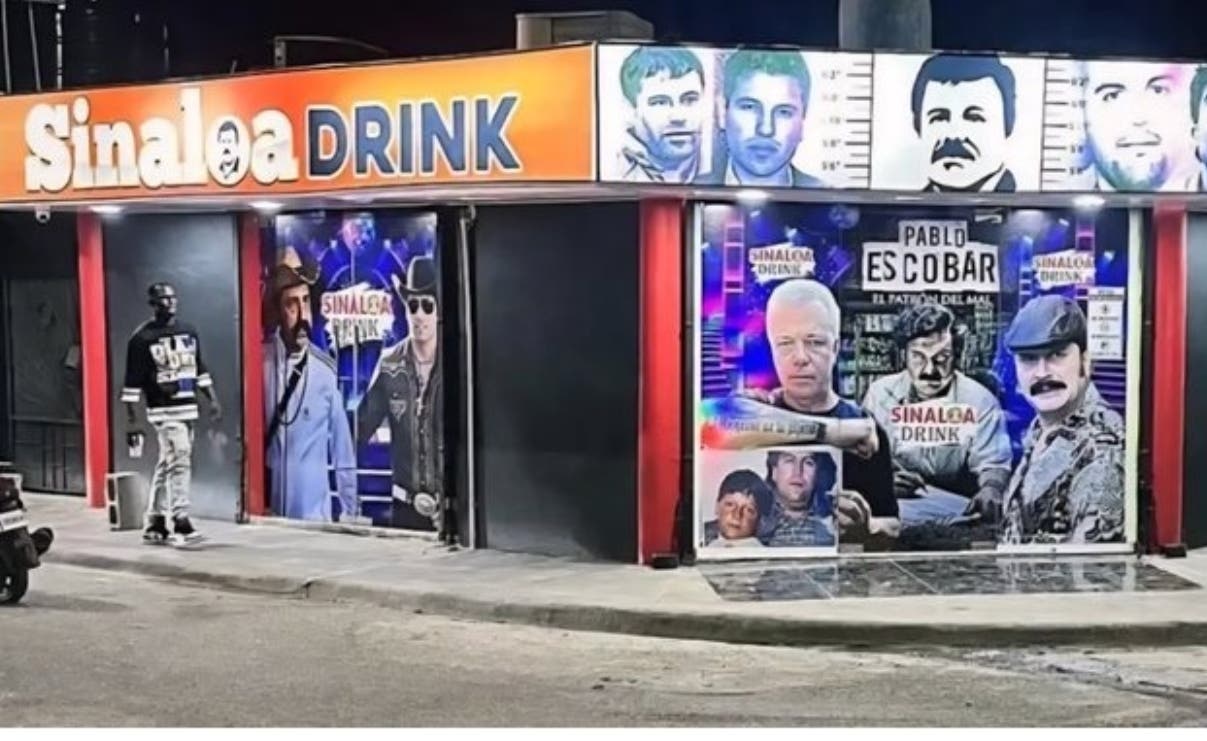
The Attorney General’s Office said today that the Public Ministry will not allow the Sinaloa Drink to be established in Baní, in honor of the most important drug traffickers of that cartel.
The PGR explained that article 36 of Law 50-88 prohibits the propaganda that exalt narcotic drugs.
The same position has been assumed by the National Drug Control Directorate (DNCD) and the Ministry of Interior and Police.
Prohibited in Baní: the Sinaloa Drink bar and narcoculture
“Any type of publication, advertising, propaganda or programs is prohibited through the media containing stimuli, and subliminal, auditory, printed or audiovisual messages that tend to favor the consumption and illicit traffic of drugs and controlled substances,” expresses the regulations.
Can read: ROSA AMALIA PILARTE begins his 5 -year sentence for money laundering
Narcocultura glorifies violence as a method to solve disputes and bribery as a tool to operate with impunity.
That action represents an affront for the authorities and institutions that work against that scourge.
Allowing that action would project an image of indifference and permissiveness in the face of organized crime, which could scare away healthy investment and spoil the development plans that the city has drawn.
The Public Prosecutor’s Office, as a representative of the company, has the responsibility of not allowing such action, which threatens the most genuine values of society, because this promotes drug use and crime.
The Mayor’s Office of Baní has the responsibility of reviewing the operation permits of the establishment.
That type of business attempts against morality and citizen security, which could be sufficient cause to revoke any license.
The DNCD and the Police will also have to establish a permanent surveillance about the premises to prevent it from becoming an operations center for the sale of illegal substances.
Public complaint, community organization and social pressure are powerful tools to demand a firm response from the authorities and make it clear that the narcoculture poison will not be tolerated in the city.
This phenomenon of narco glorification is not new and has already shown its dangers in other nations.
In Mexico, narcocultura is deeply rooted, with bars and chapels that worship figures such as Joaquín El Chapo Guzmán. This glorification has proven to be an effective recruitment mechanism for cartels. In Colombia, the figure of Pablo Escobar was exalted for years in neighborhoods of Medellín.