Batista, without proposing it, had paid the terrain for something worse, Castro totalitarianism.
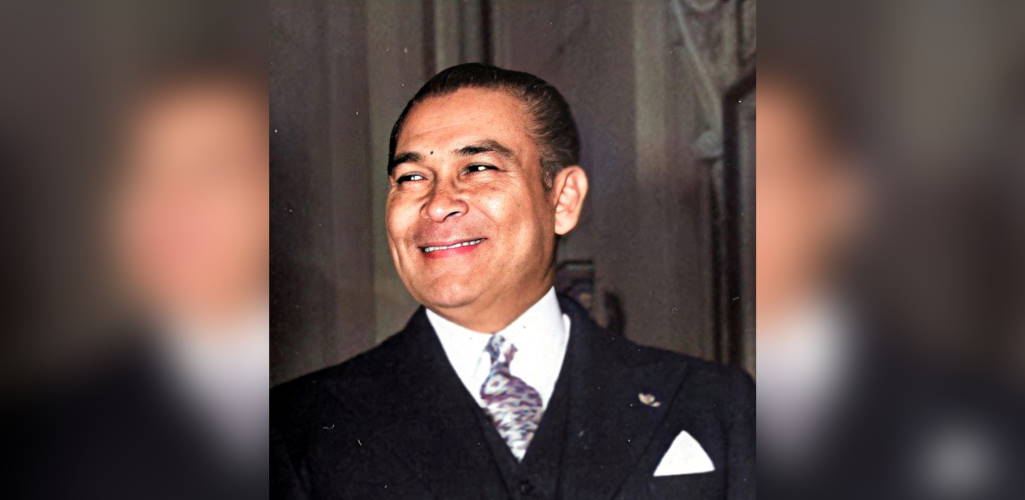
Havana.- This September 4, 92 years of the 1933 military assonada who emerged in the history of Cuba is the figure of Fulgencio Batista Zaldívar.
Batista was another of the undesirable products of the revolution that in 1933 overthrew the dictatorship of Gerardo Machado.
Born with the century in Veguitas, Banes, in the ancient province Oriente, his mother, Carmela, named him Rubén and put his last name, Zaldívar, because his father, Belisario Batista, when it came to registering it, did not want to give him his last name. In the minutes of the Banes Court, Rubén Zaldívar remained legally until in 1939, being nominated as presidential candidate, it was discovered that the birth registration of Fulgencio Batista did not exist. Getting it cost to postpone the presentation of his candidacy and fifteen thousand pesos to pay the judge.
Batista, who was mulatto, liked them to call him The Indian. To those who once said that it looked black, Orestes Ferrara, Socarrón, replied: “No, Batista seems white.”
After having been a cane cutter in Banes, a railroad retringequero in Camagüey and Recader of the Guards of the Tactical Third of Holguín, in 1921 Batista entered as a soldier of the fourth Infantry Battalion, in Columbia. President Alfredo Zayas, who used to see him reading while guarding his country house, nicknamed him THE FILOMATIC.
In August 1933, at the fall of the Machado regime, he was sergeant taquígrafo. He lived in a building in the corner of Toyo, was married to Elisa Godínez, Sundays he had beer and played dominoes with the neighbors, and with his military bearing he presumed cute before the females.
Of the four sergeants who led the assonated September 4 in demand that they raise their salary from 19 to 24 pesos, Batista was the only one who had a car. Sergeants Pablo Rodríguez, José Eleuterio Pedraza and Miguel López Migoya joined his group for the car, which allowed them to move quickly.
Sergio Carbó, without consulting with his other four colleagues in the Pentarchy that had replaced the deposed President Céspedes, on September 8, 1933 appointed Batista Coronel and Chief of the General Staff.
With high poins and cape to Napoleon, his 18 Brumament came to Batista with the fighting of the National Hotel and the castle of Atarés.
Batista, as head of the Army, was part of a random equation of provisional government with Ramón Grau as president and Antonio Guiteras as secretary of the Interior. But in 1934 he overthrew that government and became the strong man.
Authoritarian and populist, they nicknamed him The man. From Columbia, the kingdom of extrajudicial executions, the whip and the palmacristi. It was only a pale anticipation of what would come after March 10, 1952.
Batista flattered him to be considered “a providential man.” Actually, he was always a bold arrival that was mediated in chaos.
Batista opened and closed the parenthesis of relative political stability and democratic ascent in Cuba between 1940 and 1952. He opened it with the call to a constituent assembly that wrote one of the most advanced constitutions of his time. Batista, flirting with the left, won the presidential elections at the head of a coalition of parties that included the communists, whom he granted two ministries of his cabinet. And this democratic parenthesis closed abruptly at dawn on March 10, 1952, when he penetrated one of the posts of the Columbia camp to lead a military coup against the Government of Carlos Prío.
Batista’s alibi for the fracture of the constitutional order was to end the gang and the theft of the public treasure. Prio had made the mistake of allowing the general to return to Cuba since his golden exile in Daytona Beach to aspire to the presidency.
Despite the decline in the popularity of the authentic and the weakening of the orthodox after the suicide of Chibas, the possibilities of Batista for the elections were almost null. He only had to resort to the most expedited route to get to power: the quartelazo.
The hazards of our Republican history, since the time of the guerrites between liberals and conservatives to the revolutionary radicalism of 1933, had patented the axiom that the force of weapons confers legitimacy. And Batista knew the method well.
With his Tozudez, Batista, in 1954, spoiled the civic dialogue with the opposition, leaving the path open to supporters of revolutionary violence.
The last night of 1958, when the rebel forces were already in Santa Clara, the general-president raised his cup to desire “health, health” in the new year and left Santo Domingo with his family and some of his closest collaborators.
Batista, without proposing it, had paid the terrain for something worse, Castro totalitarianism.