Santo Domingo.– President Luis Abinader and Vice President Raquel Peña led on Wednesday the Fifty-First Council of Ministers, held in the National Palace, to follow up on the progress of the goals prioritized by the Government for the four-year period 2024-2028.
In the session, which lasted more than three hours, the criminal types related to the public administration of the new Dominican Criminal Code were presented, as well as the new Public Contracting Law, both key pieces in the institutional strengthening of the country.
The details were offered by the Minister of the Presidency, José Ignacio Bución, in his capacity as Technical Secretary of the Council, who reported that the new regulations seek to consolidate transparency, accountability and the fight against corruption.
“The government of President Abinader has made public integrity a flag. With this new Criminal Code, the new Public Procurement Law and the advances recognized by the OECD, we reaffirm our commitment to build a more transparent, fair and efficient state, at the service of all Dominicans,” said beating.
About the new Criminal Code
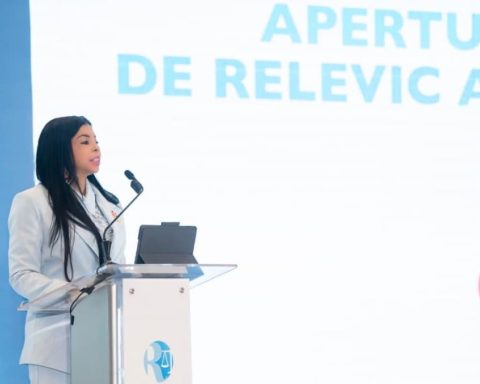
The Attorney General of the Republic, magistrate Yeni Berenice Reynoso, presented the main aspects of the new Dominican Criminal Code, which incorporates a more rigorous and modern typification of the crimes linked to the public administration.
Among the novelties are more severe sanctions for cases of administrative corruption, illicit enrichment, influence peddling, collusion in public hiring, bribery, peculation and money laundering. In addition, it introduces provisions that reinforce the criminal responsibility of officials and public servants, as well as mechanisms to guarantee greater effectiveness in judicial processes related to these crimes.
The piece also incorporates international standards for the fight against corruption, aligning the Dominican legal framework with the recommendations of multilateral organisms, which represents a firm step towards the consolidation of the rule of law and the strengthening of democratic institutionality.
NEW LAW 47-25 OF PUBLIC CONTRACTINGS
The Director of the General Directorate of Public Contracts, Carlos Pimentel, explained the details of the new legislation, promulgated in July 2025, which modernizes the system under the principles of transparency, integrity and competence.
Among its advances include the implementation of the PLADICOP platform for the digital traceability of the processes; the incorporation of criminal sanctions for acts of corruption; the promotion of social inclusion (with 30% of purchases reserved for MSMEs and companies led by women); as well as the use of data intelligence and risk management to optimize public investment.
Strengthening Public Integrity
During the meeting, the general director of Government Ethics and Integrity (DIGEIG), Milagros Ortiz Bosch, presented the results of the reports of the Organization for Economic Cooperation and Development (OECD), which highlight the important advances of the country in transparency and public integrity.
These reports are part of an action plan to strengthen the Dominican institutional framework, promoting a sustainable, transparent and effective management model in all government and social areas.
Works that transform the nation (2020-2025)
The Governing Council session also served as a stage for the presentation of the book: “5 years building the country we want”, a publication that collects the impact of the thousands of culminated and developing infrastructure works during the management of President Abinader, between 2020 and 2025.
With an investment exceeding $ 600 billion within the National Investment Plan in Development Infrastructure – which activates resources for more than RD $ 753 billion -, the initiatives have prioritized high social impact projects on roads, hospitals, schools, universities, housing, drinking water and community spaces.
Among the most relevant works include line 2C of the Metro and the Alcarrizos cable car, the expansion of line 1 of the Metro, the health city Dr. Luis E. Aybar, the Father Billini hospital, the Judicial City of Santo Domingo Este, the road solution on Republic Avenue of Colombia and the new power generation plants in Manzanillo.
Energy efficiency in public institutions
Finally, the Minister of Energy and Mines, Joel Santos, reported on the implementation of an energy saving measure in state institutions, with the aim of optimizing resources and contributing to environmental sustainability.