Presentation letter before Trump
Manuel Valencia, international business professor at Technological of Monterrey Campus Santa Fe, comments that this announcement has two readings: the first is that it seeks to protect the national industry and jobs, and the other, although more subtle, has to do with renegotiation to the T-MEC.
“This is a good letter under the sleeve where it can be demonstrated that Mexico is also an active participant in putting order with China,” he says.
Valencia says that the Mexican government has shown EU that it is willing to order drug trafficking, with extraditions with drug lords, and this announcement is similar from a merely commercial area.
“Let us imagine the negotiation (of the T-MEC) and in the style of Donald Trump asks us: ‘And what have you done for me or what have you done for this to change?’ I think that (the ban on Chinese footwear) is an answer,” he says.
“Let us imagine the negotiation (of the T-MEC) and in the style of Donald Trump asks us: ‘And what have you done for me or what have you done for this to change?’ I think that (the ban on Chinese footwear) is an answer,” he says.
Manuel Valencia, International Business Professor of Technological of Monterrey Campus Santa Fe.
Marcelo Ebrard, secretary of Economy, admitted this weekend that the country is “on a threshold where many difficulties will face” towards the renegotiation of the T-MEC, which will conclude in October 2026.
“Mexico has its plan. Its plan is to produce more and import less, its plan is to maintain free trade with the United States,” said Morena legislators.
They need to stop deterioration in the footwear industry
Gabriela Siller, director of financial economic analysis of Banco Base, considers that there may still be more tariffs against China in the following months.
On the suspension to the importation of Chinese footwear in Mexico, the specialist points out that the national footwear industry requires making adjustments to be more competitive, such as investing in machinery and equipment, since gross fixed investment has shown deterioration in recent months.
“This means that there is less machinery, equipment and plants, so eventually productivity will go down (with this trend),” he says.
Valencia, the academic of the Tec de Monterrey, agrees that once the imports of Chinese footwear, companies in the country must boost innovation and its productive capacity, since the federal government is fulfilling its part of supporting industrialists.
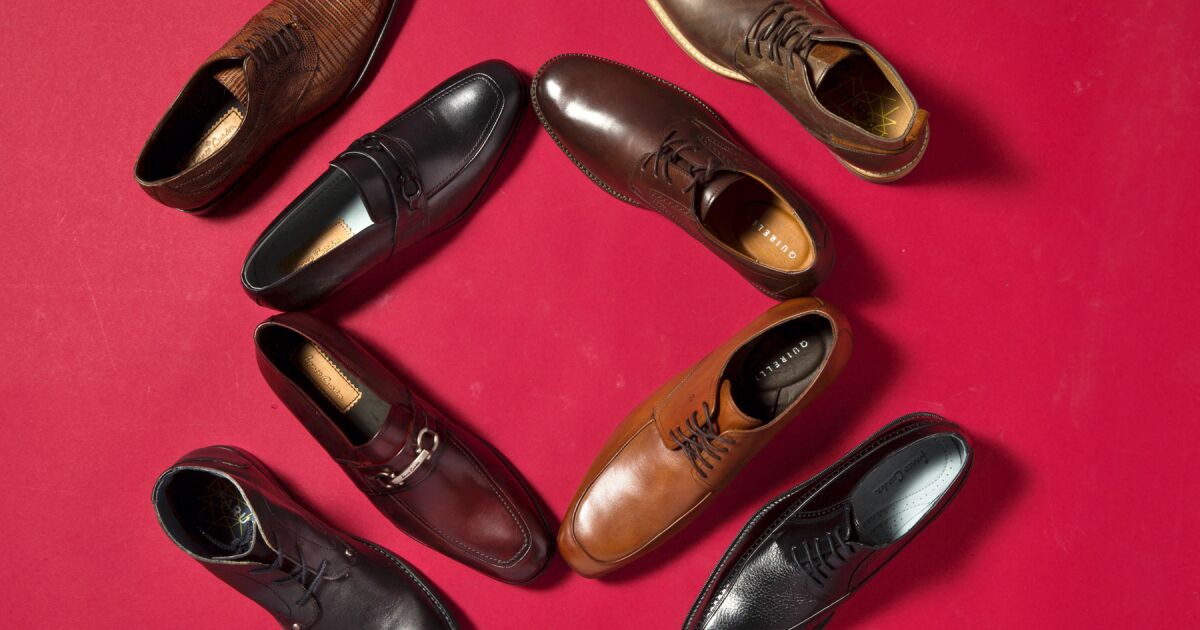
“There is a part of the footwear we can export, and that is interesting. Mexico has 128 million inhabitants and production is larger than that, almost 200 million peers. That means that there is enough shoes in Mexico for the inhabitants and also to export,” he says.
Official figures show that between 2019 and 2024, the GDP of the footwear industry contracted 3.1% per year on average, while employment fell 2.8%.
Only in 2024 almost 11,000 formal positions were lost and the GDP of the sector collapsed 12.8% compared to the previous year. The plant capacity used was also reduced more than 16 percentage points.