Countries in the region such as Peru and Colombia will disseminate inflation data this week. Despite the challenges, between December 2024 and June 2025, 16 countries in the region managed to reduce their inflation rate
Inflation continues downward in the main economies of the region and during the first semester of 2025 showed a relatively stable trajectory, although the rhythm at which it converges towards the objectives is increasingly slow, warned the Economic Commission for Latin America and the Caribbean (ECLAC).
In the economic study of Latin America and the Caribbean 2025, ECLAC indicated that as regional inflation converges towards the threshold of 3% -value commonly used as a goal by various central banks -“its reduction speed has been moderated.”
“In June 2025, the regional median was 3.9%, without variation with respect to the value of December 2024,” said ECLAC.
The decrease in inflation is usually faster at the beginning, when the levels are high, but as rates close to values considered “price stability” are reached, it is more difficult to achieve new reductions.
According to ECLAC, there are another number of factors that have avoided faster decline, among which adjustments in regulated public services, such as transport, and essential goods, such as fuels.
In addition, inflationary persistence in the region responds to the indexation of wages and prices, exchange depreciation that increased imports and supply shocks for extreme climatic events.
Despite the challenges, between December 2024 and June 2025, 16 countries in the region managed to reduce their inflation rate.
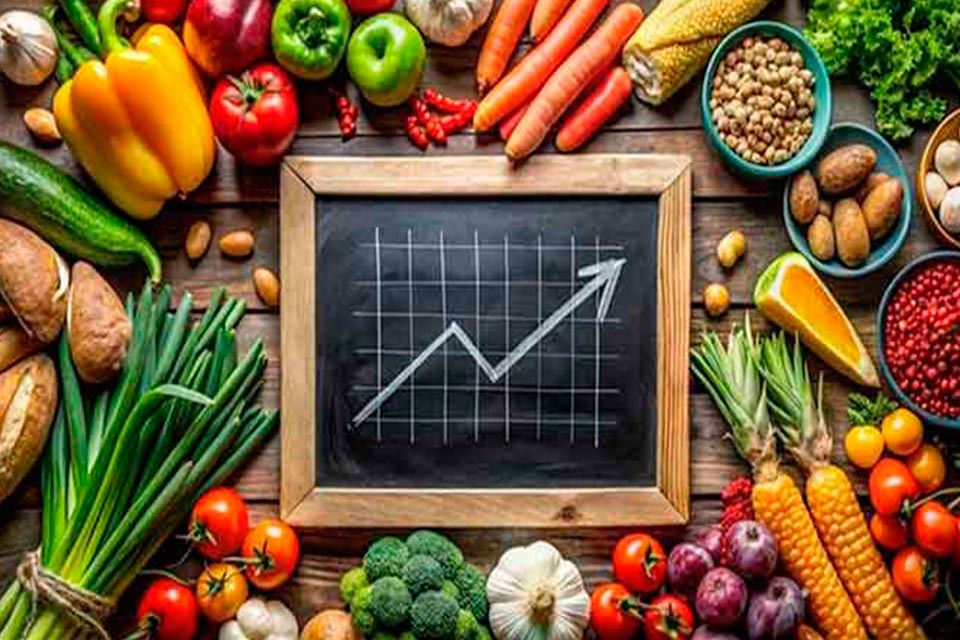
The reduction of general inflation was mainly driven by the decrease in the price of food.
According to the report, the most significant decreases, around the 4 percentage points, were recorded in Argentina, Cuba and Suriname, “whose economies continue to face structural challenges related to chronic inflation processes.”
On the other side, it refers to the rise of more than 14 percentage points of inflation in Bolivia.
Increases greater than 0.5 percentage points in the Bahamas, Brazil, Ecuador, Dominica, Honduras, Santa Lucia, and Trinidad and Tobago were also recorded.
ECLAC believes that the inflationary scenario for the rest of 2025 and by 2026 «to depend largely on the ability of countries to expand its margin of maneuver in macroeconomic politics.
It will also weigh its management of external disturbances, particularly those generated by possible increases in the international price of food and energy, as well as those linked to the volatility of international financial markets.
Read the full text in Bloomberg
*Journalism in Venezuela is exercised in a hostile environment for the press with dozens of legal instruments arranged for the punishment of the word, especially the laws “against hatred”, “against fascism” and “against blockade.” This content was written taking into consideration the threats and limits that, consequently, have been imposed on the dissemination of information from within the country.
Post views: 169