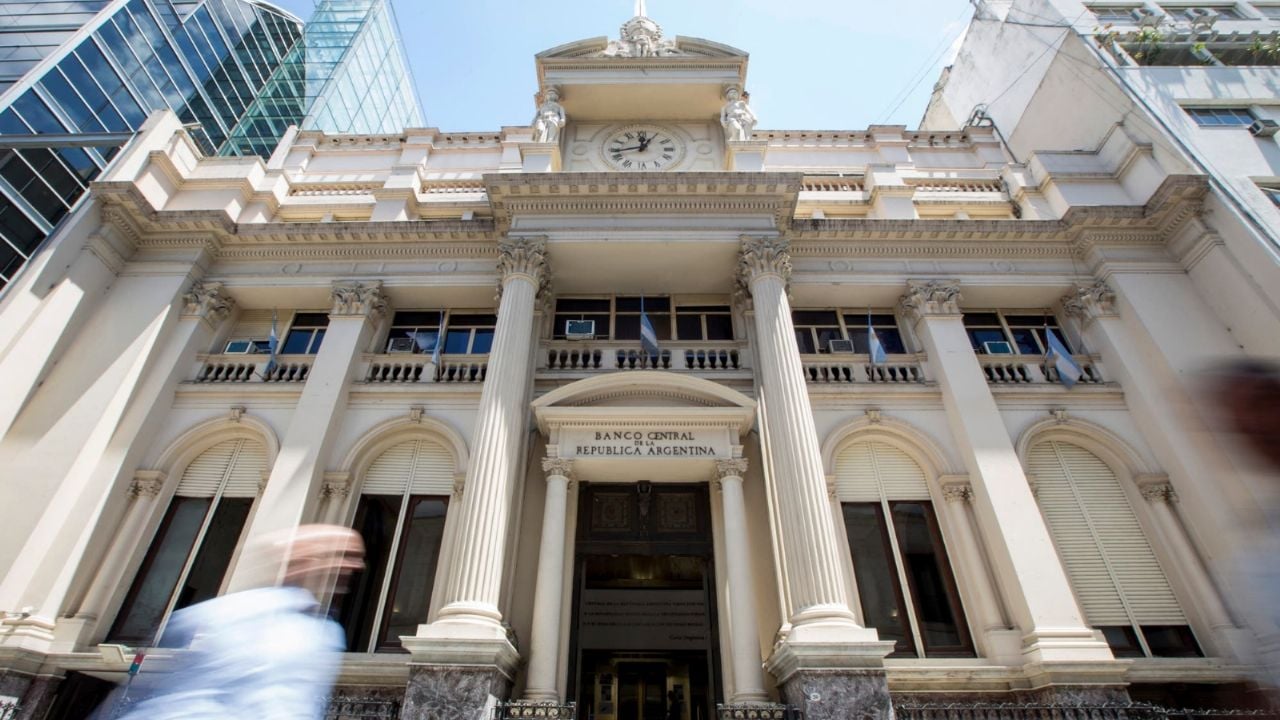
In the midst of an economic context marked by exchange volatility and negotiations with international organizations, the Central Bank of the Argentine Republic (BCRA) ratified a decision that generated surprise and debate: it will only intervene in the exchange market to buy dollars when the price is below $ 1000.
This position, which is part of the new scheme of flotation bands, was confirmed in the report that the Chief of Cabinet, Guillermo Francos, presented to the National Congress, and contrasts with the explicit order of the International Monetary Fund (IMF), which had requested a more active participation of the BCRA in the accumulation of reservations.
The strategy of Central Bank It is part of the new exchange regime agreed after signing the last agreement with the IMF. This scheme establishes a flotation band between $ 1000 and $ 1400, within which the BCRA It will not intervene.
It will only do it if the dollar drills the floor of the $ 1000 buying currencies or if it exceeds the $ 1400 roof selling reservations to contain the rise. According to market operators, this decision seeks to preserve international reserves and avoid unnecessary interventions that may generate distortions.

In fact, the BCRA He already launched a purchase order for US $ 500 million when the wholesale dollar approached the band’s floor, in a play that was interpreted as a clear sign that the government is willing to sustain this policy firmly.
The measure occurs at a time when the dollar has shown a bearish trend, driven by the liquidation of the thick harvest, the entry of external funds and the rise of interest rates in pesos. The wholesale dollar closed at $ 1080, while the MEP was at $ 1093 and the one in cash at $ 1102, all below the intervention roof but still far from the floor.

Reservations, stocks and market signs
Since the beginning of the new agreement with the IMF, the Central Bank received US $ 12,000 million in disbursements, which allowed to swell the reserves and give a certain margin of maneuver. To this is added the gradual opening of the change market for foreign investors, who can now access the official dollar after a minimum permanence of six months in the country.
The president of BCRASantiago Bausili, and the Minister of Economy, Luis Caputo, have defended this strategy as part of a comprehensive plan to get out of the exchange rate and consolidate monetary stability. The idea is that the market works with greater freedom, but within clear parameters that avoid shocks.
Followers in Google News And in our channel of Instagramto continue enjoying the latest news and our best content.