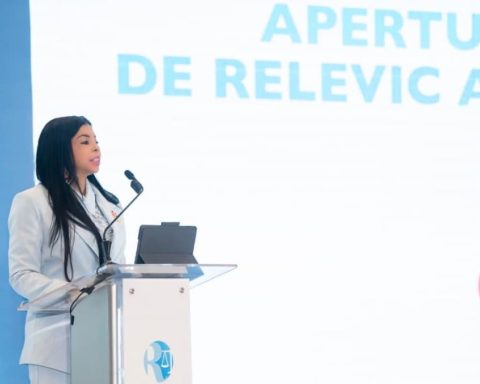
The country has been advancing in the matter of the social and democratic state of law, above all, from the Constitution of 2010 and the principle that all persons are subject to a established legal order has been strengthened. However, not everything is perfect and some reforms in justice are pending.
In this approach the jurists agreed Olivo Rodríguez Huertas, Miguel Valerio and Patricia Santana, During the lunch of the Corripio Communications Group.
Rodríguez acknowledged that citizens have a broader space of freedom and that the constitutional reform of 2010 not only extended the sphere of fundamental rights, but also worried about establishing a set of guarantees, in order to comply with international treaties.
“There is an arsenal of measures in the Constitution that ensures that these rights are really effective, that there are instruments. Because it is of no use that the Constitution establish a catalog of rights, if people, in case of violation, cannot reverse that situation.”
He valued the leading role of the Constitutional Court for these guarantees and impose its provisions above the authorities and regulations that contradict the constitutional values and dignity of the persons. “The Constitutional Court has really worried about guaranteeing the supremacy of the Constitution.”
You can read: Three jurists predict several articles of the new Criminal Code will not pass cedazo of TC
While, Santana explained that Dominican constitutionalism in the last 30 years has had a very important impact, due to the way in which the right has been transformed into the country.
He indicated that the Constitution recognizes as its foundation the dignity of people and the obligation of the State to protect rights, to do so progressively and guarantee equality, placing people in the center of all state dynamics and, obviously, of the work of the justice system.
“We come from a justice system where the judge had the idea of the empire of the law and now in the Constitution it places us in the center of all your decisions and all your policies to people.”
He stressed that the Constitution includes a broad fundamental human rights catalog, also reinforced protection of people in vulnerability and includes the bases on which it must be interpreted.
On his side Valerio explained that it is necessary to continue with the second wave of judicial reform to strengthen in the social and law. Understand that an important challenge is the digitalization of justice, to guarantee access and speed, as the courts are collapsed. He advocated alternating solutions to the conflict, since the judicial agreements that allow minimizing what reaches the courts and avoids risks of threat of witnesses, obstruction of justice and procedural scam.