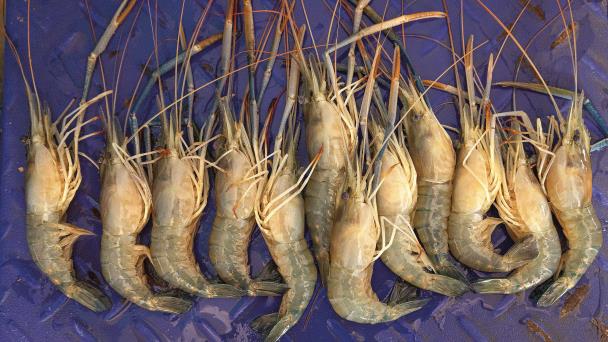
Every week for 32 years, Corinne Misson Delivery to restaurants and hotels from the North Coast, Punta Cana and Santo Domingo, the fresh prawns who has reaped his farm in COPEYITOMaría Trinidad Sánchez Province.
From there, he maintains a business that despite the high demand for tourism, is increasingly scarce: his farm is one of just two that still produce River prawns throughout the country.
Popularly known as “river shrimp“, the prawn was one of the first crops with which the aquaculture for commercial purposes in the Dominican Republic In the 80s, with a performance that by then it was around 82,500 pounds a year.
Forty -four years later the production Stay the same, averaging the 90,200 pounds a year in the last four -year, as can be official data.
In that same period, the Shrimp imports They passed 16.3 million of dollars in 2019 to 31.04 million of dollars in 2024, according to customs, so dozens of producers, unable to compete, migrated to other simpler and more profitable aquaculture crops.
“This is a immense countrywith a lot of land, water and resources to produce. We must encourage production (…); The problem is that the majority of what is purchased is imported, it observed Misson In this regard.
The Current volumes of prawns They are very compared to the Tilapiathat between 2020 and 2024 exceeded on average the 3.5 million pounds per year. Although it is a different crop – and that represents about 90 % of the aquaculture National—, the difference illustrates the shrimp lag in front of other aquaculture items.
The culture that did not prosper as expected
Sowing of River prawns In the country it began thanks to the Technical assistance that Taiwan granted Dominican and other countries in Central America in the 80s with the aim of having a kind of greater growth, less aggressive and economically more viable than those of shrimp natives of the region.
Of all the nations that tried to sow this crop, only the Dominican Republic He achieved his Successful insertion for commercial purposesaccording to the United Nations World Nations for Food and Agriculture (FAO) and the Dominican Institute for Agricultural and Forestry Research (IDIAF).

Missonwho is English and reached the Dominican Republic In 1993, she ventured with her husband at that time, the French Richard Leclercin a crop that “seemed interesting” for being incipient and promising profitability.
“There were several projects in the entire country, broken projects that we study a lot to know why, not to make the same mistake. And we thought it was an interesting product,” says the agronomist by profession, who says “went from everything” to maintain, to this day, a product of today High quality harvested at a very low density – a shrimp per square meter – to replace what its clientele – hotels and high -end restaurants – demand.
Without own capital and without access to financing, small producers They tried to prosper in that crop had a different experienceaccording to IDIAF: catastrophic events – such as hurricanes and tornadoes -, the high cost of production and the difficulty of accessing differentiated credits, made most of the Aquacultters premises will leave the production Nationally, according to a publication of the entity dating from 2007.
It was just that year when the Olga and Noel storms They frustrated the production of prawns of Florentino Fortunea small aquaculturer who sowed in COPEYITO Since 2000.
“We lost everything, we were zero,” said the producer, who ran out of an important client at Punta Cana who had at that time that he began to Import shrimpbecause they were cheaper.
The dilemma with imports
Since then, resume the prawns for Fortune It was never the same: he tried to continue with his own means and capital, but “there was no one to sell it.” The Shrimp tail importation competed: if at that time he sold the pound of prawns integers a 135 pesosthe tail of Marine shrimp Imported cost alone 60 pesos.
He tried to keep the productionalong with other crops such as Tilapia and mere base. But the restrictions of the Pandemia in 2020 They represented a hard blow to their farm. He assured that the zero rate loans further facilitated Shrimp imports and tilapias, in a context in which food for crustaceans and fish – which represent 60 % of the cost of production in the aquaculture– They shot up.
The prawns They are crustaceans who take two months in their Larvia phase and post larval, and about four months for harvest, so an aquaculturer needs at least eight months of investment to see the first entry. Lacking a market insurance to sell compromises the economic sustainability of a project of this nature.

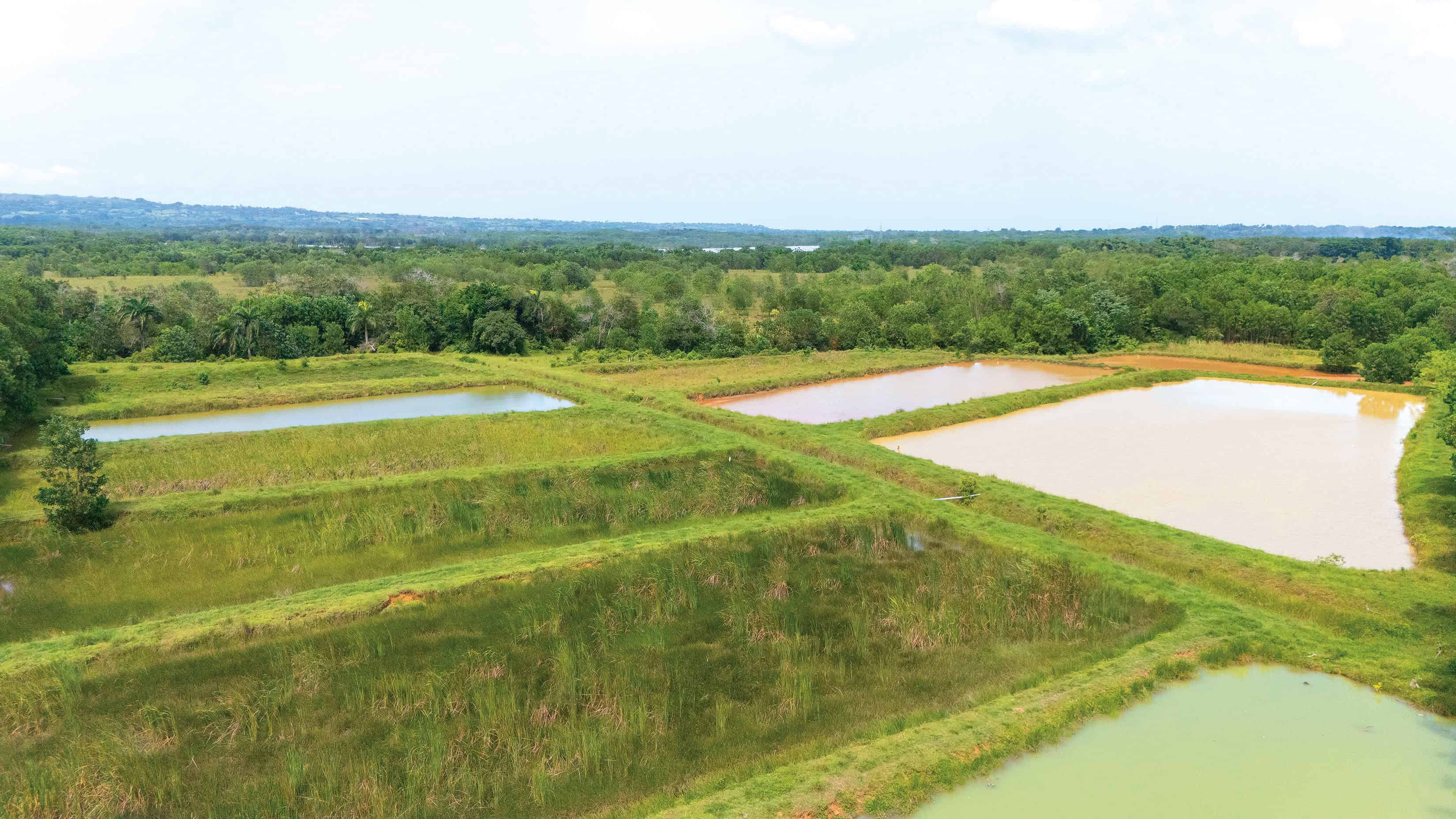
Given this situation, and prevented from being able to continue on its own aquaculture After losing a leg for diabetes several years ago, Fortune It relies on relatives and acquaintances. Live from cattle And in their ponds, many of them among the weeds, they only have some 2,000 tilapias that raises to consume and sell to the same people in the area.
The Solution to imports It is not as simple as stopping them, said the director of fishery resources of Codopesca, Ángel Luis Franco, who assured that the varieties that occur in the country are not imported.
“The others shrimpsuch as salt water, do not occur in the Dominican Republic. We do not have the power, the power, to be able to stop that import, because we would enter into an unfair trade issue in front of the World Trade Organization If the importer put any demand against the country regarding that, “he said.
Depending on the size, Misson Sell the pound of prawns between 250 and 320 pesos Libra without taxes, since it is a taxed product. “My price is much higher than the Imported shrimpOf course, but there are people who understand that it is worth it, “he said.
A market With more potential in tourism
Richard Leclercex -husband of Corinne and founder of Gambas del Caribe in Bayaguana, Monte Planta province, produced until 150,000 pounds per year of prawns To replace the East coast hotels.
Even so, your experience to market it It was “quite difficult”withdrawing in 2010 and concentrating on producing tilapias, tents, pacús and mere base, the main product to which its farm right now.
Recognize that it is a different crustaceanin Taste and textureto which the Dominicans are accustomed, such as the Sea shrimp that fish in the municipality of Sánchez, Samaná province.
“It is not a shrimp that corresponds well to the cooking habits of the Dominicans. There are people who like, of course, but the introduction of shrimp is not so easy. It is a shrimp that is very large, but it has the tail smaller than the head, the flavor is more in the head than in the tail … and they do not endure well the freezing. If it is not done in a good way, the meat is damaged. And you can’t cook too much“, held.
This coincides with Dominican Tilmax General Manager, Rodrigo del Ríowhose farm Aquícola is 30 minutes away from Gambas del Caribe.
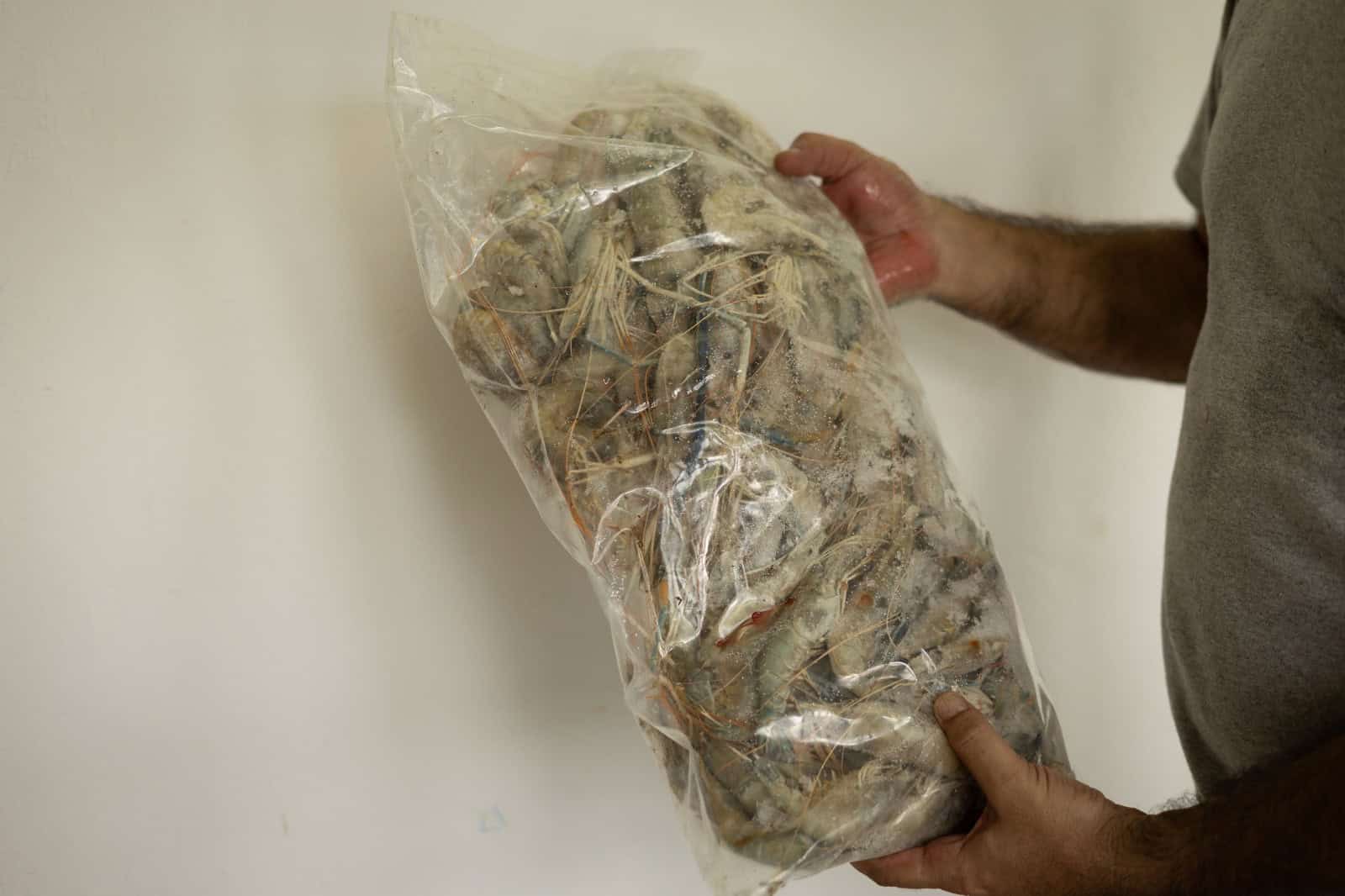
Based on Bayaguana, from the river resumed six years ago the production of prawns That the administer’s farm produced in the 90s, when he was in charge of the maximum noquiculture Nicolás.
It is the second farmas far as you have a record, which keeps alive the production of prawnsof the variant Macrobrachium Digueti. At the moment, Del Río produces less than 1,000 pounds, since it is more concentrated in selling the post larvae of the prawns To other producers, friends and acquaintances.
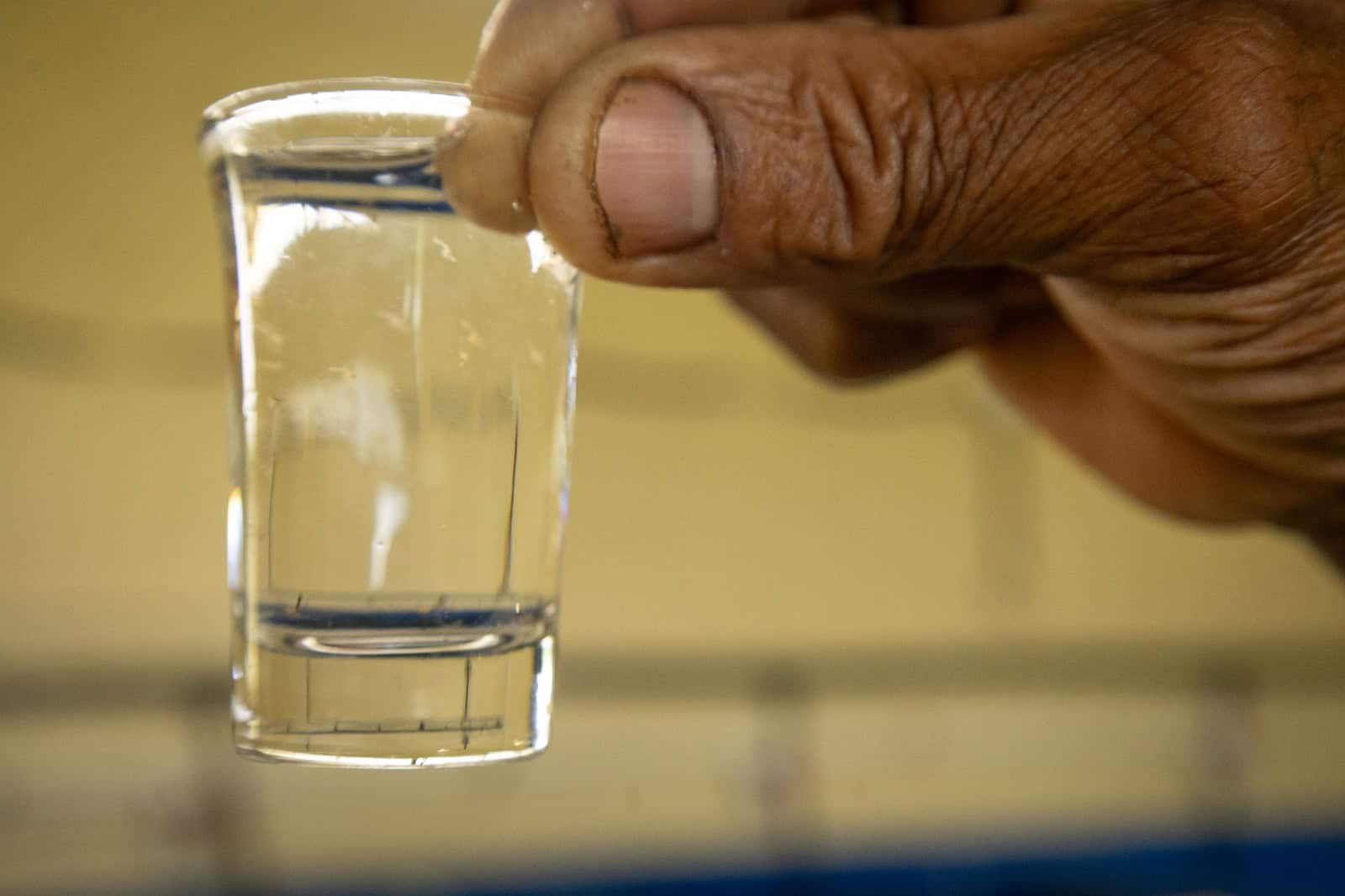
Its goal is to Diversify crops of the farm –In who has tilapias and tents– and find them market also in him Tourism sectorwhere he understands that is the greatest potential, since the market of prawns In this segment “is virgin.”
“Only with the hotel chain What’s here, and the number of tourists that come here, the market. But, it’s not so easy, “he acknowledged.
Regretted that authorities lack strategies that fit the Restaurant demands With the initiatives of the Aquaculttersin a context in which the arrival of tourists guarantees a permanent demand for aquaculture products.
“I don’t see a powerful approach, simply as they are fulfilling their functions (…). They help small producersbut not that big jump of increasing a productionas a country, to be noticed in pounds, in the gross domestic product. Not yet, “he said.
That is why he considers that Aquacultters They should join to generate a volume able to supply hotels and tourist restaurants. “It’s a round business,” he says, but requires commitment. “Without constancy, there is no business,” he settled.
Franco said that the Dominican Fisheries and Aquaculture Council is currently in a “data” data lifting, both of those farms that stopped their production, and of aquaculture farms that could have the soil and climatic conditions to resume a production that in itself is delicate and expensive, but which can be overcome with polycultures such as the tilapia or the tent.
He indicated that this process is not simple, since many ponds are from geomembranes and shrimp is usually produced in linear earth ponds. Even so, consider that if the producers who have the conditions are encouraged, resume it would be viable.