Despite a generalized increase in the income of Mexican households, which increased 18.7% between 2018 and 2024 (from 18,381 to 21,825 average monthly pesos per person), and a slight reduction in poverty and the Gini index (from 0.68 to 0.63), economic inequality remains a fact, the report points out.
The study emphasizes that these improvements are not enough to guarantee full access to human rights, the development of life projects or social mobility for the majority of the population.
The poor live with 70 pesos a day, the rich with 4,700
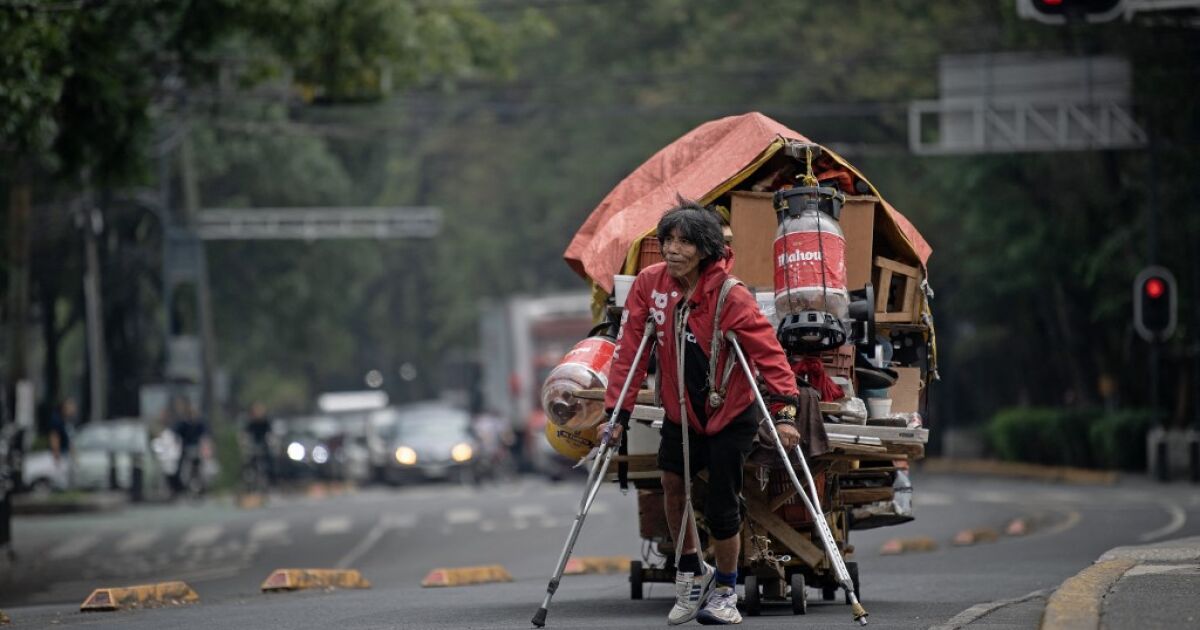
In fact, households of the poorest 10% barely receive 2,168 pesos per month, which is equivalent to just over 70 pesos a day. In contrast, the richest 10% households obtain 140,998 pesos per month, that is, around 4,700 pesos a day.
Beyond showing general averances or trends, it is urgent
Oxfam and Indesig report
In the most extreme pole, the Rich 1% revenues reach 958,777 pesos per month per personbeing 44 times larger than the national average and 442 times higher than the income of the decile, that of lower income.
In relative terms, the poorest households only access 2% of the country’s total income, while The richest 1% stay with 35% of total wealth.
Income poverty was reduced, but extreme wealth grew
The authors also alert that, although the income of the decile and grew 29% and those of the decile x 19% between 2018 and 2024, the revenues of the richest also grew 29%.
This means that, although both the richest and poorest increased their income proportionally, the difference in amounts was “abysmal”, since the people of the decil and received almost 16 pesos a day, while the richest 1% received 7,123 pesos more a day, between those two years.
Access to rights, conditioned by admission
The average expenditure analysis, which increased by 9% between 2022 and 2024 exceeding 5.85% inflation in the same period, also revealed disparities. Since while households of the poorest 10% spend an average of a weight for every six that disburse the richest 10%, the precariousness is more evident in the way in which the expense is distributed.
For example, households with lower income allocate most of their expense to Basic needs such as food, housing, care and healthitems that, according to the report, should be guaranteed by the State.
At risk of running out of a roof
As for the situation of access to housing, the report warns that the poorest 10% is in severe housing riskby allocating more than a third of their income to the payment of rent, contravening the recommendations of international organizations, they point out.
In contrast, the richest homes spend their money on education, recreation and private or luxury transport.
Máximo Jaramillo, director of the indesig, emphasized that “only those who have more resources can fully access health, education, decent housing or care services.”
Both organizations recognize that the constant increase in the minimum wage and labor reforms of the previous six -year term have had important achievements, but that did not necessarily derive in the improvement in access to rights enshrined in the Constitution.
Carlos Brown, director of Programs of Oxfam Mexico, highlighted the urgency of “strengthening and expanding public services that guarantee rights and reduce inequalities”, as well as maintain effective salary and work policies, refine social policy to be truly redistributive and move towards a fiscal policy that reduces the extreme concentration of income and wealth.