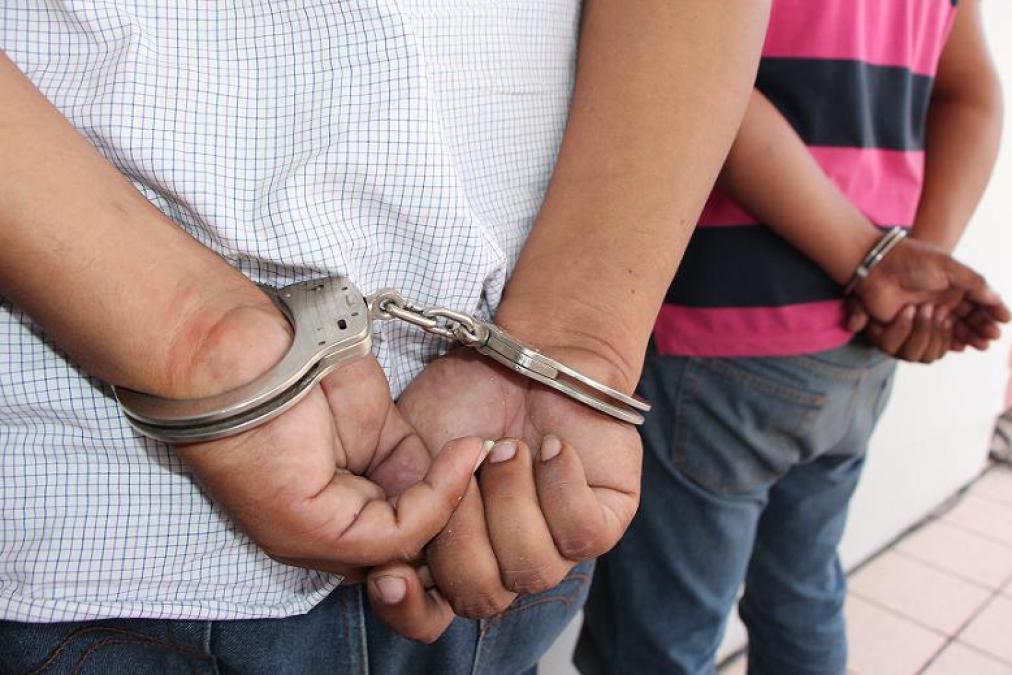
WHO emphasizes that legal measures must be accompanied by public awareness campaigns and direct support to parents, caregivers and teachers to promote positive and non -violent forms of discipline
Throughout the world some 1.2 billion children from zero to 18 years, more than half of that population, suffer corporal (physical) punishments in their homes every year, according to a study released this Wednesday, August 20 by the World Health Organization (WHO).
The epidemiologist Etienne Krug, director of the Department of Determinants of Health, Promotion and Prevention of WHO, observed when presenting the report that “there is overwhelming scientific evidence that corporal punishment entails multiple risks to child health.”
That punishment “does not offer any benefit to the behavior, development or well -being of children, nor for parents or society.”
For Krug “it is time to put an end to this harmful practice, to guarantee the integral development of children at home and school.”
WHO emphasizes that legal measures must be accompanied by public awareness campaigns and direct support to parents, caregivers and teachers to promote positive and non -violent forms of discipline.
*Also read: PMA reduces half a range of your food program due to lack of financing
Report data
- A sample of 58 countries reflects that 17 % of children suffering from corporal punishments last month suffered their most severe forms, such as blows to the head, face or ears, or strong and repeated blows.
- Among children from two to 14 years old, corporal punishment rates declared by parents and caregivers in the last month ranged from 30% in Kazakhstan and 32% in Ukraine, up to 63% in Serbia, 64% in Sierra Leone and 77% in Togo.
- 67 countries around the world have universally prohibited corporal punishment, both at home and at school. However, the practice continues.
- According to UNICEF data obtained between 2010 and 2016 in 49 low and medium -sized income countries, corporal punishment in children from two to four years was less common in Europe and Central Asia (41 %) and in East Asia and Pacific (48.2 %).
- In Latin America and the Caribbean 55.2 % of these young children were exposed to corporal punishment, and 64.6 % in South Asia. The corporal punishment was more common in sub -Saharan Africa (70.6 %) and the Middle East and North Africa (75.8 %).
- WHO indicates that in schools the practice is equally widespread. In Africa and Central America about 70 % of children suffer corporal punishments during their school years, compared to 25 % in the Western Pacific region.
Who are the most vulnerable
The report “Child corporal punishment: its impact on public health”, highlights that among children with the highest risk of corporal punishment are:
- Children with disabilities.
- Those whose parents have suffered corporal punishment.
- Those who have parents who suffer from substances consumption, depression or other mental health problems.
- Those that are affected by broader social factors such as poverty, racism and discrimination.
What are the consequences
According to the United Nations report, beyond immediate injuries, the consequences of child corporal punishment for health are deep and high -range:
- This practice triggers harmful biological responses, such as greater reactivity of stress hormones and changes in brain structure and function that can harm healthy development.
- An analysis in 49 low and medium income countries shows that children exposed to corporal punishment have, on average, 24% less likely to achieve normal development compared to their peers who are not exposed.
- They face a higher risk of anxiety, depression, low self -esteem and emotional instability.
- Psychological effects usually persist until adulthood, manifesting in higher rates of anxiety, depression, substance abuse and even suicide, suicide attempts or suicide consummate.
- They are more likely to develop aggressive behaviors, have academic and, adult difficulties, to participate in violent, antisocial or criminal behaviors.
- This practice also encourages greater social acceptance of violence, reinforcing harmful cycles throughout generations.
With information from Inter Press Service
*Journalism in Venezuela is exercised in a hostile environment for the press with dozens of legal instruments arranged for the punishment of the word, especially the laws “against hatred”, “against fascism” and “against blockade.” This content was written taking into consideration the threats and limits that, consequently, have been imposed on the dissemination of information from within the country.
Post views: 214