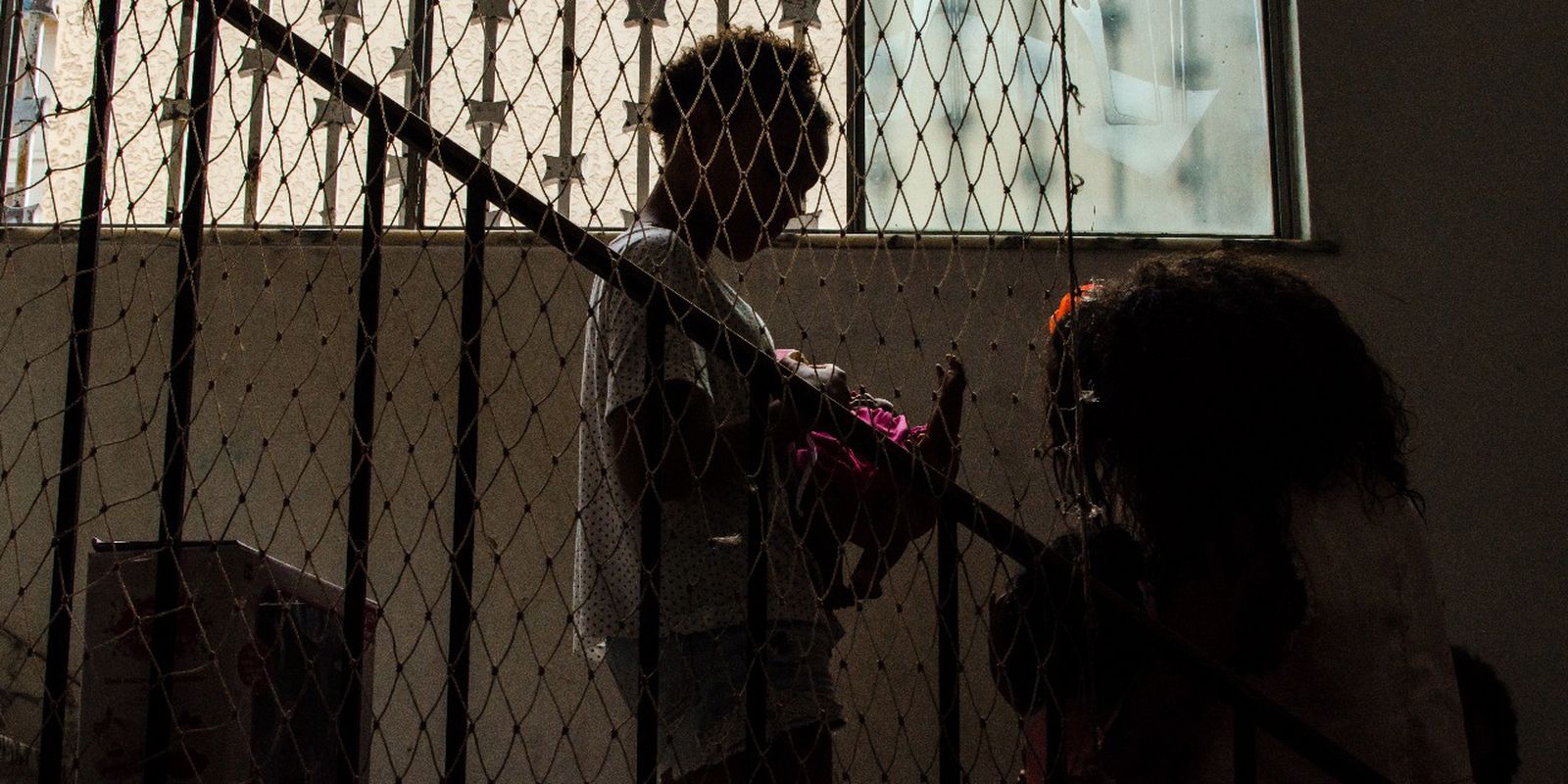
Children and adolescents who need welcoming in shelters or halls in the state of Rio de Janeiro face a reality full of problems. The structures are precarious and there is difficulties to get basic hygiene, underwear and medicine items. Most of the welcomes arrive with a history of violence and receive no proper treatment.
The information is from a study by the Rede Soligo Institute, in partnership with the Ministry of Human Rights and Citizenship (MDHC). The data will be presented to the public on August 26, but were anticipated for the Brazil agency.
The interviews were conducted in 129 units out of 155 throughout the state. They were not disclosed which municipalities, nor the name of the institutions. Data on 1,156 children and adolescents were obtained, representing more than 80% of the Fluminense network.
Of the reception places, 83.72% are institutional shelters and 16.28% work in the shape of halls. Most of these institutions are administered by the municipal government (75.97%) and serves both sexes (84.50%).
One of the first problems identified in the study is that only 53.49% of the reception places fully cover the age group from 0 to 18 years. The situation contradicts the current technical guidance of the National Council of Social Assistance (CNAS). One of the questions this causes is the separation of brothers with very different ages.
The predominant age group in the units is 12 to 17 years (44.81% of those welcomed). Regarding the sociodemographic profile, 78.29% are black children and adolescents, 62.72% come from urban slums or peripheries and 52.42% originate in female single -padded families.
Professionals who work with this type of reception also face challenges: 28.68% of institutions do not offer any type of professional training. The absence of continuous formation was pointed out as the main difficulty by 67.44% of managers.
Precarious reality
In nine institutions, the number of vacancies exceeds the mandatory limit of 20 welcomed per unit. They are with 21 or 25 children and adolescents. In 12 other, the situation is even worse, considered overcrowded: they have more than 30 welcomes.
More than half of the shelters have difficulties in the infrastructure (53.49%). The most common problems are in furniture (41.86%), mold or infiltration (37.98%), telephony and internet (37.98%), electrical system (34.11%), walls (34.11%) and appliances (32.56%). Failures were also reported in doors, windows, ceilings, floors, sewage, gas and cases of pest infestation.
In 18.60% of shelters, personal hygiene items are shared by children. The same happens in the use of clothing and warm clothing (10.08%), shoes (7.75%) and school supplies (2.33%). In addition, 3.10% do not have adequate space to store personal belongings. And 32.56% have difficulties to provide underwear.
“The predominance of the institutionalized model, associated with the scarcity of resources, the lack of training of teams and the fragility of infrastructure, compromises the principle of integral protection provided for in the Statute of Children and Adolescents (ECA),” says one of the stretches of the study.
Violence, Education and Health
Most of those welcomed (84.43%) suffered some kind of violence before entering institutions, and 63.49% were victims of two or more types of violence. Psychological violence was the most common (72.49%), but cases of sexual violence also draw attention because it affects 21.97% of children and adolescents.
The study shows that the reception centers are also not prepared to deal with these situations of greater vulnerability.
Only 44.4% of welcomed children and adolescents receive psychological follow -up; 51.61% perform health treatments and 51.30% have never performed a view. A considerable number of institutions reported difficulties in obtaining medicines (26.36%).
In the educational field, 47.06% of the welcomes have school lag and 27.51% of children of literacy age did not learn to read and write. The researchers point out that the role of reception institutions is to ensure that children and adolescents are properly enrolled.
Given the data collected, the researchers reinforce the urgency of revising institutional practices, as well as the strengthening of the protection network and implementation of policies that effectively guarantee the rights of children and adolescents.
“The profile of the welcomes reinforces the intersectionality between race, territory, poverty and violation of rights. The reception, which should represent a temporary protective measure, often becomes a space for reproduction of inequalities, marked by insufficient articulated public policies and low investment in the qualification of care,” says the study.