The United States threats that they could use military personnel against Venezuela have brought additional tensions to the Latin American and Caribbean continent due to the risk of direct intervention of a foreign power on the continent, which has not occurred since the US invasion of Panama in 1989.
The possibility of intervention was criticized by representatives of the governments of Mexico, Colombia and Brazil. President Nicolás Maduro stated that Venezuela is able to defend himself and stressed that an intervention in the country would have continental repercussions.
The special advisor to international matters of the Presidency of the Republic, ambassador Celso Amorim, said in the commission of the House of Representatives on Wednesday (20) that he sees with concern the displacement of US boats to the Venezuelan coast.
“Non -intervention is fundamental, a basic principle of Brazilian foreign policy. A historical thing. Even during the military government period, Brazil has never accepted the idea of external interventions. And it worries us the presence of war boats very close to the Venezuelan coast, especially with [as recentes] Declarations, ”he said, considering that organized crime must be fought,“ but with the cooperation of countries, not with unilateral interventions ”.
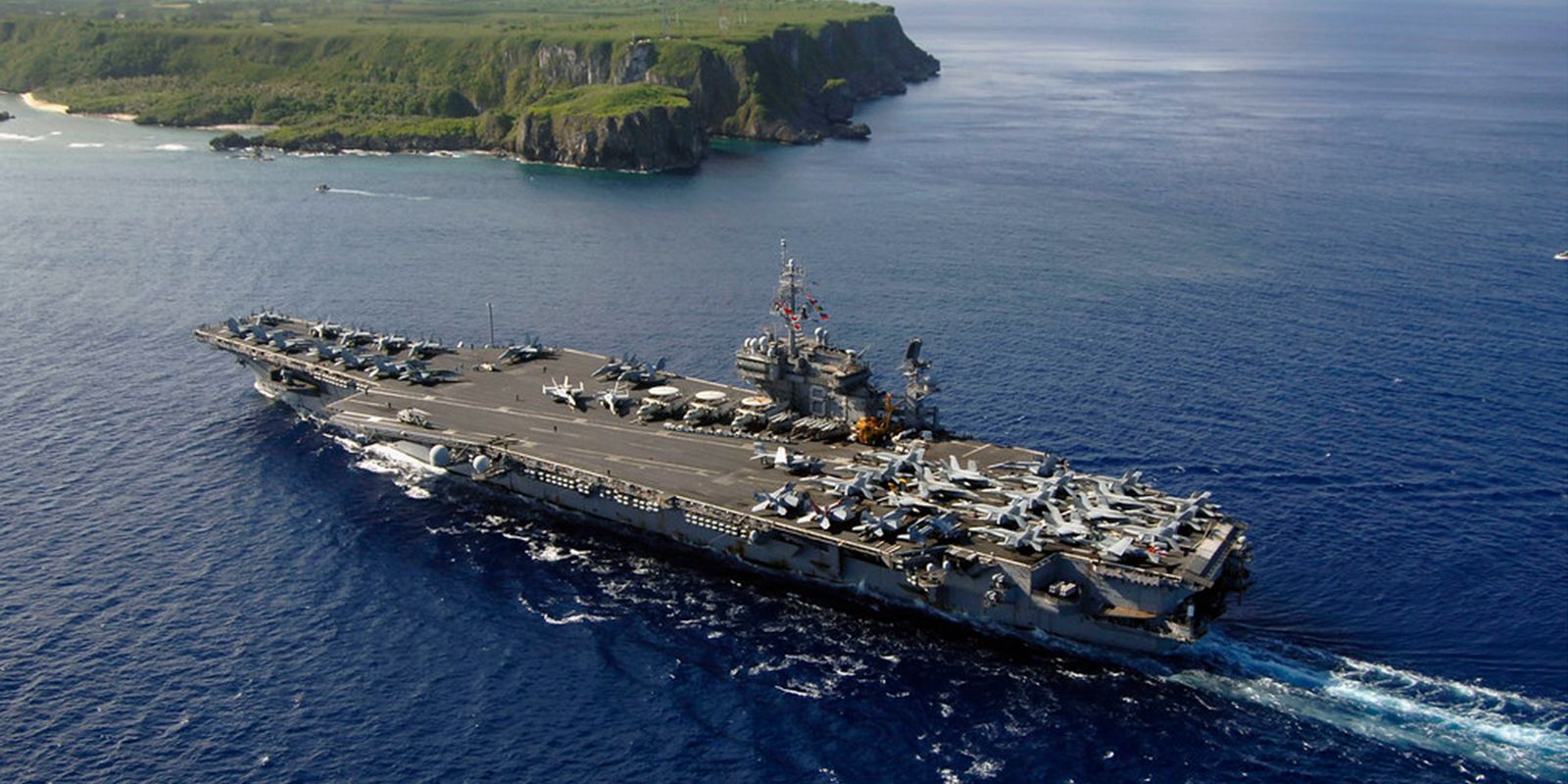
In recent days, international agencies such as the Reuters and the CNN They informed, based on unidentified sources of the Pentagon, that the White House would send 4,000 military personnel in three war-car holders to the Venezuelan coast on the grounds of combating drug trafficking.
“One of the authorities emphasized that the increase in troops is, for now, especially a demonstration of strength, aiming to send a message than to indicate any intention to carry out accurate cartels. But it also offers US military commanders – and the president – a wide range of options if Trump orders a military action,” he said, CNN of the United States.
The historian and researcher of armed and geopolitical conflict delegate Rodolfo Queiroz Laterza fears that a timely action of the US against Venezuela may undermine the political stability of all Latin America and the Caribbean.
“To make matters worse, we have on the continent, especially in Brazil, a strong political polarization, which ends up being instrumentalized for geopolitical purposes, in which a segment will applaud this pressure on Venezuela and the other segment will condemn. And this is a perfect culture broth for precisely a scenario of geopolitical instability,” said the expert.
White house
Although the displacement of military to the Venezuelan coast has not yet been officially confirmed by Washington, White House spokeswoman Karoline Leavitt told the press on Tuesday that Trump is prepared “to use all US power” against drug entry into the country.
“Maduro’s regime is not Venezuela’s legitimate government. It is a narcoterrorism cartel. And Maduro, in this government’s view, is not a legitimate president. He is a fugitive chief of this cartel who was indicted in the United States for drug trafficking to the country,” he said, when asked about the shipping of military personnel to the Venezuelan coast.
On August 8, the American newspaper The New York Times He published an article informing, based on unidentified sources, that President Donald Trump authorized the Pentagon to perform military operations in Latin American countries to “fight drug trafficking.”
The news has been interpreted as permission for direct interference from the United States in Latin America.
Also earlier this month, the US government increased from $ 25 million to $ 50 million the value of the reward for information leading to the capture of President Nicolás Maduro, accused by the White House of leading the alleged drug trafficking group Cartel de Los Soles.
Scholars have pointed out doubts about the importance of Venezuela in the global drug market. A study by the Washington office for Latin America (Wola), which brings together Latin America experts in the US, pondered, in 2020, that only 7% of cocaine that goes to the US country passes through the Venezuela Sea.
“About 90% of all cocaine to the US is traded by the western and Eastern Pacific Routes, not by the Eastern Caribbean seas of Venezuela,” says the document prepared based on official US data.
Venezuela
Venezuela denies the existence of the Los Soles cartel and says the accusation is just a pretext to intervene in the country. The Maduro government has informed that it can resist any attempt to invasion and have classified the threats of “bizarre and absurd decline empire.”
“We defend our seas, our heavens and our lands. No empire will touch the sacred soil of Venezuela or South America. They will never step with their insolent steps in the land of Bolivar,” said the Venezuelan president.
Maduro added that he will call up to 4.5 million militia to protect the nation in partnership with the Armed Forces. The militia are civil groups loyal to the Venezuela government that receive military weapons and training.
In a statement published on Tuesdaythe Maduro Administration pointed out that accusing the country of drug trafficking reveals the lack of credibility of the US country.
“These threats not only affect Venezuela, but also endanger the peace and stability of the entire region, including the Peace Zone stated by Celac [Comunidade de Estados Latino-Americanos e Caribenhos]space that promotes sovereignty and cooperation among Latin American peoples, ”says the Chancellery of Caracas.
Although Venezuela’s Armed Forces have relatively good equipment for the country’s socioeconomic conditions, they would not be able to determine an invasion or attack from the United States, in the evaluation of expert Rodolfo Queiroz Laterza.
“They are forces intended for a very limited national defense. Therefore, the ability to deter the Latin American Armed Forces is pure before the United States. Even this applies to Brazil, which an Armed Forces wing still wants structural dependence on the United States, which is an error,” Laterza added.
Colombia and Mexico
The US threats to Venezuela have also been repudiated by Mexico president Claudia Sheinbaum, who stated that countries in the region can collaborate in combating drug trafficking, but cannot accept external interventions that violate national sovereignty.
This situation also served Bogota Caracas after the friction between Colombian President Gustavo Petro and Nicolás Maduro, caused by the accusations of electoral fraud and political persecution in Venezuela.
“The Americans are lost if they think invading Venezuela will solve their problems and thus drag Venezuela into the situation similar to Syria, with the additional problem of dragging Colombia together,” Petro said in a transmitted cabinet meeting throughout the country.
* Collaborated Alex Rodrigues