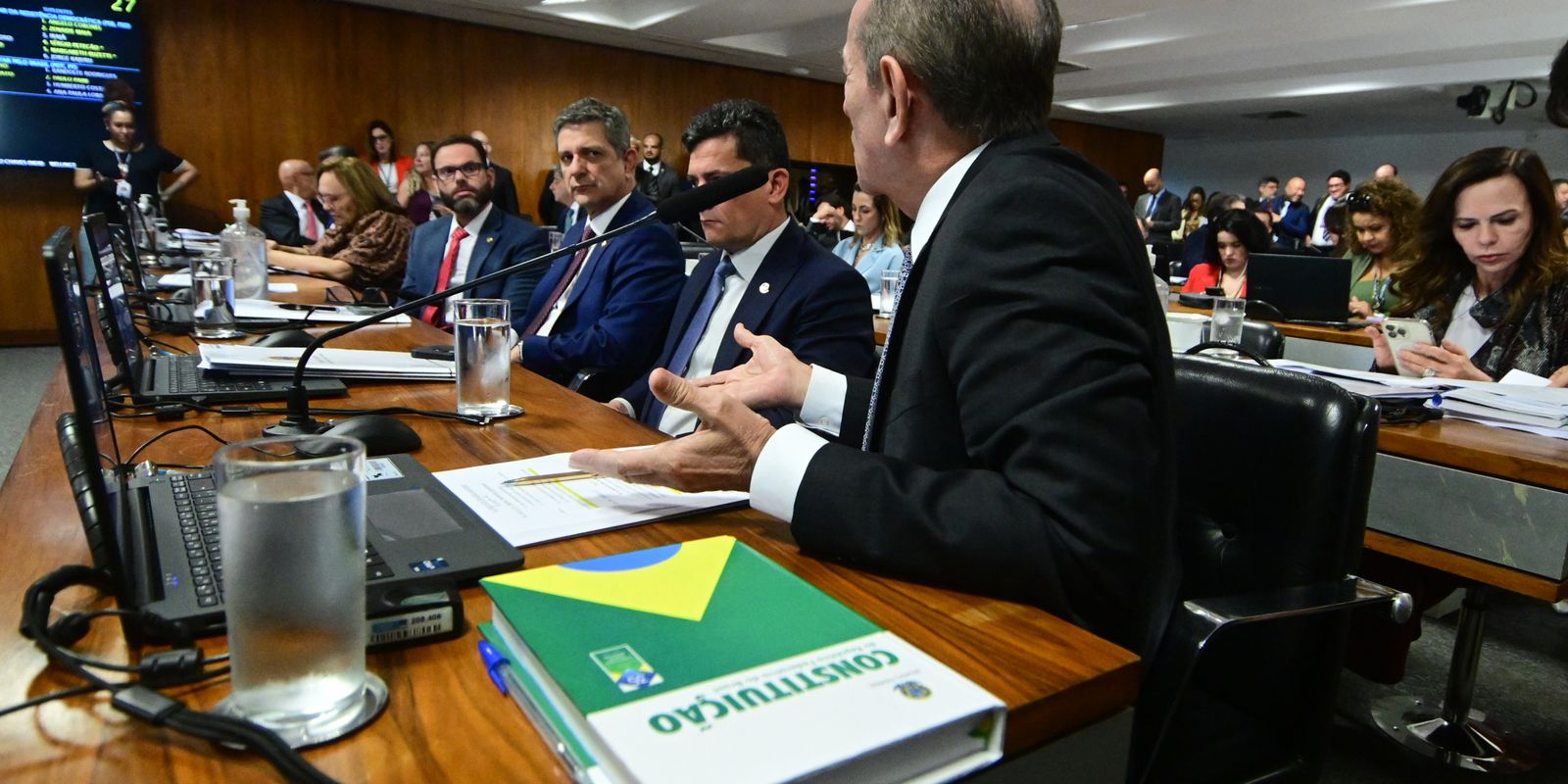
The Senate Constitution and Justice Commission (CCJ) approved, on Wednesday (20), a highlight of the PP that provides for the Printed vote in Brazilian electionsmeasure already considered unconstitutional by the Federal Supreme Court (STF).
The text was approved by 14 votes against 12 under the Complementary Bill (PLP) 112/2021, which creates the new Electoral Code of Brazil, with about 900 articles. The base text of the project has already been approved by the CCJ senators.
THE approved amendment It provides that, after confirmation of the votes of each voter, “the digital voting registration file will be updated and digitally signed, with the application of the time registration in the LOG file to ensure safety and auditability”.
Then, according to the approved text, “the ballot box will print the registration of each vote, which will be deposited automatically and without manual voter contact, in a previously sealed place; III – the voting process will not be completed until the voter confirms the correspondence between the content of his vote and the printed registration and displayed by the electronic ballot box.”
The amendment also states that the new model must be implemented in the election following the project approval. The bill still needs to be analyzed in the Senate Plenary.
How there were changes in the text that came from the House, The article should return to new analysis of deputies. For real for the next election, the story needs to be sanctioned until a year before the next election.
The opposition justified the printed vote at the electronic ballot boxes claiming that “simple” people need to rely on the electoral system and that the measure seeks to “pacify Brazil”.
The adoption of printed vote was proposed by the opposition amid accusations, without evidence, against the electronic ballot box made by supporters of former President Jair Bolsonaro.
“We have to pacify the country. For God’s sake! The question is not wanting to be right, it is being happy. So, to pacify the country and be happy, it is the printed vote,” said Senator Carlos Portinho (PL-RJ). The opposition highlighted to include the obligation of the printed vote in the text.
The rapporteur of the article, Senator Marcelo Castro (MDB-PI), had been rejecting this change claiming that, in almost 30 years of electronic ballot box, no fraud in the electronic system has never been proven.
“It is an absolutely safe system. In the election of mayors and councilors of 2024 had more than 400 thousand candidates and does not have a single lawsuit throughout Brazil with someone saying that he lost because he had fraud,” he justified in the last session of the CCJ that discussed the issue.
In 2020, the Federal Supreme Court (STF) considered unconstitutional The 2015 Electoral MiniReform that provided for the impression of proof of the vote. The Supreme considered that there was a risk of the confidentiality of the vote being violated and favoring electoral fraud.
In 2021, the House of Representatives rejected the Proposed Amendment to the Constitution (PEC) that instituted the obligation of printed vote.