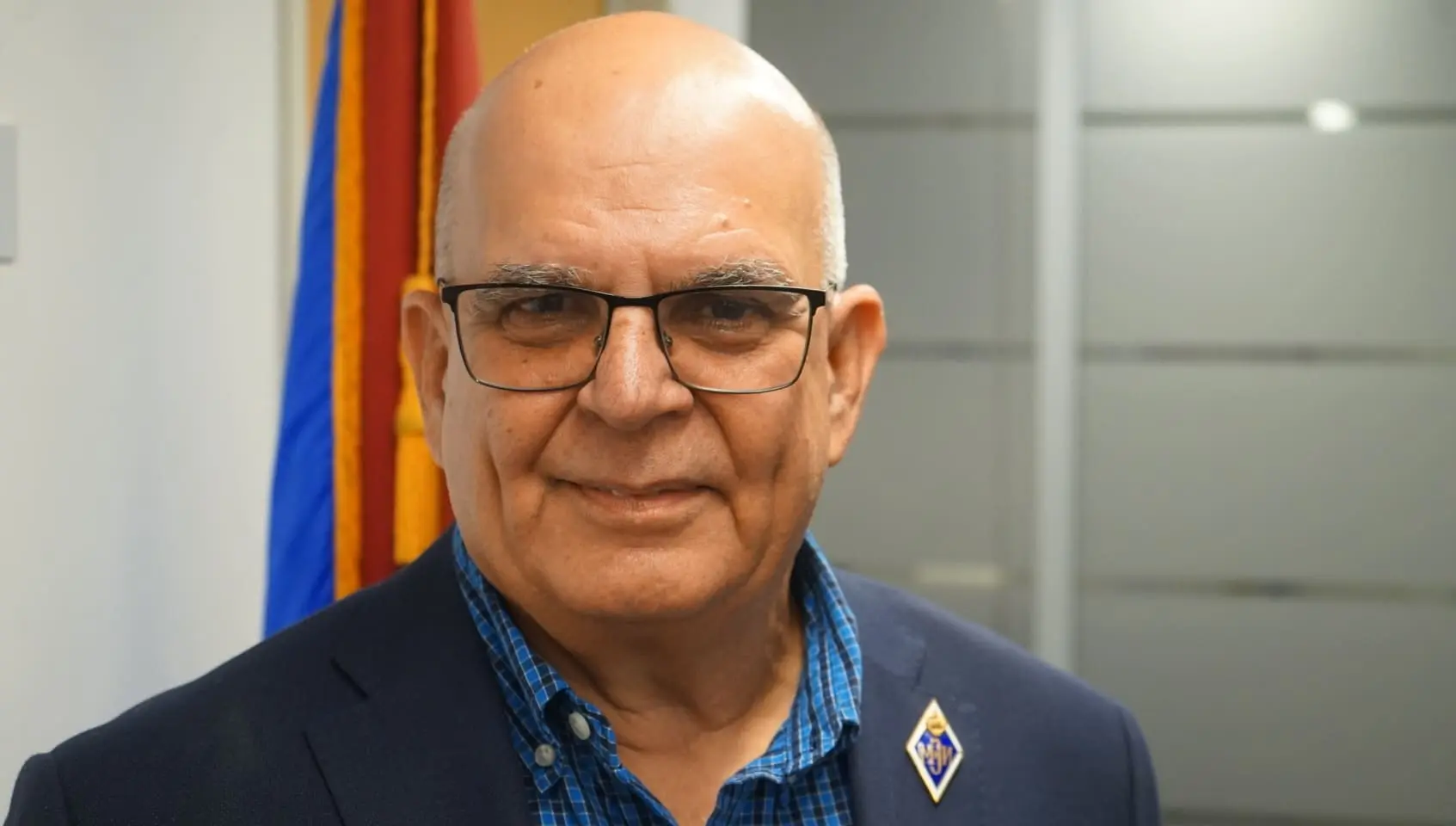
Miami.-In the middle of the blackouts Prolonged and the deterioration of the electrical system in Cuba, the nuclear engineer Pelayo Caliente offers a critical analysis of the roots of the crisis and the possibilities of solution. Formed at the Moscow Energy Institute and with direct experience in teaching and in thermoelectric and nuclear plants of the island, Hever warns that the failed policies of the regime, the lack of investment and the exodus of professionals have led the country to a collapse point.
In this interview, he shares his vision on how the energy infrastructure could be rebuilt in a free, democratic and human talent necessary to sustain it.
When was your interest in science?
From high school I always leaned more for science than for letters. I remember that I even suspended a history exam, I think the only time it happened to me, and today that matter is one of my passions. But what really caught me was physics; From early I wanted to apply it in something practical, in engineering.
What motivated you to study engineering?
I grew up in Jiguaní, a town where there were no known engineers. There were doctors, drivers, peasants and a lawyer, but little else. However, a friend’s brother was an engineer and talked to him; There I confirmed that I wanted to follow that path. In the pre -university I had a great physics teacher who reinforced my decision.
Where did you study the career and how was that experience?
I studied at the Moscow Energy Institute, one of the most prestigious in the world in that field, comparable to MIT in the United States. There I obtained my degree and Master in Nuclear Engineering. The Institute had unique laboratories, including a thermoelectric plant in the campus where we did practices. The training was very demanding, but of great quality. We graduate eleven students in 1984.
Where did you work when returning to Cuba?
I was a professor at the Faculty of Nuclear Science and Technology, which first belonged to the University of Havana and then went to the Ministry of Nuclear Affairs, directed by a son of Fidel Castro. From the beginning I was closely linked to the construction of the Juraguá nuclear plant, providing construction and assembly subjects of nuclear plants. I also gave practices in thermoelectric plants such as Tallapiedra, Rule, Santa Cruz del Norte, Matanzas, Mariel and Cienfuegos.
With your experience, did the Chernobil accident surprised?
Yes, because it was a catastrophic accident, level 7, never seen before. The design of that plant had deficiencies in its safety systems, especially the lack of a “steel and concrete“ containment ”. The accident was due to a human error, but the design itself was weak. In 1982, while doing practices in Chernobil, I was involved in an incident in the 3. With other students we had to participate in emergency work and radiate. That experience left serious consequences on my health and that of my classmates.
How did that impact your personal life?
It was hard. My son was born with the weakened immune system, and I developed health problems, including a tumor in the thyroid that, according to doctors in this country, was a consequence of radiation. I also suffered severe allergies for years.
Let’s go to Cuba. Why are you interested in explaining the island’s energy crisis?
Because I know firsthand how the system works. He taught how nuclear and thermoelectric plants were integrated into the national electrical system. I had access to the loading office, where electricity is distributed in Cuba, and took my students there. That allowed me to thoroughly understand generation and distribution dynamics. Today, with the current crisis, I feel the responsibility of explaining to the people what really happens.
What is the main cause of the energy crisis in Cuba?
The electric plants are very old. The last major plant built was that of Matanzas in the 80s. Today almost all exceed 40 years and have not received proper maintenance. That causes constant failures and stops.
Why have government strategies failed?
Because in Cuba economic policies have never worked, and energy is no exception. Instead of renewing plants, they bet on structured structure groups from Venezuela. At the end of their guarantee, they began to break and there were no spare parts. It was a serious strategic mistake: that money should have been invested in modernizing the electrical system.
How do you visualize the reconstruction of the electrical system in a free Cuba?
The first is a great investment: between 5,000 and 8,000 million dollars only in generation. Thermoelectric must be renewed in existing sites, because these sites have the necessary infrastructure and conditions. In addition, the human factor needs to be recovered: specialized engineers, technicians and workers. Many have left the country and without them it will be very difficult to undertake that task.
Can solar panels be the solution?
No. They are useful as a complement to certain consumption peaks, but they cannot be the basis of the system. Thermoelectric plant is needed that guarantee the base load, working 24 hours, something that solar panels cannot do.
What final message would you like to leave?
The energy crisis of Cuba will not be resolved with empty promises. The people suffer from the blackouts of up to 32 hours, which affects daily life, food and health. There are no immediate solutions, but in a democratic Cuba, with investment and with the return of human talent, it will be possible to rebuild the electrical system.