Madrid/More than a month has been vacant by the Plaza de Minister de Labor since it was dismissed, for its “lack of sensitivity”, to María Elena Feitó, who since Monday has a successor. Jesús Otamendiz Campos, provincial vice governor of Havana since June 2023 will be in charge of the position at an important time for his area, which is preparing to discuss the draft of the new Labor Code.
The text is still a mystery, but the authorities announce that this September will begin to discuss and until November in the work centers of the island, predictably with a view to its approval in Parliament this December. Among the few advanced novelties, the change of 17 to 18 years is known as age to establish labor relations or the use of the contract for a certain time in permanent work.
The appointment of Otamendiz Campos transcended this Monday, through a statement indicating, with the usual formula, that “the State Council, at the proposal of the President of the Republic and prior approval of the political bureau of the central committee of the Communist Party of Cuba, agreed to promote the position of Minister of Labor and Social Security to fellow Jesús Otamendiz Campos”.
Among the few advanced novelties, the change of 17 to 18 years is known as age to establish labor relations or the use of the contract for a certain time in permanent work
The new 50 -year -old minister has a law degree, a doctor of pedagogical sciences and attended the Diploma in Public Administration. His career in the single party has been, as expected, neat and, according to the statement, “with positive results.” He was an instructor of the Union of Young Communists (UJC) in Cerro (Havana), and then, first secretary of the youth organization in the municipality. From there, he jumped to the provincial level, assuming in 2005 the position of head of the Organization Department of the Provincial Committee of the UJC in Havana.
In 2008 he had his first great contact with the area that he will now direct, when he was appointed head of the Social Workers Program of the capital, which went on to integrate into the Ministry of Labor and Social Security in 2012. In that agency he was director of Training and Development, director of Employment and, from 2021, Vice Minister First, until he passed to the position he had until yesterday in the province of Havana.
The statement indicates that in this last position “he has demonstrated capacity and leadership”, and that there was “immediate reserve of the Minister of Labor and Social Security”, so it was expected to be held. The news has fallen well among the most related to the regime, which highlights the many years that Otamendiz Campos carried in the sector and indicates it as a triumph of the “paint policy.” Among the citizens of Havana, meanwhile, it is considered that it has turned out to be a void manager in municipal and provincial policy, and the problem of garbage in the capital is particularly reproached.
From his position, in addition to the responsibility of starting the Labor Code at a catastrophic moment for human resources in Cuba, marked by the
Mass exile of the last three years, will have to manage another of the big problems of the island: retirees and other vulnerable sectors. For the former, his appointment coincides with the collection – since this Wednesday – of pensions, which despite their rise will continue to be veryy in a country that has lived for more than two years with an official two -digit inflation, a depreciated currency and some stores broken down in national currency.
For the latter, a Law package which include the “attention to the robulants”, the Achilles heel of the previous minister, to whom he cost his derogatory words about poverty.
During the sessions prior to the National Assembly, this July, Feitó said that those who roam the streets in precarious conditions do not suffer from extreme poverty, but that they pretend for opportunistic purposes and described them as “drunks, simulators and illegal”
During the sessions prior to the National Assembly, this July, Feitó said that those who roam the streets in precarious conditions do not suffer from extreme poverty, but pretend for opportunistic purposes and described them as “drunk, simulators and illegal.” The official said that the function of the State is not to recognize structural poverty, but “prevent social opportunism” and “fight it” and added that the social deterioration that the country is going through is not explained by failures of the economic system, but by “individual selfishness” and the “lack of values.”
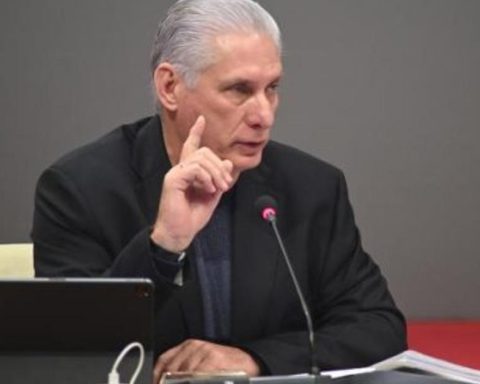
“Very questionable the lack of sensitivity in the vulnerability approach. The revolution cannot leave anyone behind, that is our currency, our militant responsibility,” said Miguel Díaz-Canel In your X account shortly after. It was the informal announcement of his dismissal, confirmed on July 15.
“The companion recognized her mistakes and presented her resignation to office,” said the authorities, which qualified their output of “Liberation, based on the lack of objectivity and sensitivity with which she addressed issues that today focus on political and government management, focused on attending real phenomena and never desired by our society.”